
ChevyMan.ru
Mazda Mitsubishi Toyota Land Rover Honda Kia Nissan
English Русский
Български
Беларускі
Український
Српски
Hrvatski
Română
Polski
Slovenský
Magyar
|
Articles | Sitemap | Contacts |


Home   Aveo   Captiva   Cruze   Lacetti   Lanos   Niva   Tahoe   Others  
Tahoe 2 and 3 (2000-2014) Tahoe 1 (1992-2000)
  • Home
  • Tahoe
  • 1 (1992-2000)
  • General information
  • User manual
  • Automatic transmission fluid

Automatic transmission fluid (Chevrolet Tahoe 1)

            0

Contents: How to check and replace ↧ How to check ↧ Checking the liquid is hot ↧ Checking the liquid cold ↧ Checking the fluid level hot or cold ↧ How to add liquid ↧

How to check and replace


A good time to check your automatic transmission fluid level is when you change your engine oil.

Change the fluid and filter every 50,000 miles (83,000 km) if the vehicle is primarily used under the following conditions:
  • When driving in severe urban conditions where the air temperature is regularly 90°F (32°C) or higher
  • In hilly and mountainous areas
  • When you tow a trailer frequently
  • Use your car as a taxi, police car or delivery service.

If you do not use the vehicle under these conditions, the fluid and filter do not require replacement.

How to check


Since this operation is a bit complicated, you can have it done by the GM service department (General Motors).

If you want to do it yourself, follow all the instructions here or you will get incorrect data on the dipstick.

Note: Too much or too little fluid can damage the transmission.


Wait at least 30 minutes before checking the fluid level if you have been driving:
  • When the outside air temperature is above 90°F (32°C).
  • At high speed for quite a long time.
  • In heavy traffic conditions - especially in hot weather.
  • If you were pulling a trailer.

To obtain correct readings, the fluid must be at normal operating temperature between 180°F (82°C-93°C).

Checking the liquid is hot


Warm up the vehicle by driving it approximately 15 miles (24 km) when the outside temperature is above 50°F (10°C).


If it is colder than 10°C, drive the vehicle in 3rd gear until the engine temperature gauge moves and remains steady for 10 minutes.

Then proceed with the hot check procedure.

Checking the liquid cold


A cold check is done when the vehicle has been parked for eight hours or more with the engine off and is for reference only. Let the engine idle for 5 minutes if the air temperature is 50°F (10°C) or above. If below 10°C, let the engine idle longer. If the fluid level is low during a cold check, you should do a hot check before adding fluid.

This will give you more accurate fluid level readings.

Checking the fluid level hot or cold


Park your car on a level place. Keep the engine running.

With the parking brake applied, place the gear shift lever in PARK (P).

Without removing your foot from the brake pedal, move the gearshift lever through each gear, holding each gear for about 3 seconds. Then return the gearshift lever to P.

Let the engine idle for three minutes or more.
Let the engine idle for three minutes or more.


Then, without turning off the engine, do the following:
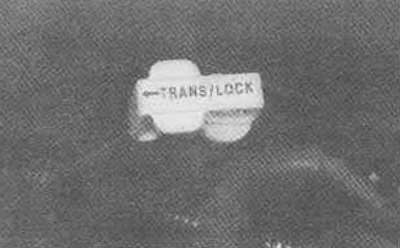
  • 1. The red transmission dipstick is located behind the engine compartment on the passenger side. Lift the handle, pull out the dipstick and wipe it with a rag or paper towel.
  • 2. Put it back in, wait three seconds and pull it out again.
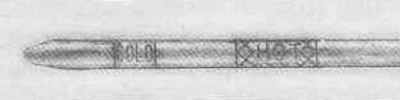
  • 3. Check both sides of the dipstick, look at the bottom level. The fluid level should be in the COLD area for a cold check and in the HOT area or the cross-marked area for a hot check.
  • 4. If the fluid level is within acceptable limits, reinsert the dipstick completely, then snap the handle down to lock the dipstick in place.
4. If the fluid level is within acceptable limits, reinsert the dipstick completely, then snap the…


How to add liquid


Determine what grade of transmission fluid you want to add. We recommend DEXRON-III only. Add liquid only after a hot test. If the liquid level is low, add the appropriate liquid in the required amount so that the level rises to the NOTES of the platform during a hot check. This will not require much liquid, usually less than one pint (0.5 liters). Don't overfill it.

After adding fluid, recheck the fluid level.

The article was checked: Vladimir Romannikov
This article is available at russian, bulgarian, belarusian, ukrainian, serbian, croatian, romanian, polish, slovak, hungarian

Share information:

Previous articles
Tahoe 1: User manual
Next articles

Air filter (petrol engine)
Motor oil (petrol engine)
Checking the engine compartment
Refueling a car
If you are stuck in sand, mud or snow
Rear axle lubrication
All-wheel drive lubrication
Power steering fluid
Windshield Washer Fluid
Brake fluid and pads


See similar articles on the topic of Chevrolet cars:
Replacing automatic transmission seals Chevrolet Aveo T300 (2012-2018)
Automatic transmission Chevrolet Captiva 1 (2006-2018)
Checking the level and adding working fluid to the automatic transmission Chevrolet Cruze 1 (2008-2016)
Checking the fluid level in the automatic transmission Chevrolet Lacetti 1 (2002-2009)
Checking the fluid level in the windshield washer reservoir Chevrolet Lanos T150 (2002-2009)
Transmission control levers Chevrolet Niva 1 (2002-2016)
Checking the hydraulic fluid level in the automatic transmission (every 3000 miles or 3 months) Chevrolet Lumina 1 (1989-1994)
Link in different formats to this page


Visitor comments

No comments yet


How much will 42 + 19 =


Tahoe 2 and 3 (2000-2014) 
  • General information
  • Vehicle characteristics
  • Vehicle device
  • Manual
  • Maintenance
  • Power unit
  • Engine repair
  • Engine overhaul
  • Cooling system
  • Injection and control system
  • Exhaust system
  • Engine electrical equipment
  • Transmission
  • Automatic gearbox 4L60, 4L65, 4L70
  • Automatic gearbox 6L50, 6L80, 6L90
  • Transfer case
  • Drive shafts and cardan
  • Front drive axle
  • Rear drive axle
  • Chassis
  • Car suspension
  • Steering
  • Brake system
  • Body (until 2007)
  • Exterior (external elements)
  • Interior (internal elements)
  • Doors, locks and windows
  • Heating and air conditioning
  • Security System (SRS)
  • Body (since 2007)
  • Exterior (external elements)
  • Doors, locks and windows
  • Interior (internal elements)
  • Electrical equipment
  • Electrical appliances (until 2007)
  • Lighting and lamps (until 2007)
  • Audio system (until 2007)
  • Electrical appliances (since 2007)
  • Lighting and lamps (since 2007)
  • Audio system (since 2007)
  • Wiring diagrams (2000-2005)
  • Wiring diagrams (2005-2007)
  • Wiring diagrams (since 2007)


Tahoe 1 (1992-2000) 
  • General information
  • User manual
  • Maintenance
  • Power unit
  • Engine in a car
  • Engine removed
  • Cooling system
  • Heating and air conditioning
  • Fuel and exhaust systems
  • Decreased toxicity
  • Transmission
  • Manual gearbox
  • Automatic gearbox
  • Transfer case
  • Clutch and drive shafts
  • Chassis
  • Brake system
  • Car suspension
  • Steering
  • Body
  • Repair of body elements
  • Electrical equipment
  • Engine electrics
  • Equipment and devices
  • Electrical circuits


ChevyMan.ru © 2017-2026 · Mobile version · Feedback · Site search · Interesting to read · Sitemap: EN BG BY UA RS HR RO PL SK HU

Aveo 2003-2008 · Aveo 2006-2011 · Aveo 2012-2018 · Captiva 2006-2018 · Cruze 2008-2016 · Lacetti 2002-2009 · Lanos 2002-2009 · Niva 2002-2016 · Tahoe 1992-2000 · Tahoe 2000-2014 · Lumina 1 1989-1994 · Trailblazer 1 2001-2008 · Orlando 1 2010-2018 ·
🛡️ For your security and to improve our service, this site uses cookies. You can disable them in your browser.