


Contents: Moving off ↧ Gear indicator ↧ Gear selector ↧ Shifting gear ranges ↧ Engine braking ↧ Rocking the car ↧ Parking ↧ "Kick Down" ↧ Malfunction ↧ Power failure ↧ Unlocking the gear selector lever ↧ Low fuel consumption mode ↧
The automatic transmission can operate in both manual and automatic gear shifting modes.
Automatic transmission - six-speed, electronically controlled.
Sixth gear is overdrive.
Moving off
1. After the engine has warmed up, while continuing to press the brake pedal, move the gear selector lever to position R or D.
Caution: Do not switch between D positions (forward motion) and R (reverse) or P (Park) while the vehicle is moving. This will damage the transmission and may cause injury.
2. Release the parking brake and brake pedal.
3. To move off, slowly press the accelerator pedal.
Gear indicator
Type 1
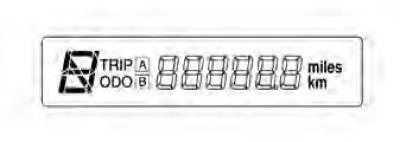
Located in the instrument cluster.
Shows the selected gear or transmission mode.
Type 2
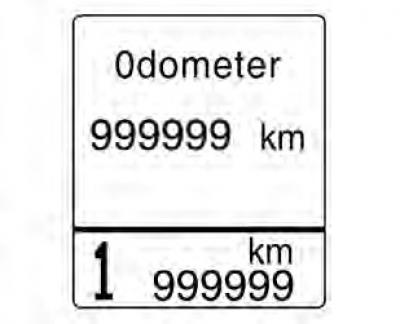
If your vehicle has a DIC display in the center of the instrument cluster, the selected gear or transmission mode is displayed at the bottom of the DIC display.
Gear selector
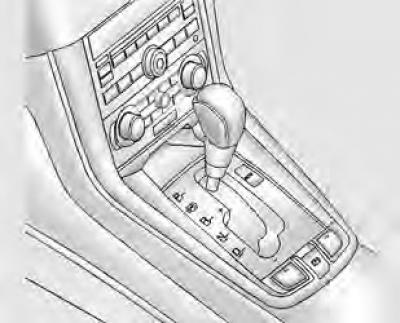
- P (PARK): Locks the front wheels. Shift to position P only when the vehicle is stationary and the parking brake is applied.
- R (REVERSE): Reverse gear position. Shift to R position only when the vehicle is stationary.
- N (NEUTRAL): Neutral position of the gearbox.
- D: This range is designed for all normal driving conditions. Allows shifting to all 6 forward gears.
Caution: Do not press the accelerator pedal while you are shifting the gear selector.
Never press the accelerator and brake pedals at the same time.
When the gear is engaged, after releasing the brake pedal, the car begins to move slowly.
Do not use the P (park) position instead of the parking brake.
Turn off the engine, apply the parking brake and remove the ignition key when leaving the vehicle.
Never leave a vehicle unattended with the engine running.
Shifting gear ranges
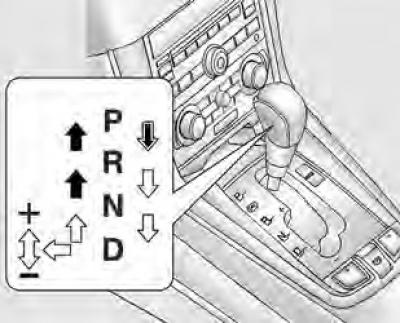
Shifting between gears is described below.

To shift, depress the brake pedal and press the release button.
The black arrows indicate the ranges that you need to press the lock release button to switch to.

To switch, press the unlock button.
White arrows indicate ranges that can be switched to without pressing the lock release button.

Free switching.
Whether the vehicle is moving or stationary, manual mode can be entered by moving the gearshift lever from the "D" position to the left into the manual mode slot. To return to the "D" mode, move the gearshift lever back to the right into the main slot.
In manual mode, moving the gearshift lever forward or backward allows you to quickly shift to the next gear. Unlike a manual transmission, manual mode allows you to change gears while pressing the accelerator pedal.
UP (+): Move this lever forward once to shift to the next higher gear.
DOWN (-): Move this lever back once to shift to the next lower gear.
Note: In manual mode, you can only shift between the five forward gears.
To move backward or stop the vehicle, move the gearshift lever to the appropriate position: "R" or "P".
Note: In manual mode, downshifting occurs automatically when the vehicle slows down.
When the car stops, first gear is automatically engaged.
To maintain the safety and performance of the vehicle at the required level, the system may not perform some shifts when the gear shift lever is moved.
Before setting off on a slippery road, move the gearshift lever to the + (up) position. This engages second gear, which is more suitable for smooth acceleration on a slippery road. Move the lever to the - (down) position to return to first gear.
Caution: In manual mode, the driver must shift up according to prevailing road conditions, trying to keep the engine speed below the red zone.
Since sudden engine braking and/or sudden acceleration may cause wheelspin, downshifts should be made carefully, in accordance with the vehicle speed.
Engine braking
On long descents, you can use engine braking. To do this, successively switch to lower gears in manual mode.
Warning: Do not downshift the transmission by two or more gears at once.
This will prevent damage to the transmission or loss of control and possible injury.
Note: Using engine braking on long descents will extend the life of your brakes.
Rocking the car
Rocking the vehicle is only allowed when skidding on sand, mud or snow.
Alternately move the gear selector to positions D and R.
Do not rev the engine or make sudden accelerations.
Parking
After stopping the vehicle by pressing the brake pedal, set the switch to position P and apply the parking brake by lifting the lever all the way up and remove the ignition key.
"Kick Down"
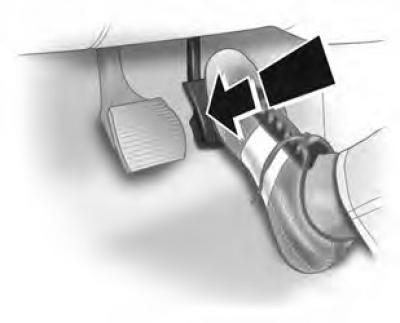
For a sharper acceleration, press the accelerator pedal all the way down and hold it there. The transmission will shift to a lower gear depending on the engine speed.
Malfunction
In case of failure, the malfunction indicator lights up. The gearbox is locked in a certain gear and no longer allows shifting in either automatic or manual mode.
Contact a service station immediately to have the fault corrected.
Power failure
If the power supply fails, the gear selector lever cannot be moved out of the P position.
If the battery is discharged, start the engine using jumper cables.
If the battery is not the cause of the malfunction, unlock the gear selector lever and remove the key from the ignition switch.
Unlocking the gear selector lever
Before moving the gear selector out of the "P" (parking) position, turn on the ignition and fully depress the brake pedal. If it is impossible to move the gear selector out of the "P" position with the ignition on and the brake pedal depressed, do the following:
1. Turn off the ignition and remove the key.
2. Depress and hold the brake pedal and apply the parking brake.
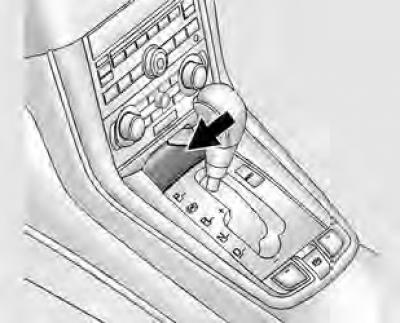
3. Remove the rubber mat.
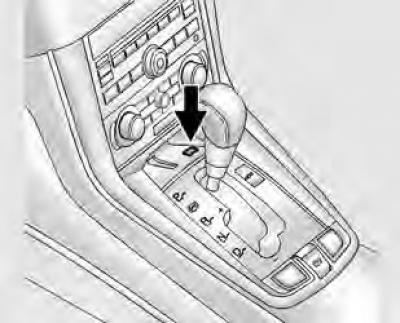
4. Insert the ignition key into the lock and press it.
5. Set the gear selector lever to neutral position "N".
6. Remove the ignition key from the slot.
7. Put the rubber mat back in place.
8. Have your vehicle repaired as soon as possible.
Warning: To avoid damage to the gearbox, follow these guidelines:
Do not depress the accelerator pedal when shifting from P or N to R or forward gear.
This can lead not only to damage to the gearbox, but also to loss of control of the vehicle.
Try to use position D whenever possible. Do not shift from position P to position R while the vehicle is moving.
When stopping on an incline, do not hold the vehicle in place by pressing the accelerator pedal. Use the service brake.
When shifting from P or N to R or a forward gear, press the brake pedal.
Otherwise, damage to the gearbox or unexpected movement of the vehicle may occur, causing the driver to lose control of the vehicle, causing harm to health, the vehicle or other property.
Low fuel consumption mode
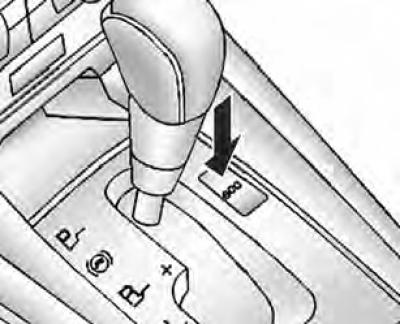
Your vehicle may have a fuel-saving mode. When enabled, fuel consumption may be significantly reduced.
The low fuel consumption mode is activated by pressing the Eco button next to the gearshift lever. When this mode is activated, the corresponding indicator lights up in the instrument cluster. See Fuel Economy Indicator. Pressing the button again turns off the low fuel consumption mode.
If the low fuel consumption mode is enabled:
- In this case, switching to higher gears will occur faster, and to lower ones - with a delay.
- The torque converter will lock up earlier and unlock later.
- The accelerator pedal will be less sensitive.
- When slowing down, the car's electronics will cut off fuel supply to the engine cylinders earlier. Do not use the low fuel consumption mode when towing.