


Contents: THIRD ↧ SECOND ↧ FIRST ↧ Rear axle connection (if equipped) ↧ All-wheel drive ↧ Connecting the front axle ↧
There are several different positions on the gear lever.
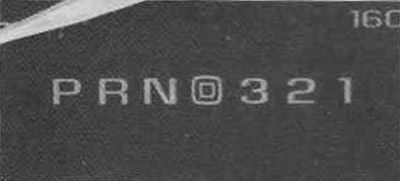
Your vehicle has an electronic gear shift indicator located on the instrument panel.
This display should be on at all times when the transmission lever is moved from the PARK (P) position. This means that when the ignition key is in the OFF (C) position but not in the LOCK (B) position, there will be a small current from the battery that may discharge the battery over a period of time. If you must leave the ignition key in the OFF (C) position for an extended period for some reason, you are advised to disconnect the battery cable from the battery to prevent battery discharge.
PARK position (P): This position locks the rear wheels. This is the best position to start the engine because the car cannot move.
REVERSE (R): This position of the gear lever is used for moving backwards.
Note: Shifting the gearshift lever to (R) while the vehicle is moving forward may damage the transmission. Shift to (R) only after the vehicle has come to a complete stop.
To rock your vehicle back and forth to get out of snow, ice, or sand without damaging your traction, see the section titled "Stuck in Sand, Mud, Ice, or Snow."
Position NEUTRAL (N): In this position, the engine is not connected to the wheels. To restart the engine if you are already moving, use NEUTRAL (N) only.
Also use NEUTRAL (N) when your vehicle is being towed.
Automatic overdrive (D): This is the position for normal riding. If you need more power to move, you:
- when driving at speeds less than 35 mph (56 km/h), press the gas pedal halfway;
- when moving at speeds over 35 mph (56 km/h), press the pedal all the way down.
You will move up to the next gear and get more power.
Automatic transmission (D) can be used when towing a trailer, with a heavy load, when driving on steep hills and off-road.
You can switch to third gear or, if necessary, to a lower gear if the gears are automatically changed too often.
THIRD
Third (3): This position is also used for normal driving, however, it offers more power and less economy than an automatic transmission.
SECOND
Second (2): This position gives you more power but less economy. You can use (2) on hilly terrain. It will help you control your speed when you are going downhill on mountain roads if you do not want to use the brakes often.
If you select (2): Manual, the clutch will operate in second gear. You can use this feature to reduce rear wheel torque when you are trying to start moving from a standstill on slippery road surfaces.
FIRST
First (1): This position gives you more power (but lower efficiency) than second gear (2). You can use it on very steep hills or in deep mud or snow. If the gearshift lever is in first (1) while the car is moving forward, the clutch will not engage first gear until the car is moving slowly enough.
Rear axle connection (if equipped)
If you have this feature, the rear axle can provide extra traction in snow, mud, sand, or gravel. The axle works like a standard axle most of the time, but when one rear wheel has no traction and the other does, the locking allows the wheel with traction to move the car.
All-wheel drive
If your vehicle has all-wheel drive, you can transfer engine torque to all four wheels for extra traction. To get more satisfaction from all-wheel drive, you should be familiar with this operation. Read the following chapters before using all-wheel drive. You should use rear-wheel drive (2H) under most normal driving conditions.
Connecting the front axle
The front axle is automatically engaged and disengaged when you move the transfer case lever. Some delay in engaging or disengaging the axle is normal. If the outside temperature is very high and the vehicle has been used under severe driving conditions, there may be a slight delay in disengaging the axle.
[For details, visit the website «chevyman.ru»]