


Contents: Coolant level ↧ Engine overheating ↧
In countries with a moderate climate, the operating temperature range of the coolant extends to approximately -30°0.
In countries with very cold climates, the operating temperature range of the coolant extends to approximately -40°C.
Maintain sufficient antifreeze concentration.
Caution: Use only approved antifreeze.
Coolant level
Caution: Too low a coolant level can cause engine damage.
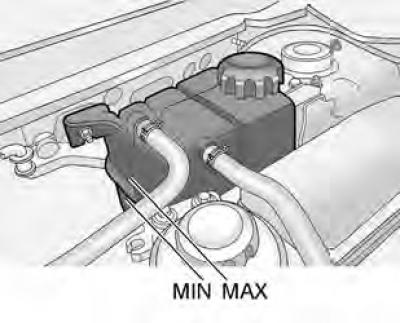
When the engine is cold, the coolant level in the expansion tank should be between the MIN and MAX marks. The coolant level increases as the engine temperature rises and decreases as it cools.
Warning: Do not remove the coolant reservoir cap when the engine and radiator are hot. Serious injury may result. Make sure the engine is cool before removing the cap. Carefully loosen the cap, releasing pressure gradually.
Add a mixture of distilled water and antifreeze approved for use in this vehicle model. Tighten the cap. Check the concentration of antifreeze and eliminate the cause of its loss at a service station.
Note: If the coolant level drops below the MIN mark, add distilled water and recommended antifreeze to the radiator in a ratio of 56:44.
To protect your vehicle in very cold weather, use a mixture of 48% water and 52% antifreeze.
Caution: Adding tap water or incorrect ingredients to the cooling system may damage the cooling system.
Do not use tap water or antifreezes based on methanol or other alcohols in the cooling system. Otherwise, the engine may overheat or catch fire.
Caution: Coolant is a hazardous substance.
Avoid regular or prolonged contact with coolant.
After contact with coolant, clean your skin and nails with soap or a special cleaner.
Keep coolant out of reach of children. Coolant is irritating to skin and may cause poisoning or death if swallowed.
Caution: Do not add coolant more often than recommended.
The need to top up the coolant more frequently may indicate a malfunction of the engine cooling system.
Contact a service station to have the cooling system checked.
Engine overheating
If the engine coolant temperature gauge needle has entered the red zone or if there is any other reason to suspect engine overheating, follow the steps below.
1. Stop the car.
2. Turn off the air conditioning system.
3. Let the engine idle for a few minutes.
4. Check the operation of the engine cooling fan.
Warning: If steam appears, move a safe distance away from the vehicle and allow the engine to cool. Steam can cause serious burns.
Note: Leaving the air conditioning system on while driving on hilly terrain or under severe road conditions may cause the engine to overheat.
If the fan does not rotate and steam appears:
- 1. Turn off the engine.
- 2. Leave the car and move away from it without opening the hood.
- 3. Wait for some time until the engine cools down.
- 4. After steam stops escaping from under the hood, carefully open the hood.
- 5. Contact a service station immediately for assistance.
If the fan is working properly and no steam appears:
- 1. Carefully open the hood.
- 2. Leave the engine idling until it cools down.
- 3. Check the coolant level.
If the fan is working properly and the engine temperature does not drop:
- 1. Turn off the engine.
- 2. Carefully open the hood.
- 3. Wait until the engine cools down.
- 4. Check the coolant level.
If the coolant level is low, check for leaks in the following areas:
- 1. Radiator.
- 2. Radiator hoses.
- 3. Radiator connections.
- 4. Heater hoses.
- 5. Heater connections.
- 6. Water pump of the cooling system.
If a leak or other malfunction is detected, or if the coolant level continues to drop, contact a service station immediately.
Warning: Hot coolant and steam are under high pressure in the cooling system. Escaping coolant or steam can cause serious injury.
Do not remove the expansion tank or radiator caps when the engine is hot.
Original version of the article on the website: ChevyMan