


Contents: Knocking of crankshaft main bearings ↧ Knocking of connecting rod bearings ↧ Knocking of pistons ↧ Knocking of intake and exhaust valves ↧ Excessive camshaft drive chain noise ↧ Insufficient oil pressure at idle… ↧ Excessive oil pressure on a warm… ↧ Increased oil consumption ↧ Engine overheating ↧ Rapid drop in fluid level in… ↧
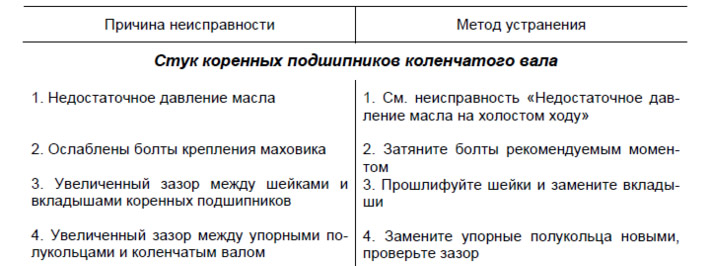
Knocking of crankshaft main bearings
Usually a dull, metallic knock. It is detected when the throttle valve is opened sharply at idle. Its frequency increases with increasing crankshaft speed. Excessive axial clearance of the crankshaft causes a sharper knock with uneven intervals, especially noticeable with a smooth increase and decrease in crankshaft speed.
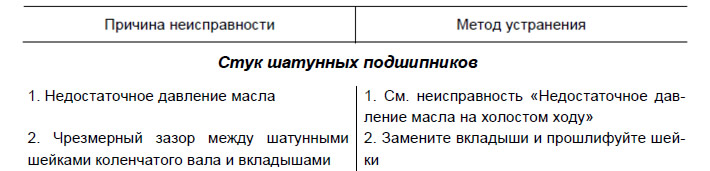
Knocking of connecting rod bearings
Usually the knock of connecting rod bearings is sharper than the knock of main bearings. It can be heard at idle speed of the engine when the throttle valves are opened sharply. The place of knocking can be easily determined by disconnecting the spark plugs one by one.
Caution: When disconnecting the spark plugs, connect the high-voltage wire to the spark gap to avoid damage to the electronic engine control system components.
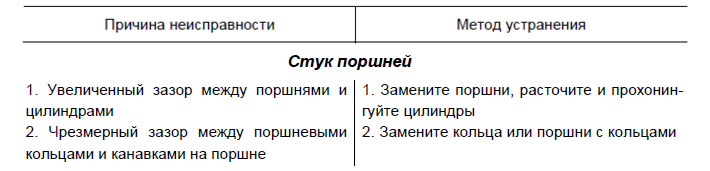
Knocking of pistons
The knock is usually not loud, but muffled; is caused by the piston "beating" in the cylinder. It is best heard at low crankshaft speeds and under load.
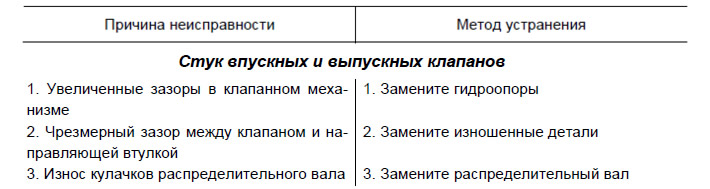
Knocking of intake and exhaust valves
Excessive valve clearances cause a characteristic knocking noise, usually at regular intervals; its frequency is less than the frequency of any other knock in the engine, since the valves are driven by the camshaft, the rotation frequency of which is half the rotation frequency of the crankshaft.
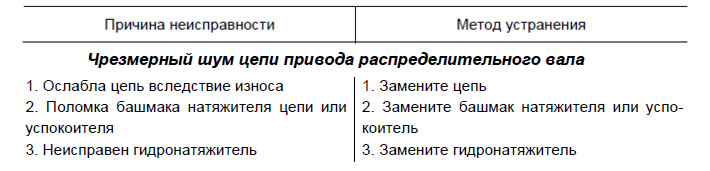
Excessive camshaft drive chain noise
From the general engine noise, the noise of the camshaft drive chain stands out when gaps appear between the engagement elements and is clearly audible at low crankshaft rotation speeds.
Insufficient oil pressure at idle with a warm engine
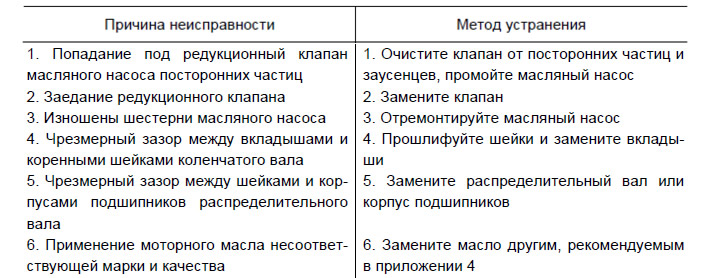
Excessive oil pressure on a warm engine

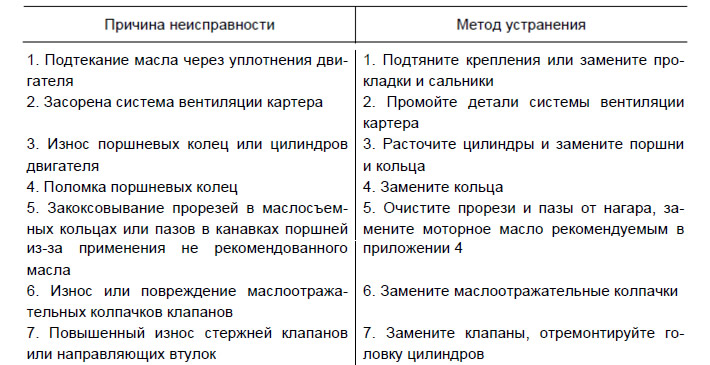
Increased oil consumption
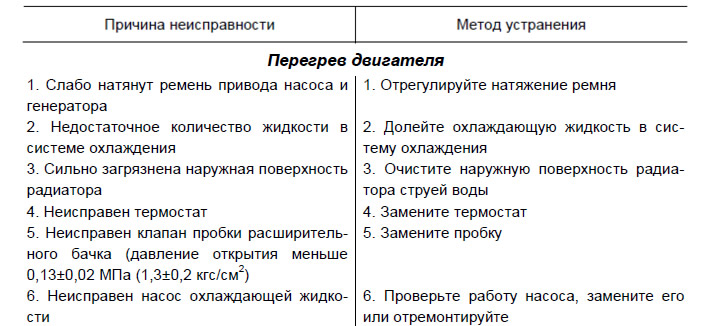
Engine overheating
The coolant temperature gauge needle is in the red zone of the scale. Before troubleshooting, make sure the coolant temperature gauge and its sensor are in good working order (see subsection "Control devices").
Rapid drop in fluid level in expansion tank
