


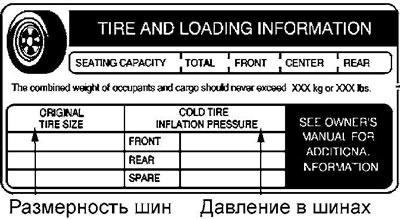
The recommended tire pressure for your vehicle modification can be found on the plate located on the driver's door pillar.
Note:
- The lower the tread depth, the greater the risk of tire slippage. The effectiveness of tires for driving on snow is significantly reduced if the tread depth is less than 4 mm.
- Incorrect tire pressure can reduce tire life and make your vehicle less safe to drive.
- Underinflation results in excessive tire wear, increased risk of punctures due to overheated tires, poor handling and increased fuel consumption.
- If the tire pressure is very low, the wheel may be deformed and/or the tire may have separated.
- High tire pressure results in reduced comfort, poor vehicle handling, and increased wear on the center tread of the tire.
2. Check the pressure only when the tires are cold. If the car is parked for at least three hours, the pressure gauge readings will be correct.
Attention:
- Always use a pressure gauge. The appearance of the tire can be misleading.
- Remember to replace the tire valve cap as dirt and moisture can get into the valve, which can cause air leaks.