


Before heading to the garage, be sure to warn your loved ones about it and take your mobile phone with you.
Small children love to watch adults work, but they have no place in the garage if there is a long and serious repair ahead. Especially if we work with solvents, weld or remove heavy equipment. Pets should also stay at home.
Garage doors should open freely and quickly from the inside and outside, and if the weather permits, it is better to keep them open altogether. The passage to the doors should not be obstructed.
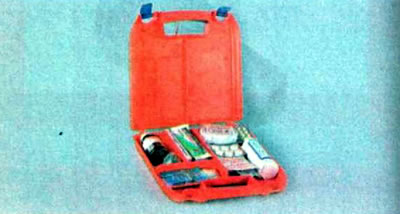
Be sure to place a fully stocked first aid kit in a visible place. Medicines must not be expired.
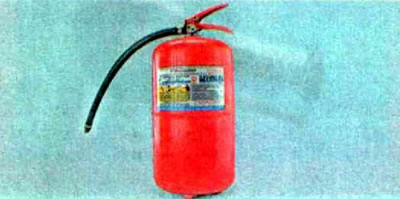
A working fire extinguisher should always be literally at hand, and not the one you carry in your car, but a special garage one with a capacity of at least 5 liters. When welding, keep a large garden watering can with water nearby.
Exhaust gases contain carbon monoxide (CO), or carbon monoxide, a substance that is extremely dangerous to life and has no smell or color. Therefore, before starting the engine, ensure intensive ventilation of the garage (just an open door is not enough). It is necessary to open the gate wide open or, in the cold season, ensure that the gases are discharged to the outside through a hose tightly placed on the exhaust pipe. When the engine is running, no people should be in the inspection pit.
Warning! When performing operations in the engine compartment with the engine running, be careful: the electric fan of the cooling system may turn on at any time!
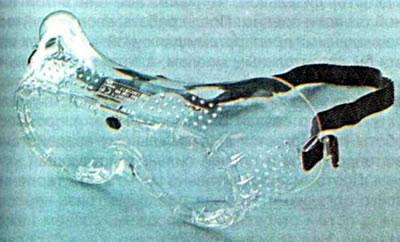
Clothing should be comfortable, not restricting movement, without hanging edges or straps that could get caught in rotating mechanisms. To protect your eyes when working under a car or using power tools, you will need glasses with plastic lenses or, better yet, a special transparent mask.
Gloves on your hands are also sometimes useful, and for some types of work (body repair, heavy duty removal) they are simply necessary.
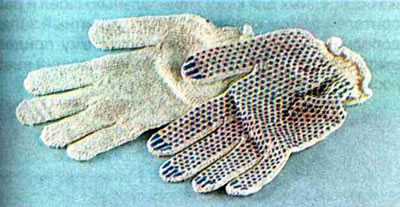
We advise you not to use household gloves, but to "splurge" on real auto mechanic gloves. These gloves are made of three layers of durable synthetic fabric and reliably protect your hands from injury and dirt. Regular knitted gloves do not provide this effect.
The skin under a mechanic's gloves breathes. The gloves are made in the style of a racing driver's gear, and thanks to the suede on the palms, they are comfortable not only for holding the tool, but also for driving a car. To be honest, sometimes it's a shame to get them dirty on oily parts, but if this happens, it's not a big deal: these gloves are easy to wash with detergent without losing their appearance. They serve for a long time and will reliably protect your hands.
For welding work, use canvas gloves and a special protective shield with a light filter. But rings, signet rings and watches are completely unnecessary.
Before starting work, remove the key from the ignition switch.
When performing work, do not rush, carefully preparing each operation.
Gasoline can ignite from anything: a passing spark, a lit match, when it hits a hot manifold, or during welding. Use extreme caution when handling any fuel system components.
Warning! The fuel in the fuel line is under pressure. Before starting work, it is necessary to release the pressure.
Even a small amount of spilled fuel should be removed immediately with a rag (which you will immediately take out the door) and ventilate the room. Until the smell of gasoline disappears, do not work with an open flame, turn electrical appliances on or off, or remove or put terminals on the battery terminals. Gasoline vapors are heavier than air, they can fill the inspection ditch and "patiently wait" for a cigarette butt to be thrown there. All of the above applies not only to gasoline, but also to various solvents, the concentration of which in the air can become dangerously high during painting work or when washing parts.
Smoking is prohibited in the garage, even if there is no direct contact with fuel or other flammable liquids during work.
Do not store "strategic" supplies of fuel, oil and paint, gas cylinders, or used rags in the garage.
Do not begin repairs until all vehicle components and coolant have completely cooled down. While the engine is hot, excess pressure remains in the cooling system, and splashing boiling water can burn your face and hands.
Tools and various devices must be of the highest possible quality and in good working order. The screw of the mechanical jack should not show any signs of noticeable wear, otherwise the jack may fall off. Open-end, adjustable and ratchet wrenches should only be used when no other tool is available or for minor connections. For "serious" bolts and nuts, you need tool heads with a reliable handle, or, in extreme cases, strong open-end wrenches. Pull the key towards you with great force to reduce the risk of injury if the key comes loose.
Do not start work if the car is raised only by a jack, use reliable factory-made stands.

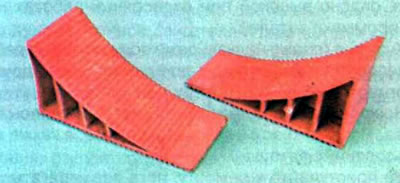
You cannot lift the car on several jacks at the same time. To lift the car, place the jack only under the special places on the body intended for this purpose, after making sure that they are strong and free of severe corrosion. Don't forget to put chocks under the wheels; if possible, additionally engage first gear or the parking brake.
If the car is on a jack, you cannot get into it, remove the engine or other heavy components: the balance of the car will change, and the car will fall. Use extreme caution when loosening and tightening heavy-duty fasteners when the vehicle is on stands. If people are working under the vehicle, no forceful actions must be taken from above, including sitting on the seats or placing or removing loads.
Do not lean over rotating parts while the engine is running or perform any work in the engine compartment or on the transmission.
Do not repair the ignition system while the engine is running (engine management) and do not touch the high voltage wires of the ignition coil (ignition module).
When working with electric welding on a car body, disconnect the battery and disconnect the wiring block from the electronic engine control unit.
A power tool with an operating voltage of 220 V must be reliably grounded if grounding is provided for by its design.
When replacing brake pads or clutch, do not use compressed air, as asbestos dust from worn pads is very harmful to the body.
When operating and charging, the battery releases hydrogen, which forms explosive detonating gas with atmospheric oxygen. To prevent it from "rattling", be careful: before connecting and disconnecting the charger clamps, vigorously wave a piece of cardboard over the battery to disperse the hydrogen. For the same reason, you cannot work with power tools or weld if the battery is charging in the garage.
The batteries are filled with electrolyte - an aqueous solution of sulfuric acid. It is poisonous and causes burns to the skin and mucous membranes, and in addition, it leads to corrosion of parts and burns through any fabric. Be careful! If electrolyte gets into your eyes, wash it off with plenty of cold water. If electrolyte gets on your skin, neutralize the acid with a solution of baking soda (not soap!). Clean water and soda should always be nearby if we are dealing with a battery.
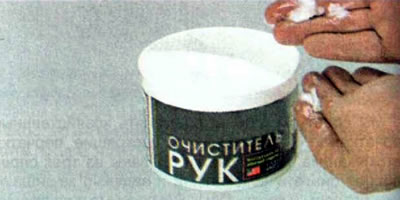
Avoid contact with skin not only with electrolyte, but also with any technical fluids, solvents, used motor oil, brake fluid, diesel fuel. All of them are harmful to one degree or another. After work, use special products for dry cleaning of hands or at least vegetable oil, and then be sure to wash your hands with warm, but not hot water and dishwashing liquid. It should be remembered that the skin of the hands of those involved in auto repair is exposed to extreme effects of petroleum products and other strong "chemistry" during the work. Therefore, it is not at all advisable to additionally test the patience of your body by washing off oily dirt with kerosene and then with washing powder. No, unless you don't mind wasting your hands, or you have spare ones in the glove compartment... But we don't think that's the case.
It is better to use a cream cleanser containing orange extract, aloe, lanolin and glycerin. This cream does not contain any mineral oils or solvents that are harmful to the skin, it has a pleasant smell, and additional cleaning properties are given to it by finely dispersed pumice powder, which removes ingrained dirt.
Food and a garage are incompatible, and it is difficult to maintain hygiene here.
When finished, dispose of the oily rags. Do not leave flammable liquids (including oil) in an open container.
When leaving the garage, do not forget to turn off all electrical appliances.