


1. Check the tire pressure.
2. Check the wheel fastening. We press vigorously on the side of the wheel with our foot, swinging it in the transverse direction. At the slightest suspicion of a loose wheel mount, check the tightening of the nuts. Wheel rims must be free of cracks and signs of deformation. The tires must not have any cuts, delaminations, tears, bulges ("hernias")...
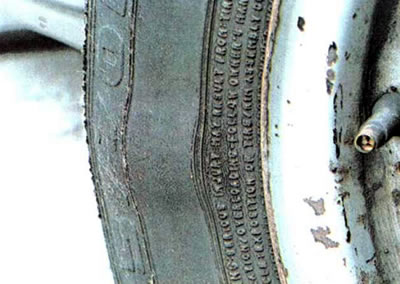
...and cord protrusions.
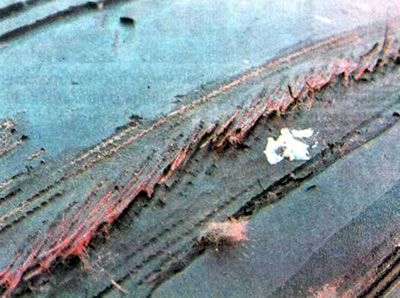
3. In the absence of mechanical damage to the tire, its suitability for use is determined by the height of the tread pattern. You can visually determine the tread height by the indicator protrusions in the grooves of the pattern.
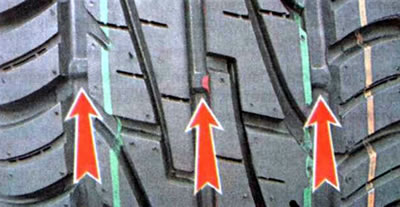
The lugs are 1.6 mm high. Once the tread height is equal to the lug height, the tire should be replaced.
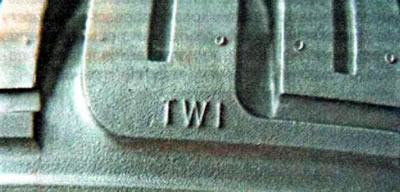
The indicators are located around the entire circumference of the tire at some distance from each other. We find them by the symbols in the form of the letters TWI or arrows "
 " on the sidewall of the tire.
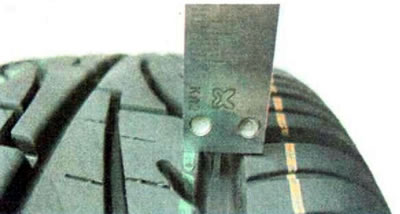
4. If you suspect that the tire tread is worn evenly at the edges and in the middle, check the degree of wear using a caliper with a depth gauge.
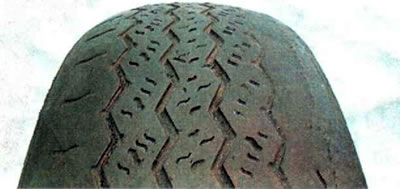
Accelerated wear of the middle part of the tread indicates that the tire is being used with increased pressure, while the edges of the tire indicate that it is being used with decreased pressure.
Note: When the car is moving, the air in the tires heats up, and the pressure can increase by 20-30 kPa. Therefore, you should check the pressure and pump up the wheels only after several hours of parking - preferably in the morning before driving.
Rapid wear on the inside or outside of the tread indicates the need for wheel alignment.
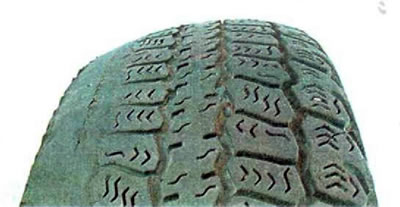
Intensive wear of one of the wheels, possibly caused by deformation of the suspension elements or the vehicle.
5. Small cracks on the sidewall of the tire...
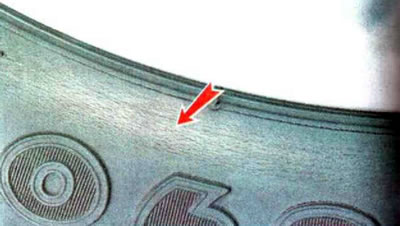
...or on the tread indicate the aging of the rubber. In this case, the tire must be replaced.
6. The appearance of vibration felt on the body or steering wheel when the car is moving at a constant speed of over 80 km/h may be a consequence of an imbalance in one of the wheels. To identify the cause, we check the wheel balancing at a tire shop. If the vibration is caused by a deformed disc, damaged tire or uneven wear, replace the tire or disc.
[The source of the article is available on the website chevyman]