


The most common types of screws in a car are:
- phillips head pan head screw 1;
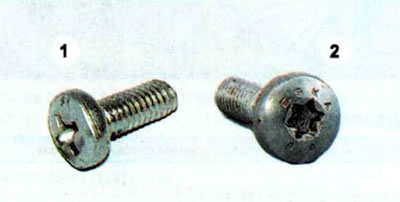
- hexagonal socket head cap screw (TORX) 2;
- hexagon socket head cap screw (compared to screws with a semi-circular head, a screw with a cylindrical head can be tightened with even greater torque due to the larger contact surface with the key) 3;
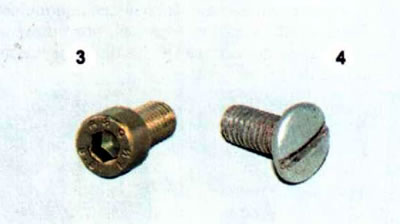
- screws with a semi-circular head and a flat slot 4 are still found.
Bolted connections can be larger than screw connections and therefore can withstand greater loads.
Bolts are available with a 5-sided hex head, and with a 6-sided and 12-sided TORX head.
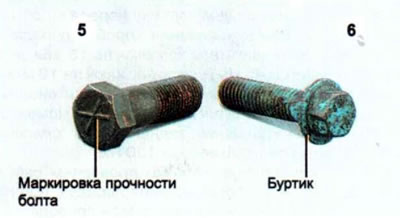
Also, hexagon head and flange bolts B can be used in threaded connections. The flange can be either smooth or serrated (the notches perform a locking function).
Self-tapping screws (self-tapping screws) are used to connect body parts and its upholstery.
The most convenient to use are self-tapping screws with a pointed tip.
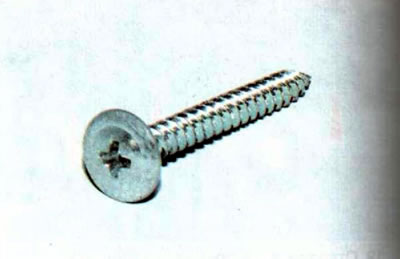
These screws "find" their hole more easily.
Self-tapping screws with a drill bit on the end are often used to attach additional equipment.
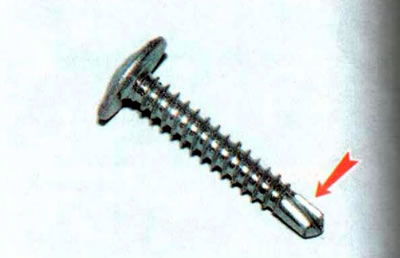
These screws can be driven into metal without pre-drilling. However, in this case it is more convenient to use an electric screwdriver. Before this, metal parts should be "punched".
Self-tapping screws come with a hex head and a flange. Can be used in connections of parts that are frequently exposed to dirt. These screws can be easily removed with socket wrenches, which are more reliable to use than screwdrivers.
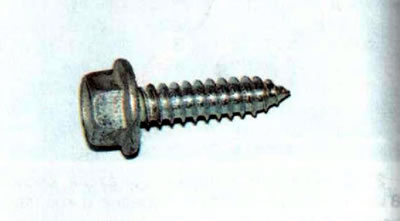
There are screws with a combination head (slot and external hex) — it is more practical to unscrew such screws with a wrench, since in this case there is less chance of the head being "torn off".
The nuts of some vehicle components are self-locking with a nylon ring (especially the nuts of the suspension parts connections)...
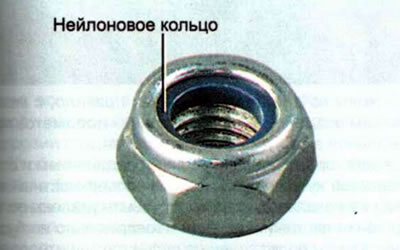
...or a belt to secure it.
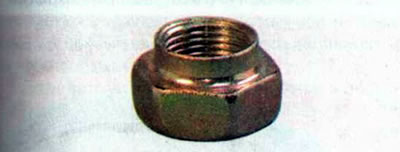
These are single-use nuts, as they lose their locking properties when used again.
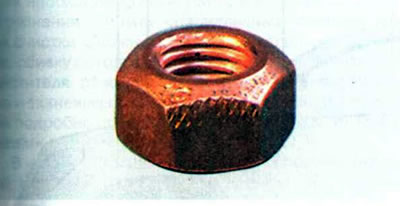
There are also nuts made of brass or copper-plated steel. These nuts are used in "hot" connections (exhaust manifold with exhaust pipe).
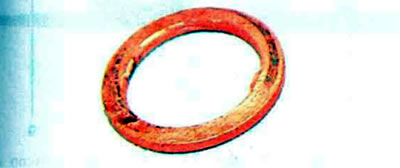
Washers can be used as sealing elements. For sealing hydraulic systems, annealed copper washers are typically used.
They also prevent damage to parts when tightening. In addition, washers can be used as locking elements for threaded connections. These washers include spring washers (grover washers) 1...
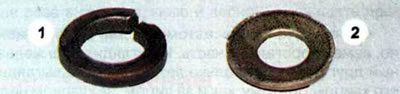
...and conical spring washers 2.
When assembling/disassembling threaded connections, it is necessary to adhere to simple rules:
- before unscrewing the screw, clean the slot or head of the screw from dirt, thereby preventing the screw slots from being stripped, also clean the protruding part of the connection thread...
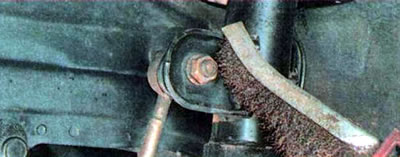
...and treat with penetrating anti-corrosion lubricant;
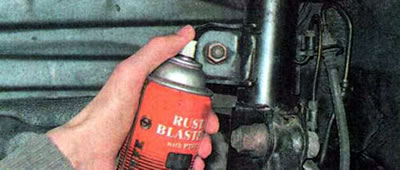
- before assembling threaded connections for their subsequent disassembly, lubricate them with a special lubricant. The exception is connections with nuts that have a nylon ring, since in this case the grease can partially dissolve the ring and the nut will lose its locking properties;
- after assembling screw threaded connections in places exposed to dirt, coat the screw splines with plasticine. This measure will protect the screw slot from corrosion and make it easier to unscrew later.
Thread locking compound is used in critical threaded connections.
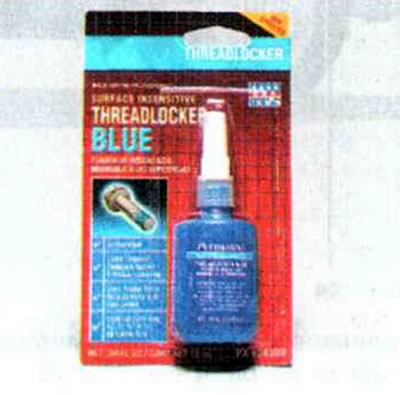
This product prevents self-loosening and protects the thread from corrosion.