


Contents: How to remove power steering pump… ↧ Installation procedure ↧ Power Steering Supply Hose Removal… ↧ Installation procedure ↧
How to remove power steering pump hoses and pipes
1. Pump out the fluid from the power steering reservoir.
2. Remove the front wheels. See section 2E, "Tires and Wheels".
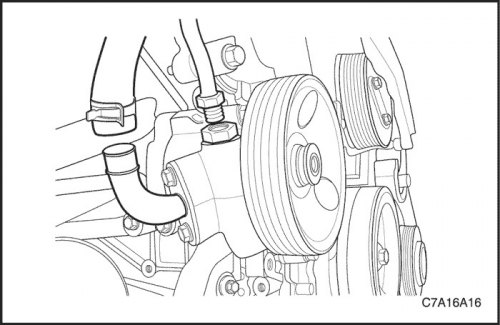
3. Disconnect the high pressure pipe and feed line hose from the inlet and outlet fittings of the power steering pump.
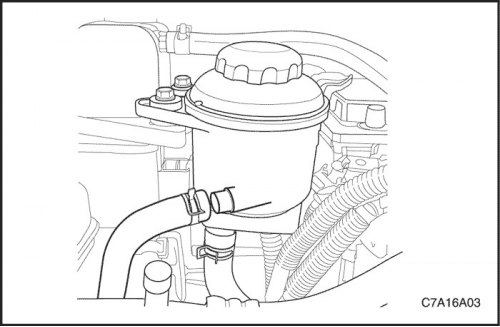
4. Remove the fluid reservoir screws.
5. Disconnect the return tube from the fluid reservoir.
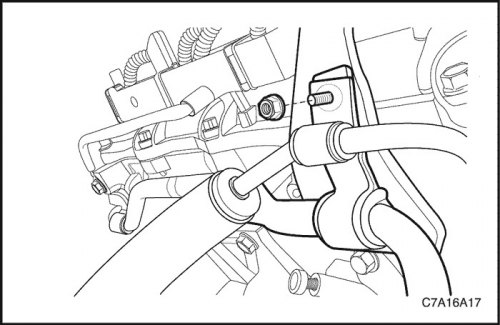
6. Remove the high pressure pipe bracket retaining bolt near the rear of the cylinder head.
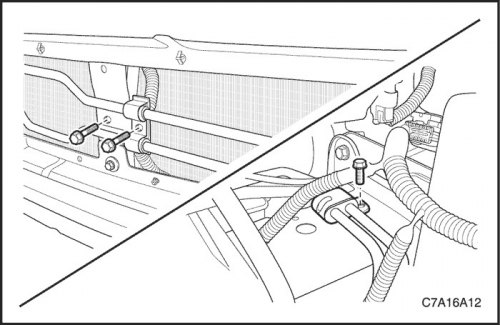
7. Remove the front bumper trim. See section 9O, "Bumpers and Fascias".
8. Remove the mounting bolts of the return cooling pipe bracket bracket in front of the radiator grille.
9. Loosen the mounting bolt of the cooling return pipe bracket bracket under the left headlight.
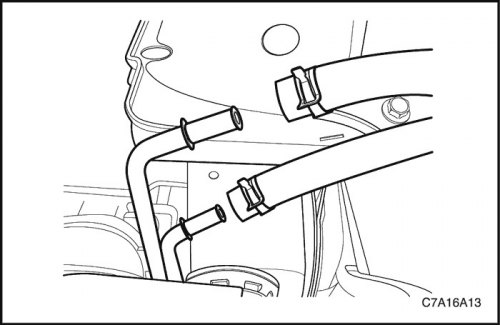
10. Disconnect the coolant return hoses from the tubes near the lower left side of the front bumper.
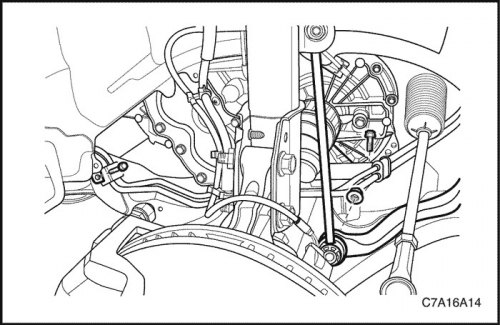
11. Remove the left front engine shield. See section 9R, "Front End of Body".
12. Remove the mounting bolts of the cooling return pipe bracket bracket near the frame.
13. Remove the nut from the stabilizer bar and lift the stabilizer bar back.
14. Remove the front left drive axle shaft. See section 3A, "Front Drive Axle".
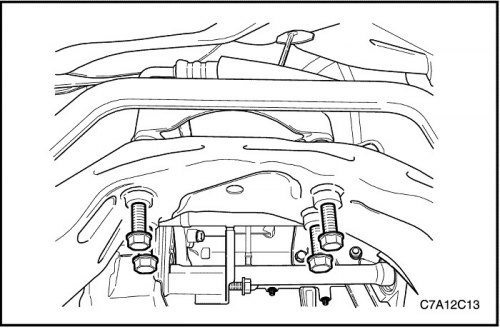
15. Remove the front exhaust pipe. See Section 1G3. Engine exhaust system - HFV6 3.2 L.
16. Remove the rear mount assembly of the transmission with the final drive. See section 1C2, "Engine Mechanical System - HFV6 3.2L".
17. For all-wheel drive, remove the transfer case See Section 5D "Transfer Case"
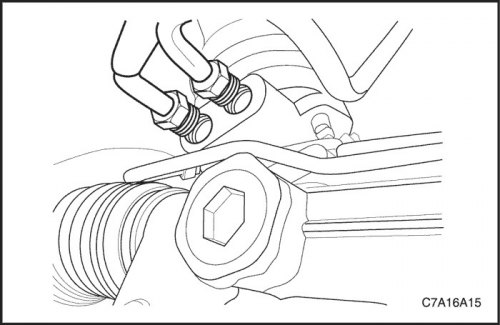
18. Disconnect the high pressure pipe from the power steering inlet fitting.
19. Disconnect the return line tube from the power steering outlet fitting.
20. Remove the return pipe and high pressure pipe from the vehicle.
Installation procedure
1. Route the high pressure line from the steering pump to the power steering gear.
2. Route the return line from the fluid reservoir to the power steering gear.
3. Raise the vehicle and place it on the supports provided for this purpose.
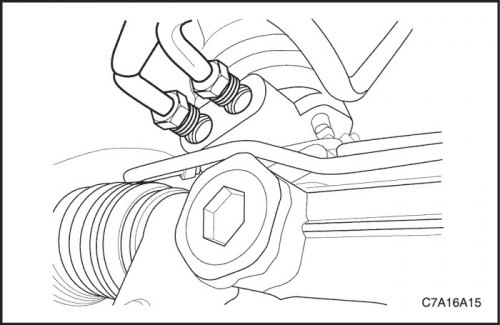
4. Connect the return line to the power steering outlet fitting.
Tighten
Tighten the return pipe fitting to 28 N·m (21 ft·lbs).
5. Connect the high pressure line to the power steering inlet fitting.
Tighten
Tighten the high pressure hose fitting to 28 Nm (21 ft·lbs).
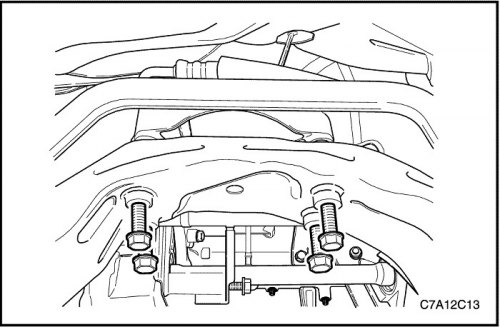
6. For all-wheel drive, install a transfer case. See Section 5D "Transfer Case"
7. Install the rear mount assembly of the transmission with the final drive. See section 1C2, "Engine Mechanical System - HFV6 3.2L".
8. Install the front exhaust pipe. See Section 1G3. Engine exhaust system - HFV6 3.2 L.
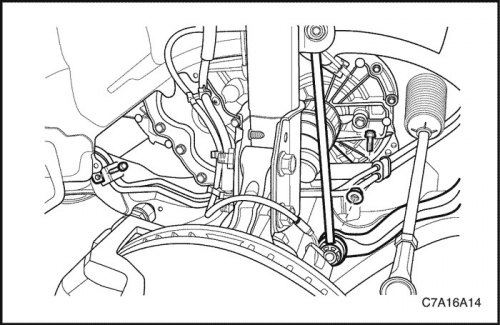
9. Install the front left drive axle shaft. See section 3A, "Front Drive Axle".
10. Install the stabilizer bar using the nut.
Tighten
Tighten the stabilizer bar to stabilizer strut mounting nut to 65 N·m (48 ft·lbs).
11. Install the coolant return pipe bracket bracket mounting bolts near the frame.
Tighten
Tighten the return pipe mounting bolts to 10•m (7ft·lbs).
12. Install the left front engine shield. See section 9R, "Front End of Body".
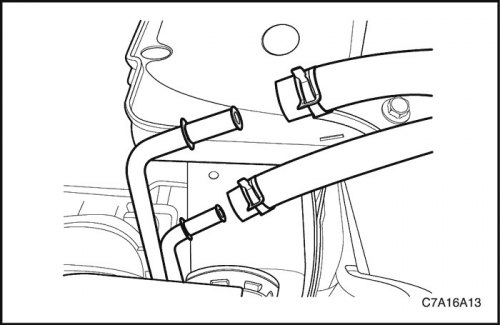
13. Connect the return cooling hoses to the tubes near the left lower side of the front bumper.
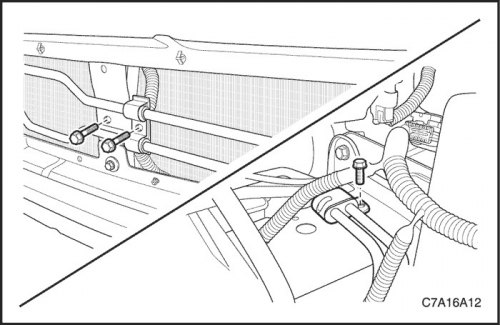
14. Install the coolant return pipe bracket bracket retaining bolt under the left headlight and in front of the radiator grille.
Tighten
Tighten the return pipe mounting bolts to 10•m (7ft·lbs).
15. Install the front bumper trim. See section 9O, "Bumpers and Fascias".
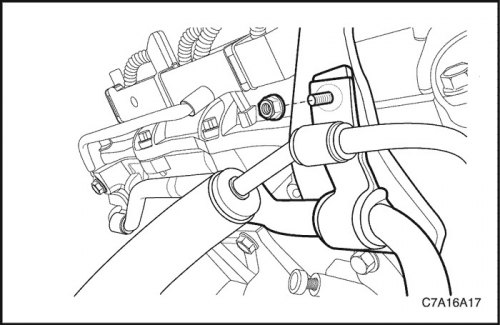
16. Install the high pressure pipe bracket retaining bolt near the rear of the cylinder head.
Tighten
Tighten the high pressure pipe mounting bolts to 10•m (7ft·lbs).
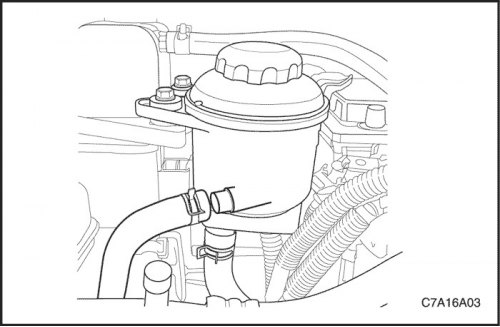
17. Connect the return tube to the fluid reservoir.
18. Install the fluid reservoir using bolts.
Tighten
Tighten the fluid reservoir bolts to 9 N·m (80 lb-in).
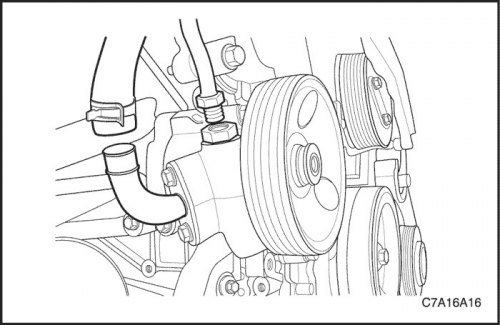
19. Connect the high pressure pipe and the feed line hose to the inlet and outlet ports of the power steering pump.
Tighten
Tighten the high pressure hose fitting to 28 Nm (21 ft·lbs).
Note: Always use only DEXRON®-IID power steering fluid for refueling or complete fluid changes. The use of unsuitable fluids can cause damage to the hoses and seals, resulting in leaks.
20. Install the front wheels. See section 2E, "Tires and Wheels".
21. Fill the reservoir with power steering fluid.
22. Check for leaks. If a leak is found, repair the cause and bleed the system. See "Bleeding the power steering system" in this section.
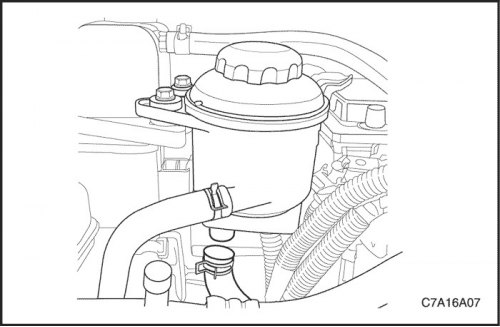
Power Steering Supply Hose Removal Procedure
1. Pump out the fluid from the power steering reservoir.
2. Remove the fluid reservoir screws.
3. Disconnect the supply hose from the lower fitting of the fluid reservoir.
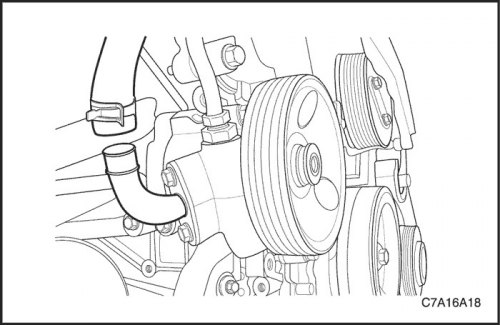
4. Remove the front wheels. See section 2E, "Tires and Wheels".
5. Disconnect the feed hose from the power steering pump inlet fitting. Use a rag to prevent fluid from spilling.
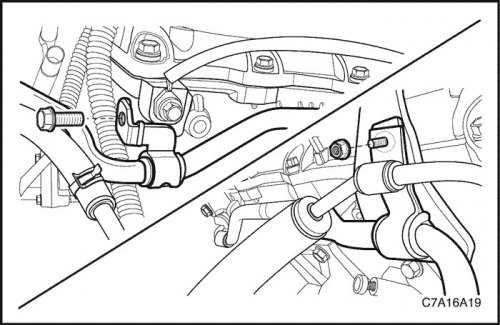
6. Loosen the supply line tube bracket mounting bolts.
7. Remove the power steering fluid supply hose from the vehicle.
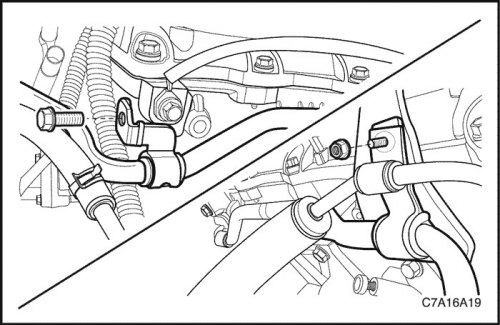
Installation procedure
1. Install the power steering supply hose.
2. Install the feed line tube bracket mounting bolts.
Tighten
Tighten the feed line tube bracket mounting bolts to 10 Nm (7 ft·lbs).
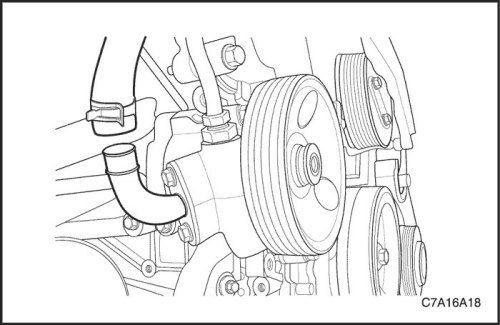
3. Connect the supply hose to the lower fitting of the fluid reservoir.
4. Install the front wheels. See section 2E, "Tires and Wheels".
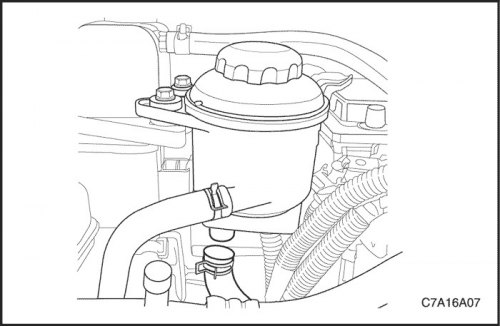
5. Connect the supply hose to the lower fitting of the fluid reservoir.
Note: Always use only DEXRON®-IID power steering fluid for refueling or complete fluid changes. The use of unsuitable fluids can cause damage to the hoses and seals, resulting in leaks.
6. Install the fluid reservoir using bolts.
Tighten
Tighten the fluid reservoir bolts to 9 N·m (80 lb-in).
7. Fill the reservoir with power steering fluid.
8. Check for leaks. If a leak is found, repair the cause and bleed the system. See "Bleeding the power steering system" in this section.