


WARNING: Do not smoke or use open flame when refueling.
Chevrolet Aveo vehicles are designed to run on unleaded gasoline with an octane rating (RON) of at least 95. It is permissible to use gasoline with an octane rating lower than 95, but only in extreme cases, if it is impossible to refuel the car with gasoline with an octane rating of 95 or higher during the trip. In such cases, no special engine adjustment is required. When refueling with gasoline with an octane rating lower than 95, the engine performance is reduced. If you do refuel with gasoline with a low octane rating, do not subject the engine to heavy loads, as this may lead to serious damage. Fill up with the recommended fuel as soon as possible.
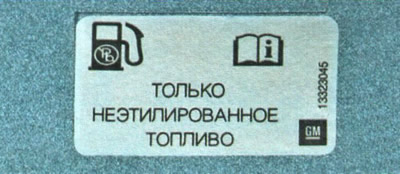
WARNING: Only use unleaded gasoline in your vehicle. Even a small amount of leaded gasoline "poisons" the active mass of the catalytic converter of exhaust gases and leads to the failure of the converter.
At the tips of the filling guns of the columns for leaded gasoline (old-style columns with arrow indicators) had an increased diameter. Therefore, to prevent accidental filling with such gasoline, the diameter of the filler neck is made smaller than that of the nozzles of these dispensers.
USEFUL TIPS: If the gas station where you were planning to fill up your car has just emptied fuel from a tanker, it is better to look for another pump or come back in a few hours. The fact is that not all pumps are equipped with good cleaning filters and it takes time for all the dirt in the fuel to settle to the bottom of the gas station tank. Fill up your car at trusted gas stations. The power and durability of the engine directly depend on the quality of the fuel.
Any fuel that gets on the body parts should be wiped off immediately with a clean cloth. When refueling, do not use plastic canisters or containers, as there is a risk of sparks due to the accumulation of static electricity.
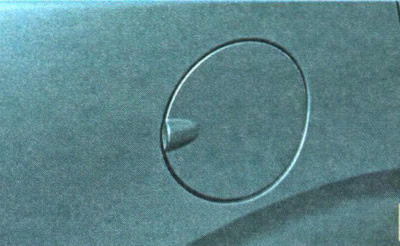
The fuel tank cap is located on the right rear fender of the body under the hinged hatch cover.
1. Stop the engine.
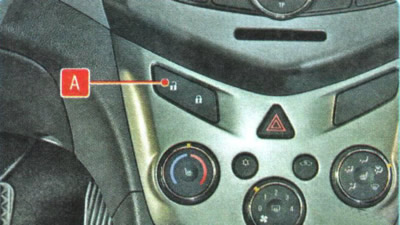
2. To unlock the fuel filler pipe door lock, press button A on the instrument panel...
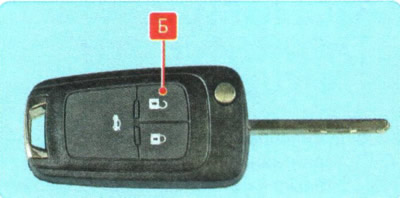
3. ...or button B on the ignition key remote control.
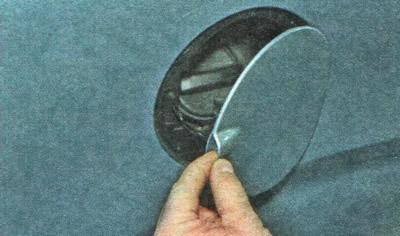
4. Pry up the edge and open the filler pipe hatch cover completely.
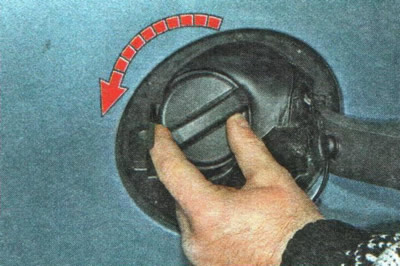
5. Turn the fuel tank filler cap counterclockwise and remove the cap.
WARNING: Since fuel vapors can create increased pressure inside the tank, loosen the filler cap slowly. This will allow the pressure inside the tank to equalize with the atmospheric pressure. If you see steam coming out from under the cap or hear a hissing sound, stop loosening the cap and wait until these sounds stop. Otherwise, fuel may spill out of the tank.
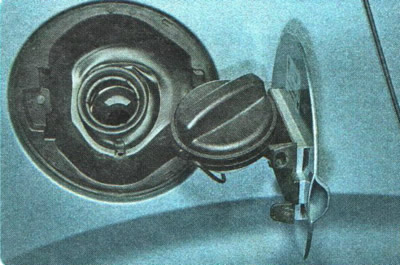
6. Hang the cork on the hook on the inside of the lid.
NOTE: To prevent loss, the plug is attached to the body with a plastic tie. The tie will also prevent the hatch cover from being closed unless the plug is screwed into the filler neck.
7. Insert the nozzle of the fuel dispenser into the filler neck of the fuel tank and fill the car. If you are filling the car from a canister, then before filling, insert a funnel into the filler neck of the fuel tank and pour gasoline from the canister.
WARNING: Do not refuel the vehicle after the fuel valve has shut off automatically or after fuel appears in the filler neck of the fuel tank when refueling with a valve that is not equipped with an automatic shut-off system. Failure to follow this recommendation may result in excess fuel spilling out of the fuel tank when the vehicle is parked.
8. After filling, screw the cap clockwise until it clicks. The cap is equipped with a torque limiter, so it will scroll after the click.
9. Close the lid and remove any fuel spills with a wiping cloth.