


Two oxygen concentration sensors are installed in series in the engine exhaust system. First sensor (control) installed in the exhaust manifold before the catalytic converter.
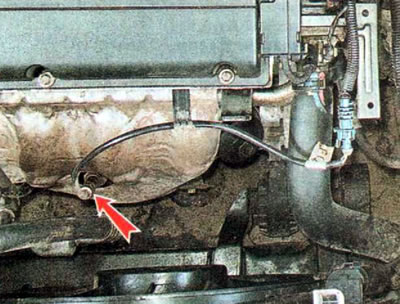
Based on its data, the ECU adjusts the fuel-air mixture.
Second sensor (diagnostic) installed in the exhaust pipe after the catalytic converter.
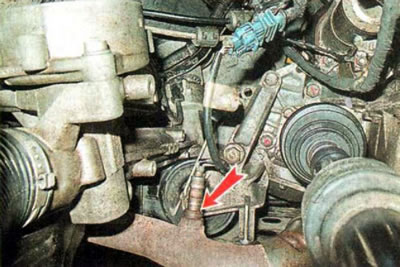
Based on the sensor signals, the ECU evaluates the degree of exhaust gas purification and ensures control of the efficiency of the catalytic converter. To increase operating efficiency and reduce the time it takes to warm up to operating temperature, heating elements are built into the sensors.
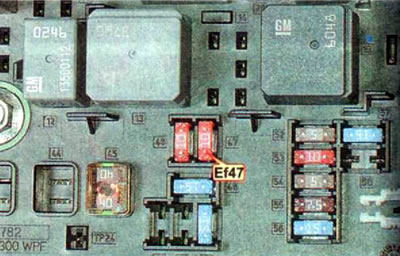
Note: The sensor can be tested by measuring the resistance of the heating element (conclusions 1 and 3), which should be within 3-20 Ohms at 20°C. A faulty heating element in the sensor may cause fuse Ef47 in the fuse and relay box in the engine compartment to blow.
If the oxygen concentration sensors are faulty, the ECU switches to a backup operating program, the engine management system malfunction indicator lamp lights up on the instrument panel, and a working sensor is determined during diagnostics of the engine management system.
Warning. The presence of lead silicon compounds in the exhaust gases can cause oxygen concentration sensors to fail. Therefore, the use of leaded gasoline is not permitted (it contains lead compounds). When repairing an engine, you should also not use a sealant with a high silicone content (silicon compounds), the vapors of which can enter the cylinders through the crankcase ventilation system and then into the exhaust system. You should use a sealant that the manufacturer states on the packaging that the sealant is safe for use with oxygen concentration sensors.