


2. Start the engine and check whether the oil pressure is low or normal using the pressure gauge on the car or the oil level indicator light. Listen to the sounds of the valves operating in sequence or to their knocking.
3. Check the following:
- Is the oil diluted with moisture or mixtures of unburned fuel?
- Is the engine oil viscosity appropriate for the expected temperature?
- Is the oil pressure gauge sensor accurate and in good condition?
- Is the oil pressure gauge accurate and in good working order?
- Is the oil filter clogged?
- Is the oil filter bypass valve working properly?
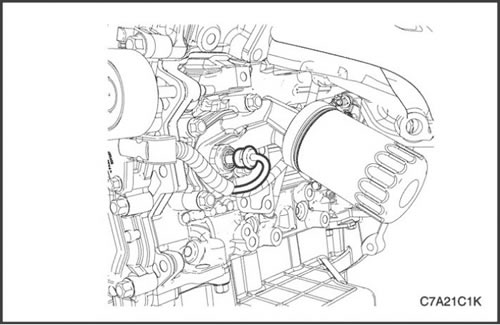
4. Remove the oil pressure sensor from the oil filter adapter.
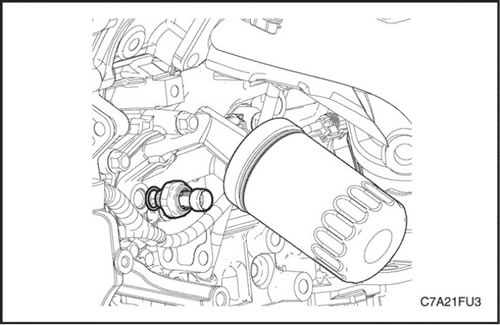
- Install an oil pressure gauge adapter and oil pressure gauge in place of the oil pressure sensor.
- Start the engine and then allow the engine to reach normal operating temperature.
- Measure the engine oil pressure at idle speed.
- The minimum oil pressure should be approximately 69 kPa (10.00 psi) at idle speed and 138 kPa (20.01 psi) at 2000 rpm.
5. If the engine oil pressure falls below the minimum specification, check the engine, paying attention to the following possible causes:
- The oil pump is worn out or dirty
- The oil pump safety valve has failed
- The oil pump protective cover is loose, clogged or damaged
- Excessive bearing clearance
- Cracked, porous or blocked oil passages
- The oil passage plugs in the engine block are missing or incorrectly installed
- The valve lifters are broken
- The oil filter adapter is not properly secured
6. After checking the oil pressure, remove the oil pressure gauge and adapter, then set the oil pressure sensor to 13 N·m (115 lb-in).
7. Check the oil level. If necessary, add oil up to the MAX mark.