


Engine
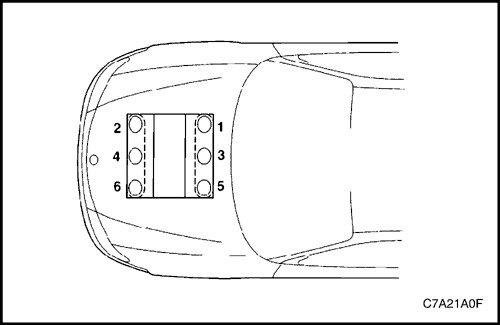
The V6 engine is a V-shaped engine with a closed V cylinder block made of die-cast aluminum alloy and having an extended skirt, cast iron cylinder liners, an internally balanced crankcase, full-size water jackets and main bearing caps secured with six bolts each.
The cylinders form two rows of three cylinders each, which are positioned at an angle of 60 degrees to each other. The rear row consists of cylinders 1-3-5 (ROW 1), and the front row of cylinders 2-4-6 (ROW 2).
The cylinders fire in the order 1-2-3-4-5-6. Each aluminum cylinder head has hardened valve seats and four valves per cylinder: two intake and two exhaust. Two camshafts are used to actuate the valves (two camshafts located on top) per row of cylinders - one for the intake and one for the exhaust valves. Smooth adjustment of the valve timing is provided by four drives installed on the front ends of all camshafts.
The crankshaft is made of forged steel. The crankshaft position sensor uses a breaker gear pressed onto the rear end of this shaft. The connecting rods are made of powder metal, and the connecting rod caps are obtained by chipping during the manufacturing process. This ensures a stronger connection between the rod and the cap, which visually has no joint line.
Cleanliness and care
An automobile engine is a combination of many machined, honed, polished, and lapped surfaces with tolerances measured in ten-thousandths of a millimeter. Cleanliness and care are important when servicing engine parts. A thick layer of machine oil is applied to the rubbing surfaces during assembly to protect and lubricate the surfaces during the initial period of operation. Proper cleaning and protection of machined surfaces and rubbing parts is part of the repair procedure. It is considered standard repair shop practice, even if not specifically stated.
After valve train components are removed for servicing, they should be maintained in proper order. They should be installed in the same locations and with the same mating surfaces as before removal. Before performing major work on the engine, the battery cables should be disconnected. Failure to disconnect the cables may result in damage to the cable harnesses or other electrical components.
Maintenance without dismantling from the engine
Caution! Disconnect the negative battery cable before removing or installing any electrical components or when tools or equipment may come into contact with exposed electrical terminals. Disconnecting the cable will help prevent personal injury and mechanical damage to the vehicle. The ignition must be locked unless otherwise noted.
Note: When removing the air filter, it is necessary to close the intake port. This measure will protect against accidental entry of foreign material that can enter the cylinder through the intake port and cause severe damage when starting the engine.