


General information
The engine electrical system consists of ignition, starting and charging subsystems (see illustration). In connection with that. since the functions of these systems are closely related to the engine, they are described separately from the rest of the electrical devices of the car, such as lighting devices, instrument panel, etc., which are described in chapter 12.
Precautionary measures
When working on the electrical system, observe the following rules:
- a) When working on the engine's electrical system, precautions must be taken to avoid damaging the semiconductor devices (diodes and transistors), and also to avoid injury.
- b) Avoid leaving the ignition on for a long time when the engine is not running.
- c) Do not disconnect the battery cables while the engine is running.
- d) If the engine is started from an external battery, the batteries must be connected "plus to plus" and "minus to minus" (see subsection "Starting the engine from an additional battery" at the beginning of this guide).
- e) When working on the electrical system, first disconnect the negative battery terminal. Disconnection should be carried out in accordance with the recommendations below.
Before performing the procedures described in this chapter, it is recommended that you familiarize yourself with the engine electrical system-related items in the subsection "Safety first!", given at the beginning of the manual.
Disconnecting the battery
There are various systems on the vehicle that require a constant supply of power to ensure their continuous operation (for example, clock, car radio, electric windows, central locking, etc.), and for storing various information in memory blocks. When disconnecting the battery, please observe the following requirements to prevent accidental disconnection of devices and loss of electronic memory data.
- a) Before disconnecting the battery on a vehicle with electric door locks, remove the key from the ignition switch and keep it with you, which will eliminate the possibility of leaving it in the vehicle, the central locking of which will be locked when the power is subsequently connected.
- b) On vehicles equipped with an engine management system, after disconnecting the battery, the parameters stored in the microprocessor memory are lost; such data includes engine idle parameters, fuel injection operating parameters and fault codes present at the time of disconnection (see chapter 6). To restore normal engine control mode, it is necessary to program the listed data into the control unit. After connecting the battery, the parameters will be automatically loaded into the electronic memory of the unit, but before this, the engine operation may be characterized by a decrease in performance characteristics and be accompanied by such phenomena as a drop in crankshaft speed and unstable operation at idle speed. To reprogram the control unit, you need to start the engine and warm it up at idle speed to normal operating temperature. After this, it is necessary to increase the speed to 1200 min⁻¹ and keep the power unit in this mode for about 2 minutes. After this, it is necessary to drive the car about 7 km, changing the load on the engine and its speed in the entire operating range. This will reprogram the engine control unit.
To avoid the problems described above, you should use storage devices. The method of using such a device depends on its type. Typically, the storage device is connected to the cigarette lighter socket and to the backup battery. After this, you can disconnect the battery. This device maintains the voltage in the circuit required to save the radio security codes and parameters in the electronic memory of the electronic control unit. The memory device ensures continuous operation of the electronic clock. These elements do not fail to operate even if a short circuit occurs in the engine's electrical system during repairs or maintenance.
Caution 1: Since the memory device maintains voltage in the circuits after the battery is disconnected, make sure that the circuit being serviced is open before starting work.
Caution 2: If you plan to work near SRS components, do not connect any storage devices when disconnecting the battery, as this may cause the air bag to deploy unexpectedly, which could result in injury.
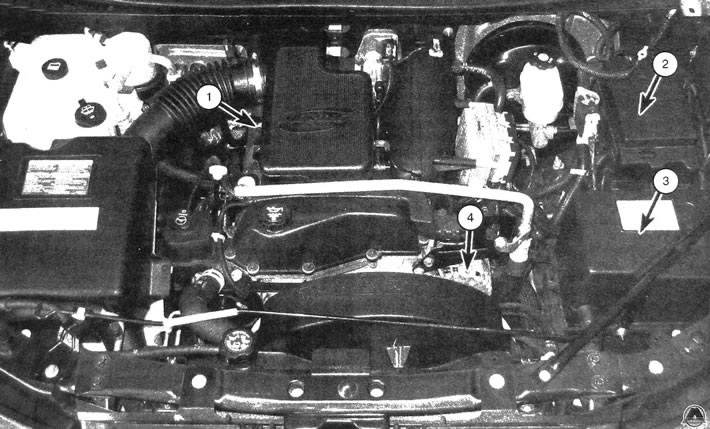
1.1. Elements of a typical engine electrical system: 1. Ignition coils (located under the intake air duct resonator); 2. Distribution block located in the engine compartment; 3. Battery; 4. Generator
Original version of the article on the website chevyman