


Contents: Muffler and pipes ↧ Catalytic converter ↧
Warning: inspection and repair of exhaust system components is only possible after a certain period of time has passed since the engine has been turned off, as this is necessary for them to cool down completely. In addition, before performing work under the vehicle, make sure that the supports are securely installed.
1. The exhaust system consists of exhaust manifolds, catalytic converters, mufflers, resonators, rear exhaust pipes, as well as connecting pipes, brackets, hangers and clamps. The system is suspended from the bottom side on rubber hangers. If one of the elements is installed incorrectly, increased noise occurs during engine operation, as well as vibration that spreads to the car body.
Muffler and pipes
2. Perform periodic maintenance of the system to ensure its quiet and safe operation. Inspect the system whenever the vehicle is raised. Identify damaged or deformed components, loose welds, holes, loose joints, as well as excessive exposure to corrosion or other defects that cause exhaust gases to enter the vehicle interior (see illustrations). Also, when inspecting the exhaust system components, inspect the catalytic converter (see below). Do not restore damaged system components - replace them with new parts.
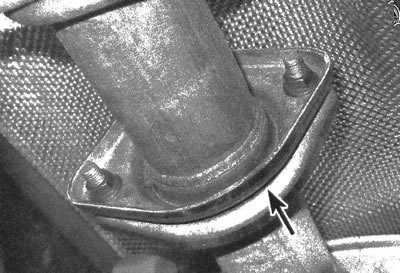
15.2a. Inspect the exhaust system connections for signs of blow-by
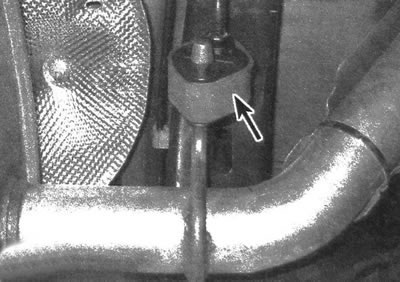
15.2b. Inspect the rubber hangers for signs of damage
3. If the system components have been exposed to extreme levels of corrosion, they will probably need to be replaced. The easiest way to disconnect such parts is to cut them off with a welding machine by contacting a specialized workshop. To save money, you can disconnect the system elements yourself. If welding equipment is not available, you can use a regular hacksaw. A pneumatic tool for cutting metal will also work. If you plan to work on the exhaust system yourself, purchase protective glasses and gloves.
4. Below are some principles to follow when repairing your exhaust system:
- a) When removing system components, proceed from the rear to the front of the vehicle.
- b) Before separating the elements, treat their fasteners with penetrating lubricant.
- c) During subsequent assembly, replace gaskets, hangers and clamps.
- d) When installing, treat the threaded fasteners of the system with an anti-seize agent.
- e) When assembling the system, ensure that there is sufficient space between its parts and the bottom of the vehicle to prevent overheating of the floor in the passenger compartment and the resulting damage to the carpet. Pay special attention to the catalytic converter and heat shield.
Catalytic converter
Warning: The converter heats up to extremely high temperatures when in operation and maintains this temperature for several hours after the engine is turned off. Before touching the converter, you must be absolutely sure that it has cooled down.
Note: Additional information about the catalyst is provided in Chapter 6.
5. The catalytic converter heat-insulating shield should be periodically inspected for cracks and dents. It is necessary to ensure that all shield fasteners are present and securely installed.
6. Inspect the converter for cracks or other signs of damage.
7. If it is necessary to replace the converter, please refer to Chapter 6.