


Contents: Removal ↧ Installation ↧
Warning: See warning in subsection 1.
Note: When replacing elements of the receiver/injector module, it is necessary to take into account the serial numbers of the injectors. Each nozzle has an individual flow capacity, so these elements are not interchangeable.
Removal
1. Relieve fuel system pressure (see subsection 2).
2. Disconnect the negative battery cable.
3. Remove the air intake duct (see chapter 2A).
4. Before removal, clean the area around the receiver/injectors with a degreaser, then blow it with compressed air to dry.
Caution: Wear safety glasses.
5. Disconnect the fuel pressure regulator vacuum line, injector wiring harness connector (see illustration 11.7a) and fuel line couplings (see subsection 4).
6. Unscrew the mounting bolts, then carefully and evenly apply force to the receiver and disconnect it from the cylinder head (see illustration).
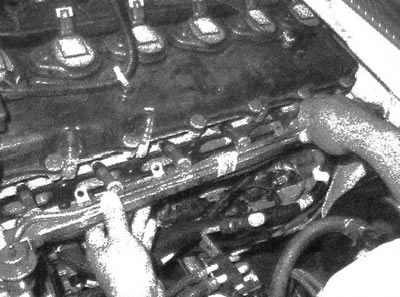
14.6. The receiver and injectors are removed as an assembly. After this, you can disconnect each injector separately
7. To remove, disconnect the electrical connector from the injector.
8. Remove the retainer and disconnect the injector from the fuel receiver (see illustration). Remove and discard the O-rings and seals.
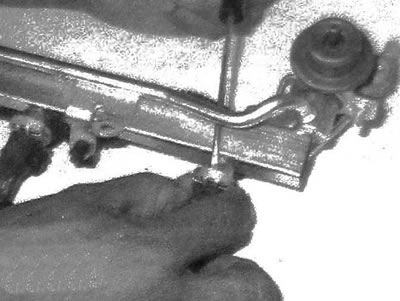
14.8. Before removing the injector, it is necessary to remove the retainer
Note: When replacing one of the injectors or its sealing ring, it is recommended to remove the remaining injectors and replace their sealing rings (each nozzle has two sealing rings).
Installation
9. Replace the injector sealing rings. Lubricate the O-rings with clean engine oil and press the injector into its original location on the receiver.
10. Install the injector retainers.
11. Inspect the injector holes in the cylinder head and clean them if necessary, then lubricate the injector sealing rings with clean engine oil.
12. The rest of the installation procedure is carried out in the reverse order of removal. Tighten the receiver mounting bolts to the required torque.
13. After complete assembly, turn the ignition key to the ON position, but do not engage the starter (this will turn on the fuel pump for two seconds, resulting in the creation of working fuel pressure in the fuel lines and fuel equipment components). Turn the key to the ON and OFF positions several times, then check for fuel leaks through the fuel lines, receiver and injectors.