


Recommendations are also provided regarding all stages of repair, from equipment preparation and purchasing tools and spare parts to a detailed step-by-step description of the procedures for removing, inspecting, repairing and installing engine components.
The procedures described in the following subsections assume that the engine has been removed from the vehicle. Removal, inspection, repair and installation of engine components installed in a vehicle are described in part A this chapter.
This section of the chapter provides the specifications needed to check the oil pressure and measure the compression. For further technical data and tightening torque values please refer to part A this chapter.
Sometimes it is not easy to determine whether a major overhaul is appropriate.
The fact that high mileage is not always an indicator of the need for a major overhaul, and low mileage is not a reason not to carry out repairs is probably the main factor that requires consideration. An engine that has had its oil and filter changed regularly and other necessary maintenance performed should operate reliably for many thousands of kilometers. On the contrary, an unkempt engine may require major repairs with very low mileage.
Excessive oil consumption indicates that the piston rings, valve seals and/or guides require inspection. Make sure that oil leakage through gaskets and seals has not led to the mistaken belief that rings and/or guides are worn. To determine the probable cause of the problem, perform a compression test (see subsection 3) or check the tightness of the cylinders (see subsection 4).
Check the oil pressure by connecting a pressure gauge to the oil pressure sensor port and compare it with the value given in the specifications in this chapter (see subsection 2). If the pressure is extremely low, the engine bearings and/or oil pump are probably worn out.
Loss of power, rough running, knocking and metallic grinding sounds, excessive valve train noise and high fuel consumption also indicate the need for a major overhaul, especially if these factors occur simultaneously. If the faults are not corrected during maintenance, then major repairs are inevitable.
Major repairs include restoration of all internal elements until the engine acquires the parameters of a new power unit. During a major overhaul, piston rings are replaced and engine cylinders are bored to repair dimensions (boring and honing) (see illustrations 1.2 and 1.3).
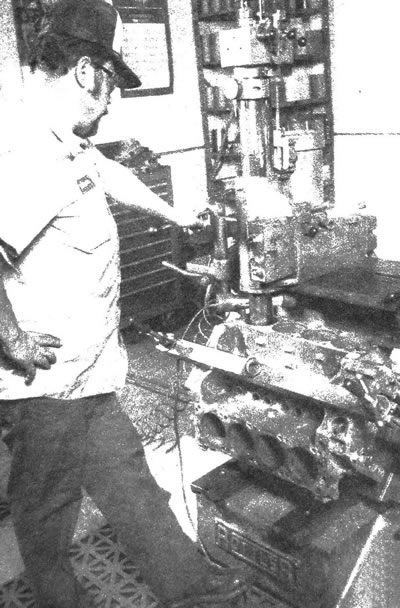
1.2. The mechanic bores the engine cylinders on a special machine
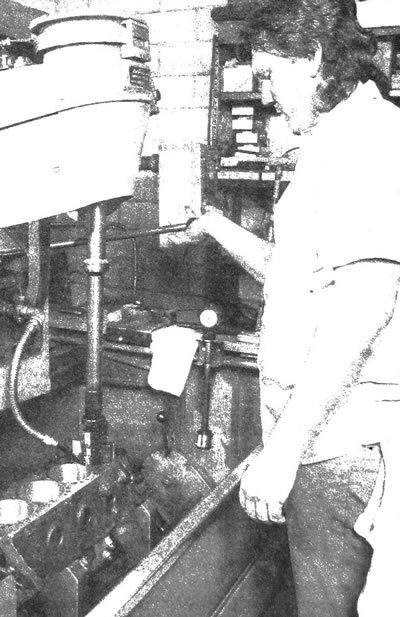
1.3. After boring, the cylinders are honed on a special installation
If boring is performed in a car repair shop, then new pistons of a repair size are installed on the engine. The main bearings and the lower connecting rod head bearings are also replaced; if necessary, the crankshaft is ground to restore its journals (see illustration 1.4).
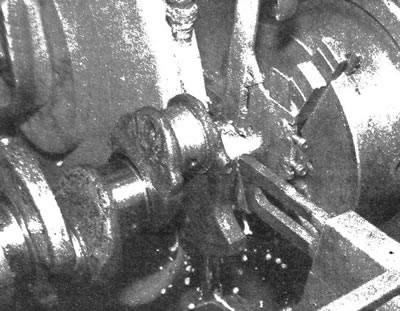
1.4. Mechanical treatment of crankshaft main bearing journals
During engine repair, the valves are also restored, since at this stage their condition usually leaves much to be desired. If necessary, also repair or replace the generator and starter. As a result of the repair, the engine should acquire the characteristics of a new motor, capable of operating reliably for many kilometers.
Note: Cooling system components that require close attention, such as hoses, drive belt, thermostat and pump, should be replaced during a major overhaul. The radiator should be checked for leaks and blockages (see chapter 3). Some shops will not provide a warranty on a replacement remanufactured engine or a power unit assembled from a replacement truncated cylinder block unless the radiator has been replaced or professionally cleaned. In addition, when carrying out major repairs, it is recommended not to repair, but to replace the oil pump.
Restoring the internal elements of a modern engine is a rather labor-intensive procedure that requires special skills and patience, as well as the use of many special devices. It is preferable to entrust this type of work to service station specialists (see illustrations 1.5, 1.6 and 1.7). Before deciding on the type of maintenance and the list of repair operations, wait until the engine is removed and all its components are inspected (especially the cylinder block). The condition of the major components is the deciding factor in deciding whether to repair an old engine or purchase a new or remanufactured power unit, so do not purchase parts or repair other components until the engine block has been inspected. As a rule, the main cost of repair is a waste of time, so it is not worth installing worn out or non-standard spare parts.
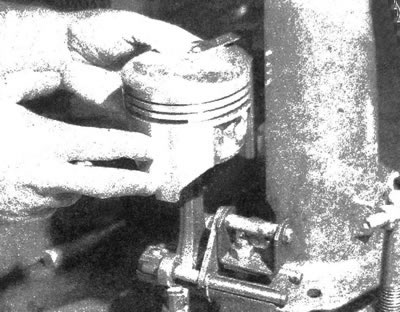
1.5. The mechanic determines the bending of the connecting rod using special equipment
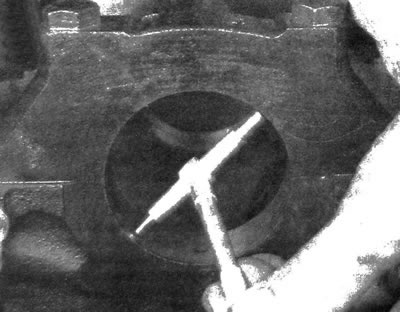
1.6. The bore diameter of the main bearing is determined using a bore gauge
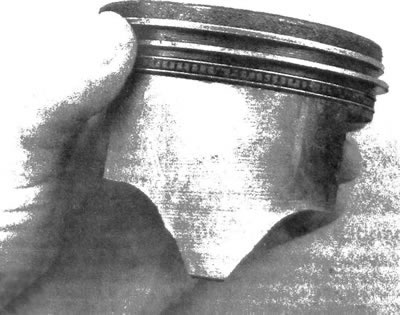
1.7. Uneven wear of the piston indicates that the connecting rod is bent
It should be noted that engine restoration at service stations usually takes at least two weeks. At some stations it is only possible to restore the existing engine, while at others it is also possible to install a refurbished engine to replace the one removed. Perhaps such a decision will be economically justified.
The original source of the article is the website «ChevyMan.ru»