
ChevyMan.ru
Mazda Mitsubishi Toyota Land Rover Honda Kia Nissan
English Русский
Български
Беларускі
Український
Српски
Hrvatski
Română
Polski
Slovenský
Magyar
|
Articles | Sitemap | Contacts |


Home   Aveo   Captiva   Cruze   Lacetti   Lanos   Niva   Tahoe   Others  
Niva 1 (2002-2016)
  • Home
  • Niva
  • 1 (2002-2016)
  • Chassis
  • Brake system
  • Removal air from the hydraulic drive

Removal air from the hydraulic drive (Chevrolet Niva 1)

            0

Air that gets into the brake hydraulic system when replacing pipes, hoses, sealing rings, or when the system is leaking causes an increase in the free travel of the brake pedal, its "softness", and significantly reduces the effectiveness of the brakes.

Before bleeding the brake system, make sure that all brake drive units and their connections are tight, check and record the fluid level in the reservoir and, if necessary, fill the reservoir to the "MAX" level with brake fluid. After bleeding, the fluid should be at the same level. If necessary, add fluid or drain excess using a bulb. Then thoroughly clean the air bleed nipples from dirt and dust and remove their protective caps.

Place a rubber hose on the head of the fitting (figure 6-7) to drain the liquid, and lower its free end into a transparent container partially filled with liquid.
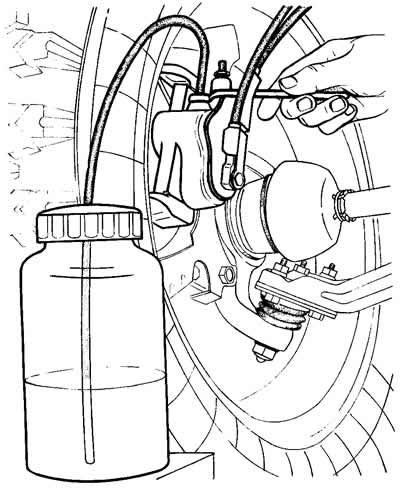
Figure 6-7. Bleeding air from the hydraulic brake drive.

Figure 6-7. Bleeding air from the hydraulic brake drive.


Press the brake pedal and unscrew the nipple by ½-3/4 of a turn. Continuing to press the pedal, force the fluid and air through the hose into the container. After the brake pedal reaches the extreme forward position and the fluid stops flowing through the hose, screw the air bleed nipple all the way in. Repeat these operations until all air bubbles come out of the hose. Then, holding the brake pedal pressed, screw the air bleed nipple all the way in and remove the hose. Wipe the nipple dry and put on the protective cap.


Perform all the above operations first on the right rear wheel, then on the left front wheel. This will remove air from one circuit. To bleed the other circuit, repeat the bleeding in the following sequence: left rear - right front wheel.

When bleeding air, maintain a normal fluid level in the brake hydraulic drive reservoir. If there is no air in the drive, the brake pedal should not go more than half of its full travel.

Remove air when the rear wheels are loaded (hanging the rear of the vehicle is not allowed).

If the brake fluid has been completely drained from the system, then before removing the air:
  • loosen the air bleed nipples on the cylinders of all wheels by 1.5-2 turns;
  • sharply pressing the brake pedal and smoothly releasing it, tighten the nipples as the fluid flows out of them. Then bleed the brake hydraulic drive as described above.

If, even after prolonged removal, air continues to escape from the hose into the vessel in the form of bubbles, it means that it is entering the system through damage in the pipelines, due to insufficient tightness of the connections, or as a result of a malfunction of the main or wheel cylinders.

When bleeding air from a vehicle whose brake system has been in use for a long time, replace the fluid in the system with new fluid.

The original article can be found on the resource ChevyMan

The article was checked: Vladimir Romannikov
This article is available at russian, bulgarian, belarusian, ukrainian, serbian, croatian, romanian, polish, slovak, hungarian

Share information:

Previous articles
Niva 1: Brake system
Next articles

Adjusting the pressure regulator drive
Checking the performance of the pressure regulator
Adjusting the parking brake
Adjusting the position of the brake light switch
Checking the performance of the vacuum booster
Clutch and brake pedal bracket
Vacuum brake booster
Brake master cylinder
Front brake device
Removal and installation the front brake


See similar articles on the topic of Chevrolet cars:
Bleeding the clutch release hydraulic drive Chevrolet Aveo T300 (2012-2018)
Bleeding the Clutch Hydraulic Drive Chevrolet Captiva 1 (2006-2018)
Bleeding the clutch release hydraulic drive Chevrolet Cruze 1 (2008-2016)
Bleeding the clutch hydraulic drive Chevrolet Lacetti 1 (2002-2009)
Bleeding the clutch hydraulic drive Chevrolet Lanos T150 (2002-2009)
Checking the clutch hydraulic drive Chevrolet Tahoe 1 (1992-2000)
Bleeding the clutch release hydraulic drive Chevrolet Orlando 1 (2010-2018)
Link in different formats to this page


Visitor comments

No comments yet


How much will 48 + 25 =


Niva 1 (2002-2016) 
  • General information
  • Vehicle device
  • User manual
  • Maintenance
  • Power unit
  • Engine repair
  • Cooling system
  • Lubrication system
  • Power and exhaust system
  • Transmission
  • Clutch
  • Car gearbox
  • Transfer case
  • Cardan gear
  • Rear axle
  • Front axle
  • Chassis
  • Suspension and shock absorbers
  • Steering
  • Brake system
  • Body
  • Exterior (external elements)
  • Interior (internal elements)
  • Ventilation and heating
  • Electrical equipment
  • Power devices
  • Lighting and appliances


ChevyMan.ru © 2017-2026 · Mobile version · Feedback · Site search · Interesting to read · Sitemap: EN BG BY UA RS HR RO PL SK HU

Aveo 2003-2008 · Aveo 2006-2011 · Aveo 2012-2018 · Captiva 2006-2018 · Cruze 2008-2016 · Lacetti 2002-2009 · Lanos 2002-2009 · Niva 2002-2016 · Tahoe 1992-2000 · Tahoe 2000-2014 · Lumina 1 1989-1994 · Trailblazer 1 2001-2008 · Orlando 1 2010-2018 ·
🛡️ For your security and to improve our service, this site uses cookies. You can disable them in your browser.