


- fuel vapor recovery system;
- forced crankcase ventilation system;
- exhaust gas toxicity reduction system.
The fuel vapor recovery system reduces emissions of fuel vapors generated in the fuel tank into the environment. The system consists of an adsorber, an adsorber purge valve and connecting tubes.
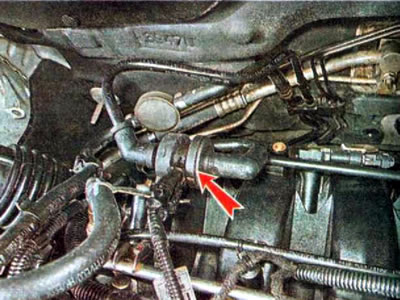
The purge valve of the adsorber is installed on the top of the intake manifold on the right side.
The adsorber is installed on the fuel tank on the right side.
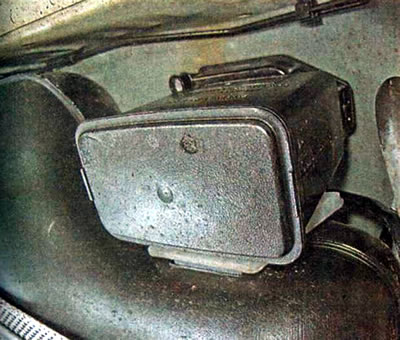
An adsorber is a container filled with activated carbon. As air passes through the adsorber, gasoline vapors are absorbed by activated carbon. The adsorber is connected to the adsorber purge valve by a hose. Under certain engine operating conditions, the purge valve of the absorber opens on command from the electronic engine control unit (ECU). Under the action of the vacuum existing in the intake manifold, air from the atmosphere passes through the adsorber. Next, the air, together with the fuel vapors accumulated in the adsorber, enters the intake manifold through the throttle assembly and then into the engine cylinders. When the adsorber is operating, various deposits form in it, and eventually it becomes clogged. In cars with high mileage, the adsorber may be completely clogged. In this case, the engine may run unevenly. This adsorber needs to be replaced.
Forced crankcase ventilation system. When the engine is running, so-called crankcase gases accumulate in its crankcase - these are mainly gases that have broken through the leaks in the piston rings. They contain products of incomplete combustion of fuel, so they are very harmful not only to human health, but also to the environment as a whole. Therefore, modern internal combustion engines are equipped with a crankcase ventilation system. The operating principle of such a system is based on the forced removal of crankcase gases under the action of vacuum in the intake tract that occurs during engine operation. Crankcase gases are sucked into the intake manifold, where they mix with air, enter the engine cylinders and burn. In addition to reducing toxicity, the crankcase ventilation system maintains optimal pressure in the engine compartment. If the crankcase ventilation system is faulty, the crankcase gas pressure may increase to such an extent that it will force oil through the crankshaft seals.
The system consists of a hose that carries the gas mixture from the cylinder head cover to the throttle assembly through a valve.
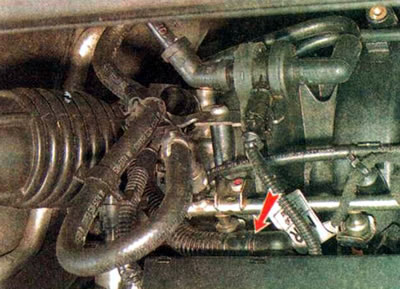
During operation, it is necessary to regularly monitor (according to the maintenance plan) for the condition of the hose and valve. A ruptured hose will cause engine malfunction.
Exhaust gas toxicity reduction system. To reduce the level of toxicity of exhaust gases and, above all, to reduce the emission of products of incomplete combustion of fuel, a catalytic converter is installed on the car. In order for the neutralizer to work effectively, the optimal composition of the fuel-air mixture entering the engine cylinders is maintained. For this purpose, two oxygen concentration sensors are installed in the exhaust system. Based on the signals from these sensors, the electronic engine control unit adjusts the amount of injected fuel and air supply, sending the corresponding signals to the fuel injectors and throttle assembly.
The emission control system, which is installed in the vehicles, ensures compliance with EURO IV toxicity standards.
(The article was reprinted from the website «CHEVYMAN.RU»)