
ChevyMan.ru
Mazda Mitsubishi Toyota Land Rover Honda Kia Nissan
English Русский
Български
Беларускі
Український
Српски
Hrvatski
Română
Polski
Slovenský
Magyar
|
Articles | Sitemap | Contacts |


Home   Aveo   Captiva   Cruze   Lacetti   Lanos   Niva   Tahoe   Others  
Captiva 1 (2006-2018)
  • Home
  • Captiva
  • 1 (2006-2018)
  • Engine 2.0 l (diesel)
  • Engine repair
  • Cylinder block repair

Cylinder block repair (Chevrolet Captiva 1)

            0

Contents: Disassembly procedure ↧ Cleaning procedure ↧ Assembly procedure ↧

Necessary equipment


DW 100-130 Engine Overhaul Stand

KM-470-B Angular Torque Indicator

EN-48251 Crankshaft Rear Oil Seal Installer

EN-48249 Piston ring compressor

Disassembly procedure


1. Remove the engine. Follow the step "Engine assembly" in this section.

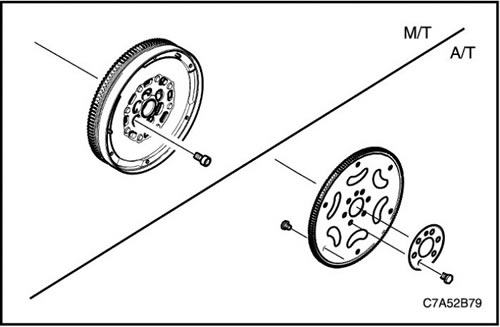
2. Remove the flywheel or flexplate screws.

3. Remove the flywheel or flexplate.
3. Remove the flywheel or flexplate.


4. Install the engine on the DW100-130 engine overhaul stand.

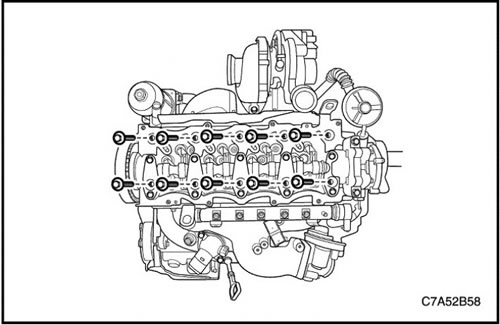
5. Remove the cylinder head. Follow step "Cylinder head and gasket" in this section.
5. Remove the cylinder head. Follow step «Cylinder head and gasket» in this section.


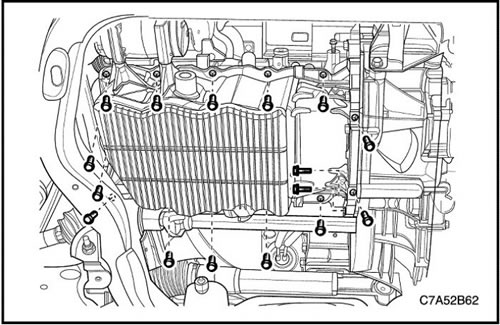
6. Remove the oil pan. Follow step "Oil pan" in this section.
6. Remove the oil pan. Follow step «Oil pan» in this section.


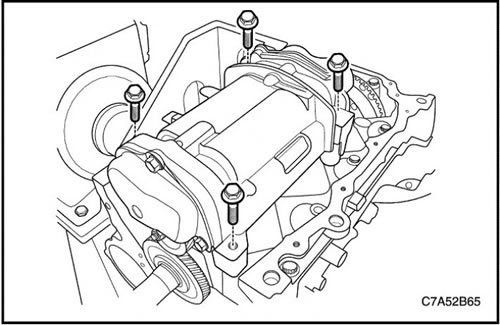
7. Remove the crankshaft balancer. See "Crankshaft balancer" in this section.


7. Remove the crankshaft balancer. See «Crankshaft balancer» in this section.


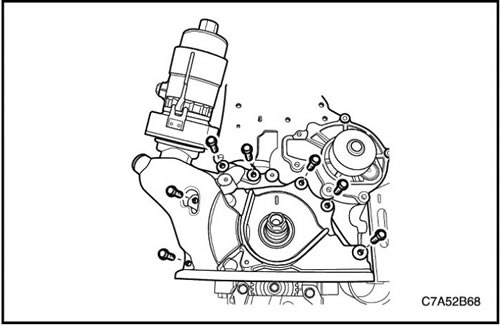
8. Remove the oil pump. See "Oil pump" in this section.

8. Remove the oil pump. See «Oil pump» in this section.


9. Remove the starter. See Part 1E1, Engine Electrical - 2.0 Diesel.
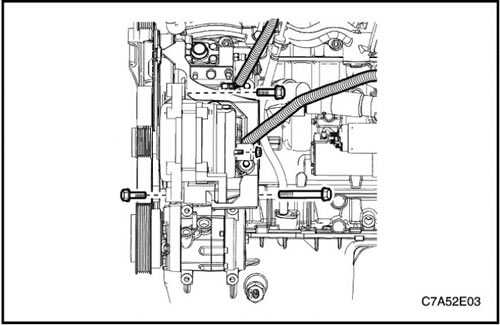
9. Remove the starter. See Part 1E1, Engine Electrical - 2.0 Diesel.


10. Remove the generator. See Part 1E1, Engine Electrical - 2.0 Diesel.

11. Remove the air conditioning compressor. See Section 7D, Automatic Temperature Control, Heating, Ventilation and Air Conditioning System.
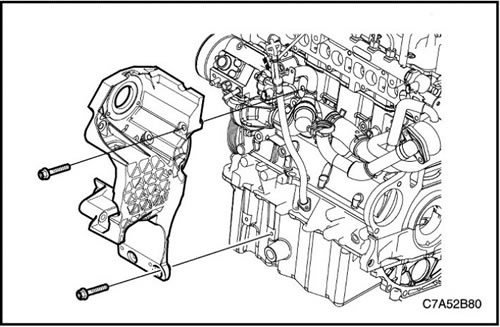


11. Remove the air conditioning compressor. See Section 7D, Automatic Temperature Control, Heating,…


12. Remove the air conditioning compressor and generator bracket.
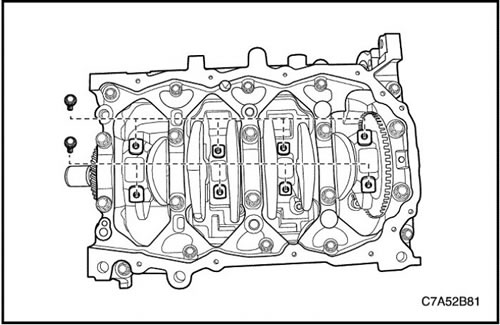
12. Remove the air conditioning compressor and generator bracket.


13. Remove the connecting rod and piston.

14. Remove the engine support plate.

15. Remove the crankshaft with the rear oil seal.
15. Remove the crankshaft with the rear oil seal.


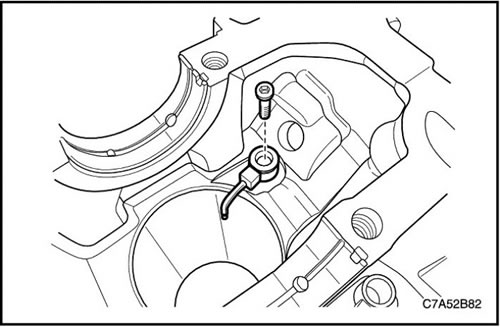
16. Remove the grease nozzle tube.

Cleaning procedure


1. Clean the sealing surface of the base plate.

2. Clean the sealing surface of the cylinder block.


3. Clean the base plate tie bolts.

4. Clean the base plate bolt holes.
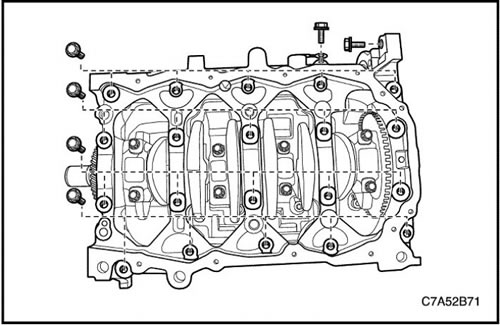
4. Clean the base plate bolt holes.


Assembly procedure


1. Lubricate the main bearing with engine oil.

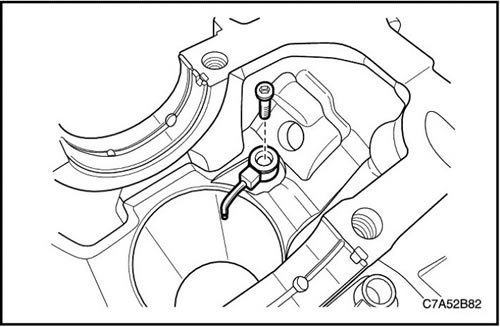
2. Install the grease nozzle tube.

Tighten

Tighten the grease nozzle tube mounting bolts to 23 N·m (17 ft·lbs).
Tighten the grease nozzle tube mounting bolts to 23 N·m (17  ft·lbs).


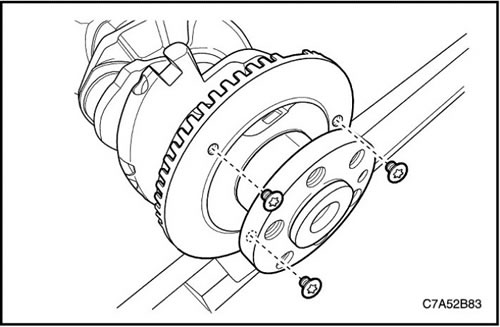
3. When replacing the crankshaft, the wheel with the "target" for the crankshaft position sensor (CPS) must be transferred to the new crankshaft.

Tighten

Tighten the tie bolts of the target wheel for the crankshaft position sensor (CPS) to 12 N·m (8.9 ft·lbs).
Tighten the tie bolts of the target wheel for the crankshaft position sensor (CPS) to 12 N·m (8.9 …


4. Install the crankshaft together with the main bearing shells.


5. Install the engine support plate. See "Engine support plate" in this section.
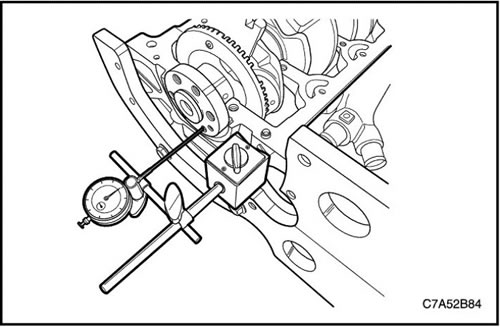
5. Install the engine support plate. See «Engine support plate» in this section.


6. Check the crankshaft end play with the main bearings installed. Follow step "Engine Specifications" in this section.

7. Check the crankshaft end clearance. Follow step "Engine Specifications" in this section.
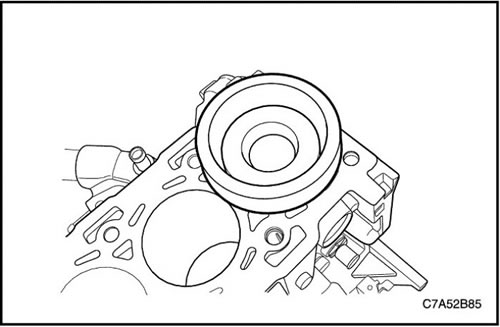
7. Check the crankshaft end clearance. Follow step «Engine Specifications» in this section.


8. Lubricate the piston and rings with engine oil.

9. Inserting the piston and connecting rod using the piston ring compressor EN-48249.
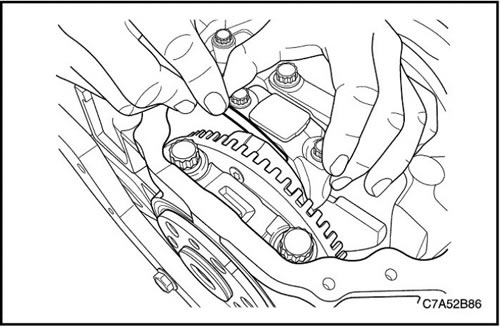
9. Inserting the piston and connecting rod using the piston ring compressor EN-48249.


10. Install the connecting rod head bolts.


Tighten

Tighten the big end cap bolts to 25 N·m (18.4 ft·lbs). Using the KM-470-B angular torque indicator, tighten the big end cap bolts an additional 90 degrees.

11. Check the connecting rod end clearance. Follow the step "Engine Specifications" in this section.
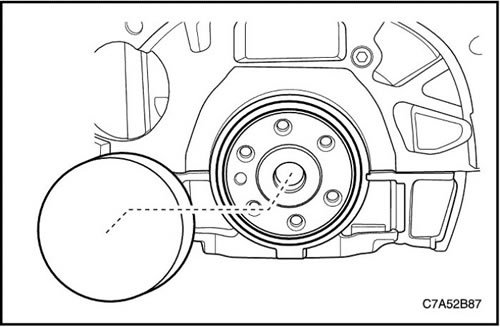
11. Check the connecting rod end clearance. Follow the step «Engine Specifications» in this section.


12. Install a new crankshaft rear oil seal using the EN-48251 crankshaft rear oil seal installer.
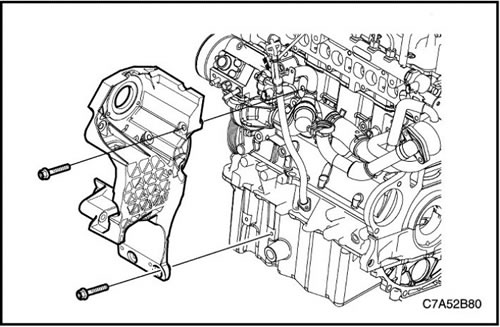
12. Install a new crankshaft rear oil seal using the EN-48251 crankshaft rear oil seal installer.


13. Install the air conditioning compressor and generator bracket.

Tighten

Tighten the A/C compressor and alternator bracket bolts to 35 N·m (25.8 ft·lbs).
Tighten the A/C compressor and alternator bracket bolts to 35 N·m (25.8  ft·lbs).


14. Install the flywheel or flex plate.

Tighten

Tighten the flywheel or flexplate pinch bolts to 105 N·m (77.4 ft·lbs).

[The original text can be found on the website: «CHEVYMAN»]

The article was checked: Vladimir Romannikov
This article is available at russian, bulgarian, belarusian, ukrainian, serbian, croatian, romanian, polish, slovak, hungarian

Share information:

Previous articles
Captiva 1: Engine repair
Next articles

Cylinder head repair
Removal and installation the engine
Rear suspension unit of the gearbox with the main gear assembly
Front suspension unit of the gearbox with the main gear assembly
Engine mount assembly (right side)


See similar articles on the topic of Chevrolet cars:
Cylinder Block Parts Chevrolet Aveo T250 (2006-2011)
Disassembly, repair and assembly of the cylinder head Chevrolet Cruze 1 (2008-2016)
Replacing the cylinder head cover gasket Chevrolet Lacetti 1 (2002-2009)
Safety precautions during maintenance and repair Chevrolet Lanos T150 (2002-2009)
Cylinder block Chevrolet Niva 1 (2002-2016)
Cylinder Block Plugs and Sensors — Design Description Chevrolet Tahoe 2 and 3 (2000-2014)
Removal, repair and installation of the rear wheel brake cylinder Chevrolet Lumina 1 (1989-1994)
Link in different formats to this page


Visitor comments

No comments yet


How much will 16 + 46 =


Captiva 1 (2006-2018) 
  • Manual
  • Before leaving
  • Keys, doors and windows
  • Seats, protection systems
  • Instruments and controls
  • Lighting system
  • Information and entertainment
  • Navigation system
  • Climate control
  • Driving a car
  • Car care
  • Maintenance
  • Engine 2.0 l (diesel)
  • Engine device
  • Troubleshooting
  • Engine repair
  • Cooling system
  • Engine electrical equipment
  • Control and power systems
  • Exhaust system
  • Engine FAM II 2.4D
  • Engine device
  • Troubleshooting
  • Engine repair
  • Cooling system
  • Engine electrical equipment
  • Control and power systems
  • Exhaust system
  • Engine HFV6 3.2L
  • Engine device
  • Troubleshooting
  • Engine repair
  • Cooling system
  • Engine electrical equipment
  • Control and power systems
  • Exhaust system
  • Transmission
  • Front drive axle
  • Rear drive axle
  • Automatic gearbox - device
  • Automatic gearbox - service
  • Automatic gearbox - repair
  • Manual gearbox - device
  • Manual gearbox - service and repair
  • Clutch
  • Transfer case
  • Chassis
  • Car suspension
  • Brake system
  • Steering
  • Body
  • Heating and ventilation
  • Air conditioning (manual)
  • Air conditioning (automatic)
  • Seat belts
  • Airbags
  • Car seat
  • Interior (internal elements)
  • Exterior (external elements)
  • Doors and windows
  • Electrical equipment
  • Equipment and devices
  • Lighting and lamps
  • Windshield wipers and washers
  • Electrical circuits


ChevyMan.ru © 2017-2026 · Mobile version · Feedback · Site search · Interesting to read · Sitemap: EN BG BY UA RS HR RO PL SK HU

Aveo 2003-2008 · Aveo 2006-2011 · Aveo 2012-2018 · Captiva 2006-2018 · Cruze 2008-2016 · Lacetti 2002-2009 · Lanos 2002-2009 · Niva 2002-2016 · Tahoe 1992-2000 · Tahoe 2000-2014 · Lumina 1 1989-1994 · Trailblazer 1 2001-2008 · Orlando 1 2010-2018 ·
🛡️ For your security and to improve our service, this site uses cookies. You can disable them in your browser.