


Contents: Flexible hoses ↧ Tubes ↧
1. It is recommended to check the condition of the hoses and tubes every 6 months. If cracks, leaks, swelling or other damage are found, replace the hose.
Flexible hoses
2. Clean the hose connections.
3. Unscrew the tube fitting from the hose.
4. Remove the U-bracket and pass the hose through the hole in the bracket (see photo).
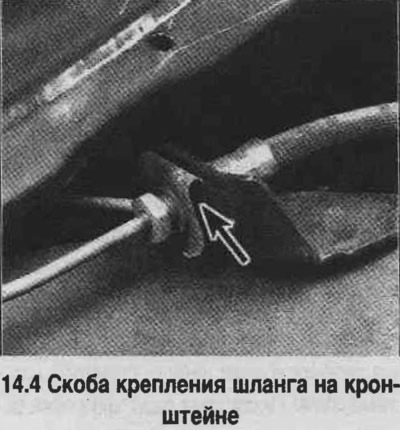
5. Loosen the ring fitting bolt and disconnect the hose from the caliper.
6. When assembling, replace the copper gaskets, align the protrusion on the hose with the hole in the caliper and tighten the union bolt to the specified torque.
7. Pass the hose through the bracket, screw on the fitting nut, insert the clamp and tighten the nut.
Caution! When connecting the hose, the vehicle must be on its wheels so that the suspension can support the vehicle's weight.
8. Remove air from the brake hydraulic system.
Tubes
9. When replacing pipes, make sure that they are secured with clamps along the entire route. The shape of the curved new pipes must match the shape of the ones being replaced. Only steel pipes that exactly match the make of the car are allowed to be installed. Copper pipes are not allowed to be installed.
(The original article is on the website «CHEVYMAN»)