


At first, catalytic converters were used only on gasoline engines. In diesel engines, the ignition and combustion process occurs differently, and more complete combustion of fuel occurs. Due to this, the concentration of harmful substances in diesel exhaust gases is lower. However, further increases in environmental requirements have forced automakers to install catalytic converters on diesel vehicles as well.
In Europe, the introduction of neutralizers was stimulated at the legislative level by the introduction of similar EURO standards. In order to meet regulatory requirements, car manufacturers now install catalytic converters on all cars they produce.
The neutralizer is a container whose entire internal space is filled with tubular honeycombs.
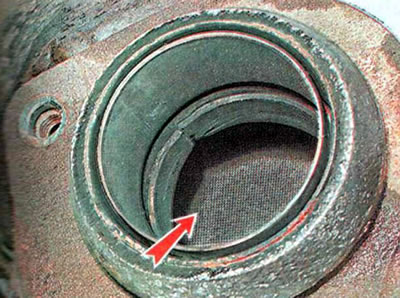
To ensure that the neutralizer does not provide much resistance to the flow of exhaust gases, the honeycombs are shaped like straight channels. To ensure that the contact area of the exhaust gases with the catalyst is sufficient, these channels are made almost the entire length of the neutralizer body, and the cross-section of the honeycombs is made small. This made it possible to increase the contact area many times over. The honeycombs are made from thin corrugated metal tape, folded in a certain way, or special ceramics.
The surface of the honeycombs is coated with platinum and other rare earth metals. They are the catalyst - a substance that, without entering into a chemical reaction, initiates the process of oxidation (burning) of harmful substances to a neutral state. This is where the name of the neutralizer comes from - catalytic.
The process in the neutralizer is effective only at high temperatures (around 300°C). In order for the neutralizer to warm up to operating temperature faster, and, accordingly, fewer harmful substances to enter the atmosphere during startup, designers try to place it as close as possible to the exhaust manifold. Therefore, the catalytic converter used in the vehicle is made integral with the exhaust manifold.
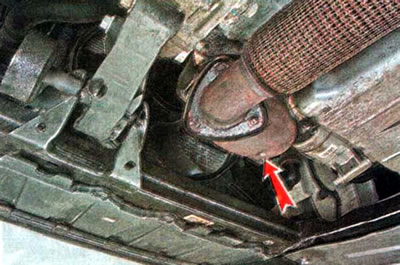
The neutralizer is covered from above by a heat shield.
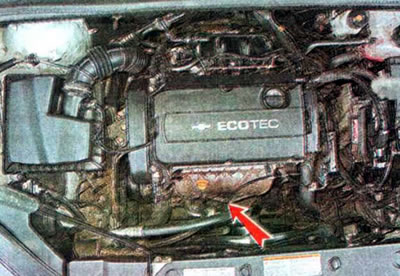
For the neutralizer to operate efficiently, it is necessary to maintain the optimal composition of the fuel-air mixture entering the engine cylinders. To monitor this parameter, an oxygen concentration sensor is installed in the exhaust manifold before the catalytic converter.
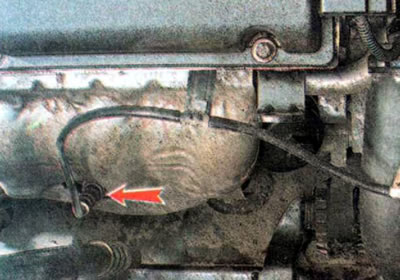
Based on the signals from this sensor, the engine electronic control unit (ECU) determines the oxygen content in the exhaust gases and adjusts the amount of injected fuel accordingly. For more precise adjustment of the composition of the combustible mixture, a second oxygen concentration sensor is installed in the exhaust pipe of the exhaust system.
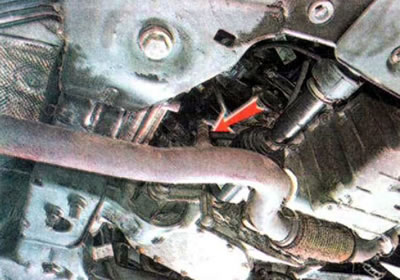
The first sensor, located before the catalytic converter, is called the control sensor, and the second is called the diagnostic sensor. Based on the data received from the second sensor, the ECU additionally corrects the fuel-air mixture.
The exhaust gas toxicity reduction system, which the car is equipped with, ensures compliance with EURO IV standards.
A catalytic converter is an expensive unit, although the layer of catalytic substance is very thin, and there is no more than three grams of precious metal in the entire converter. At the same time, it is very sensitive to the composition of exhaust gases. Thus, soot that appears during the combustion of an over-enriched combustible mixture, or oil that gets into the exhaust system due to wear of engine parts, depositing on the walls, can completely clog the honeycombs. Another reason why exhaust gases may not pass through the neutralizer is the melting of the honeycomb edges. This can be caused by prolonged engine operation on an enriched fuel mixture.
The most common reason why the neutralizer fails is poor quality gasoline, especially if it is leaded. Tetraethyl lead contained in it has a negative effect on the catalytic coating of the neutralizer, as well as on the oxygen concentration sensors. Leaded gasoline was banned in the Russian Federation by presidential decree in 2003 (both its production and sale), and special services began to regularly monitor the quality of fuel at gas stations.
Another reason for the failure of the neutralizer is the unsatisfactory technical condition of the engine. But this is typical for cars with very high mileage. For example, if the connecting rod and piston group is worn out, oil will enter the exhaust system. A malfunction in the engine management system can also cause the engine to run rich and allow unburned fuel to enter the exhaust system. A flash of gasoline accumulated in the neutralizer can lead to deformation of the honeycomb. From this we can conclude that even on a relatively new car, conditions in which fuel vapors can accumulate in the neutralizer should be avoided. For example, if the engine does not start after two or three attempts, you should take a break before the next attempt. It is necessary to replace spark plugs in a timely manner and not allow the engine to operate with faulty spark plugs.
If the catalytic converter cells are clogged or melted, the increased resistance to exhaust flow will cause the engine to lose power and may even stall. A faulty catalytic converter must be replaced. In this case, it will be necessary to replace some other elements of the exhaust system.
(The material was created based on information from the website CHEVYMAN.RU)