


Contents: Speedometer and odometer (car… ↧ Tamper-resistant odometer ↧ Trip meter ↧ Tachometer ↧ Warning lamps, gauges and indicators ↧ Seat Belt Reminder Lamp ↧ Airbag Readiness Light ↧ Battery charge warning light ↧ Voltmeter ↧ Brake system warning light ↧ Anti-lock brake system warning light ↧ Coolant temperature gauge ↧ Multifunctional warning lamp ↧ Oil pressure gauge ↧ Daytime Running Light (DRL)… ↧ Fuse check lamp ↧ High/Low Beam Indicator Lamp ↧ Fuel quantity measuring device ↧
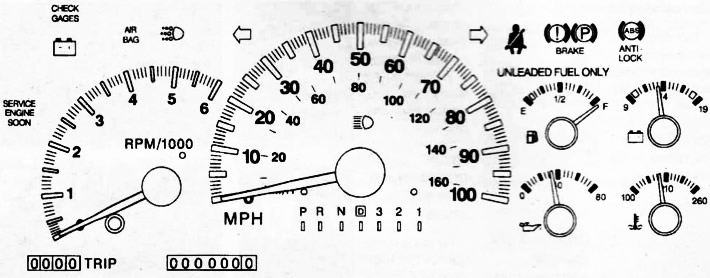
This panel is a combination of instruments and warning lights that will give you an immediate indication of the condition of your car. You will know how fast you are going, how much fuel you have, and many other things to help you drive safely and economically.
Speedometer and odometer (car odometer)
The speedometer allows you to see your speed in both miles and kilometers per hour. The odometer will show you how far your car has traveled in both miles (US) and kilometers.
Tamper-resistant odometer
If someone tries to turn the meter back, silver lines will appear between the numbers.
Trip meter
Shows you how far your vehicle has traveled since you last reset the odometer to zero.
To reset the counter completely, press the button located next to the trip meter and it will be set to zero.
Tachometer
The tachometer display will show you the engine revolutions per minute.
Warning lamps, gauges and indicators
This section of the manual describes the warning lights and gauges that may be on your vehicle. The illustrations will help you identify them.
Warning lights and signals can alert you to problems before something becomes serious enough to require costly repairs or replacement.
Paying attention to warning lights and instruments can help protect you and others from injury. Warning lights come on when there may be or are problems with the vehicle's functions.
As you may have seen on the previous pages, some warning lights come on briefly when the engine is started just to let you know that they are working. If you are familiar with this, you should not worry about it.
Gauges can signal that there may be or is a problem with one of the functions of the car. Often, gauges and lights work together to let you know that there is a problem with the car. If one of the warning lights comes on and stays on while you are driving, or when the gauge indicates that there may be a problem, look at the section of the manual that tells you what to do about it. Please follow the advice in the manual. Delaying repairs can be costly and even dangerous. So get to know your warning lights and gauges.
Seat Belt Reminder Lamp
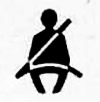
When the ignition key is turned from position D to position E, a chime will sound to remind passengers to fasten their seat belts until the driver's seat belt is fastened.
The seat belt light will also come on and stay on for 20 seconds, then it will flash for another 55 seconds. If the driver's seat belt is fastened, neither the horn nor the light will come on.
Airbag Readiness Light
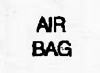
This light is located on the instrument cluster and indicates AIR BAG. When the light comes on, it indicates a fault in the airbag system, which includes sensors, wires, the airbag module in the steering wheel, and the diagnostic module.
This light comes on when the engine starts and flashes for a few seconds. Then the light goes out. This means that the system is ready to operate.
If the light comes on after starting the engine or lights up while driving, the system is not working properly. Contact a service station immediately.
Battery charge warning light
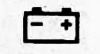
This light comes on briefly immediately after the engine is started. This indicates that the light is working.
Once the engine is started, it should go out. If it stays on or comes on while driving, you may have a problem with the battery charging system. It may also indicate a problem with the alternator drive belt or other problems in the charging system. Have the problem checked immediately.
Driving with the light on drains the battery. You can drive a short distance, but you should turn off all additional power consumers, such as the radio and air conditioning.
Voltmeter
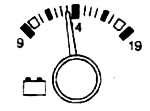
When the engine is not running but the ignition key is in position D, this instrument displays the battery charge status in DC volts.
When the engine is running, the gauge shows the charging system status. A gauge reading between the lower and upper warning zones indicates normal operation.
The reading in the lower warning zone may be when a large number of current consumers are running and the engine is idling for a long time. This condition is normal, as the charging system is not able to provide full power when the engine is idling. As the engine speed increases, this condition is corrected, as at high speeds the charging system produces maximum power.
You may only drive for a short period of time if the instrument needle is in the warning zone. If you must drive, switch off all unnecessary energy consumers.
Readings in any warning zone indicate problems with the electrical system.
Have your vehicle checked as soon as possible.
Brake system warning light

The hydraulic brake system of a car is divided into two parts. If one part of the system does not work, the other still works and can stop your car. For good braking, however, you need both parts to work well.
If the warning light comes on, there may be a problem with the brakes. Check the brake system immediately.
This light may come on briefly when you turn the ignition key to position D. If it does not come on, adjust it so that it can warn you if a problem occurs.
If the light comes on while driving, pull over carefully. You may notice that the brake pedal is hard to press. Or the pedal easily goes to the floor. More time is needed to brake. If the light still comes on, have your car towed to a service station.
When the ignition is on, the light may also come on if the parking brake is set. The light will also come on if the parking brake is not fully released. If the light comes on when the parking brake is fully released, you have a problem with your brakes.
Anti-lock brake system warning light
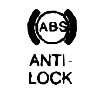
This light may come on when you start the engine and stay on for a few seconds. This is normal.
If the light remains on or comes on while driving, your vehicle needs service.
If the regular brake warning light is not on, your brakes still work, but the anti-lock brakes are not working. If the regular brake warning light is also on, you have a problem with your brakes. Proceed as in the previous chapter.
If the ABS lamp does not light up for a short time after starting, check its functionality.
Coolant temperature gauge
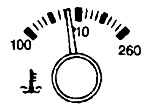
This gauge shows the coolant temperature. It also has a light that shows how severe the conditions are that your vehicle is operating in. In most cases, this gauge will show 210°F (100°C) or less. If your vehicle is hauling a load or going up a hill, this is normal, but if the temperature increases and approaches 260°F (160°C), this indicates that the cooling system is operating beyond its capabilities.
Multifunctional warning lamp
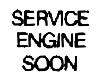
The engine needs maintenance.
Your vehicle is equipped with a computer that controls the fuel system, ignition system, and emission control system. This system is called 0BD2 (On-board diagnostics of the second generation) and is designed to determine the level of exhaust toxicity acceptable for the vehicle and the environment.
The light comes on when there is a problem and service is needed. Problems are often caught before the problem occurs. This can prevent more serious damage to the vehicle. This system is also designed to help the service technician properly diagnose any problem.
This light should come on to show you that it is working when the ignition is on but the engine is running. If the light does not come on, check and repair it.
This lamp also lights up during malfunctions and can light in two modes.
The lamp is blinking - misfires have been detected. Misfires in the ignition system increase toxic emissions and can damage your vehicle's emission control system. Qualified maintenance is required.
The lamp is constantly on - problems with the exhaust toxicity reduction system have been detected. Service is also required.
If the lamp is blinking
The following steps can prevent serious damage to your vehicle:
- Reduce the speed of the car.
- Avoid pressing the gas pedal hard.
- Avoid steep climbs.
- If you are towing a trailer, remove the load as soon as possible.
If the light stops flashing and stays on, see the next chapter.
If the light continues to flash, then the safest thing to do is stop the car. Find a safe place to park. Turn off the engine, wait at least 10 seconds and start the engine again. If the light stays on, see the next chapter. If it still flashes, follow the previous recommendations and take the car to a service station.
If the lamp is constantly on
You can fix your emission control system by thinking about this:
Have you filled your car with fuel recently?
If so, check the fuel cap and close the tank completely. The diagnostic system may detect a cap that is not closed or not closed properly. Fuel may evaporate into the atmosphere. A few trips with the cap closed correctly and the light will go out.
Have you driven through deep puddles of water?
If so, the electrical system may be wet. Conditions will change as the electrical system dries out. A few trips and the light should go out.
Are you low on fuel?
When your engine starts to run low on gas, it doesn't run as efficiently as you want it to because a small amount of air is sucked into the fuel line, causing misfires. Refueling will correct this situation, and after a few trips the light will go out.
Have you recently changed the type of gasoline?
If so, fill your car with quality gasoline. Poor quality fuel can cause the engine to not run as efficiently as you want. You may notice this as the engine stalls after starting, stalls when changing gears, jerks when you press the gas pedal (these symptoms may disappear if you warm up the engine). The system detects this and the lamp lights up.
If you notice one or more of these signs, change the type of fuel. You need to fill the tank completely with suitable gasoline once and the lamp will go out.
If none of the steps you have taken help, take your vehicle in for service.
Oil pressure gauge
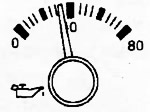
This device shows the oil pressure in the system psi (pounds per square inch), when the engine is running. In the European version it shows the pressure in kPa (kilo pascals).
Oil pressure varies with engine speed, outside temperature, or oil viscosity, but readings above the low pressure zone indicate normal operating range.
If the gauge needle is in the low pressure zone, it may be caused by dangerously low oil levels or other problems. Check the oil level as soon as possible.
Warning: Do not drive if the oil pressure is low. The engine may overheat and catch fire. You or someone else could be burned. Have the oil system checked at a service station as soon as possible.
Daytime Running Light (DRL) indicator lamp
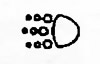
This lamp will remain on continuously when the DRL system is on.
When it starts to get dark, the DRL indicator lamp will remind you to turn on the headlights.
Fuse check lamp
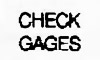
Lights up briefly after starting the engine. If the light comes on while your car is moving, it may indicate a problem with the car. It could be a problem with the oil pressure, with the coolant temperature, or anything else. Check the various fuses to make sure there are no blown fuses in dangerous areas. If there are, take the car to a service center immediately.
High/Low Beam Indicator Lamp

The lamp always turns on when you turn on the signal, turn signal or change lanes.
Fuel quantity measuring device
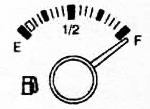
If the ignition is on, the fuel gauge will show you the amount of gasoline remaining in the fuel tank.
The gauge will show empty (E) before the fuel runs out, and you should refuel as soon as possible. Here are four things you should know about the fuel gauge:
At a filling station, the fuel pump will shut off before the indicator arrow shows a full tank (F).
It will take a little more or less fuel to fill the tank than the arrow shows. For example, the arrow shows half a tank, but in reality it will take a little more or less than half the tank capacity to fill the tank.
The fuel gauge needle fluctuates when you turn or increase speed.
The fuel gauge needle does not stop at the empty position (E) when you turn off the engine.
None of the above indicates that there is a problem with the fuel gauge.