


Contents: Vehicle identification numbers ↧ Vehicle Identification Number (VIN) ↧ Factory certificate ↧ Label for ordering spare parts ↧ Engine number ↧ Automatic transmission number ↧ Transfer case number (AWD models) ↧ Rear axle number ↧ VECI label ↧ Starting the engine from an… ↧ Lifting a car with a jack ↧
This manual is for the following models:
Chevrolet Pickups, Suburban (1991-1999), Blazer (1991-1995), Tahoe (1994-1999).
Petrol engines V6: 4.3 liters, V8: 5.0, 5.7 and 7.4 liters.
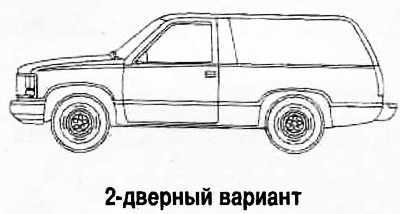
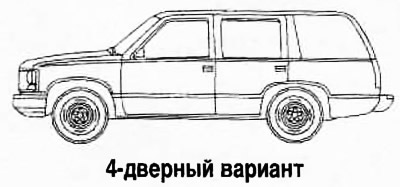
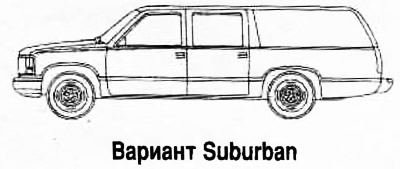
Chevrolet and GMC light-duty trucks produced since 1987 (models C and K) have a conventional layout, with a front engine and rear-wheel drive. Some vehicles have all-wheel drive (4x4 wheel arrangement). V6 and V8 engines installed in cars before 1995 used fuel injection from the throttle body. Since 1996, all models have used single-nozzle fuel injection (SFI injection). Torque from the engine to the wheels was transmitted through a four- or five-speed manual gearbox, or a three- or four-speed automatic transmission. On all-wheel drive (4WD) models, a transfer case and a cardan shaft are provided for driving the front wheels. The front suspension is independent. On rear-wheel drive models, the elastic element of the front suspension is coil springs, on all-wheel drive (4WD) models, torsion bars. The elastic element of the rear suspension on all models is leaf springs. Conventional shock absorbers are used on the front and rear suspensions.
The steering gear is installed to the left of the engine, the gear is connected to the steering levers via rods. All models are equipped with a vacuum brake booster and a hydraulic power steering. The front brakes are disc, the rear ones are drum. Most models are equipped with an ABS system.
Vehicle identification numbers
When compiling operating manuals and spare parts catalogs, numerical vehicle codes are used, so when selecting and installing the necessary parts, it is necessary to know the identification code (identification) car number.
Vehicle Identification Number (VIN)
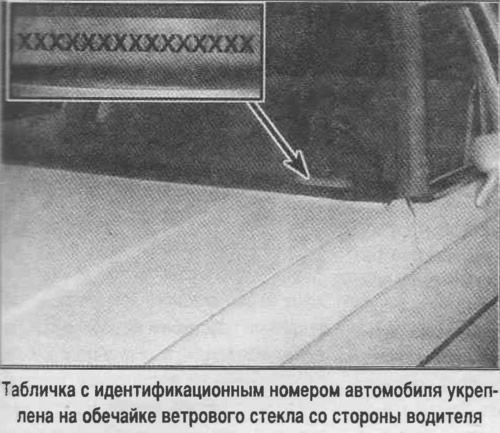
This very important number is stamped on a plate mounted on the left side of the dashboard, just below the windshield (see photo). This number is also indicated on the vehicle certificate. The number contains information about the manufacturer, date of manufacture, manufacturer, year of manufacture, model and body type.
Factory certificate
The certificate plate is located on the rear edge of the left door. The plate contains the month and year of manufacture, the manufacturer, the gross vehicle weight, and a mark on the vehicle's suitability for operation.
Label for ordering spare parts
The label is located on the glove compartment door. It contains the VIN number, vehicle base, paint number, options and other information related to this vehicle. Use the data on the label when ordering spare parts.
Engine number
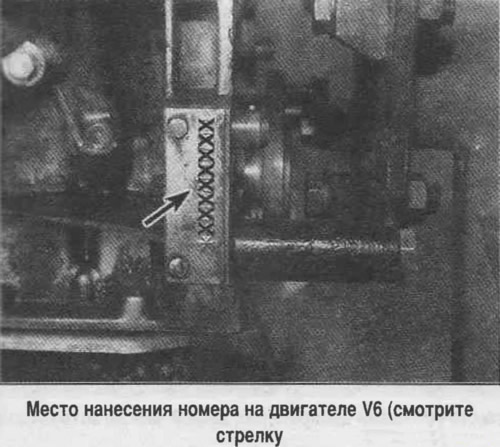
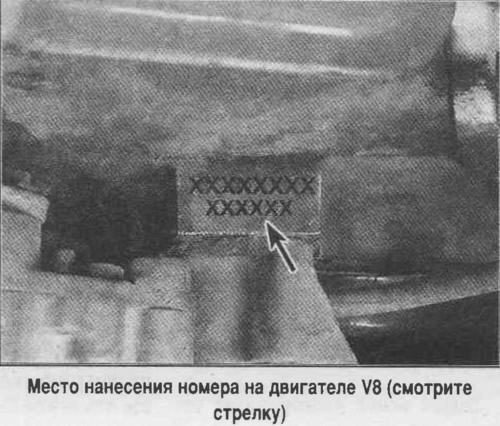
The engine number is usually stamped on the machined surface at the front of the cylinder block, under the right cylinder head. The number may also be stamped on the left rear of the block, above the oil filter (see photo).
Automatic transmission number
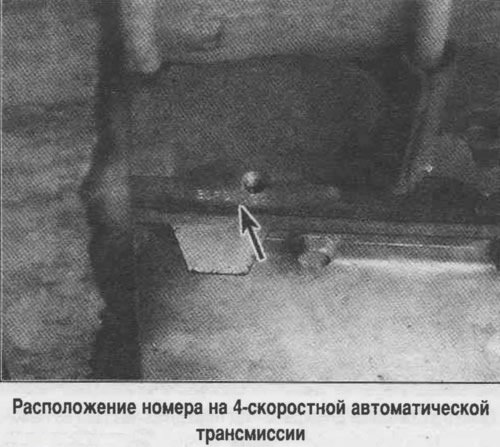
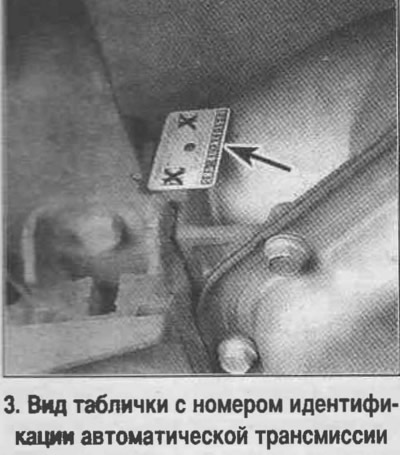
The automatic transmission number is located on the right side of the transmission case, either stamped or on a reinforced plate (see photo).
Transfer case number (AWD models)
This number is located on a metal plate on the tailpiece of the transfer case housing.
Rear axle number
The rear axle identification number is stamped on the top of the right axle housing.
VECI label
The label is usually located on the top of the radiator fan shroud. The label contains emission control equipment information and adjustment data.
Starting the engine from an auxiliary battery
When starting the engine using a booster battery, observe the following precautions.
1. Before connecting the booster battery, make sure the ignition is off.
2. Make sure all consumers (headlights, heater, windshield wipers, etc.) disabled.
3. Make sure the booster battery's voltage rating is the same as the battery in your vehicle.
4. If the engine is to be started from a battery installed in another vehicle, the bodies of the vehicles must not touch.
5. Make sure the gearshift lever is in neutral position (or in the Park position if the vehicle is equipped with an automatic transmission).
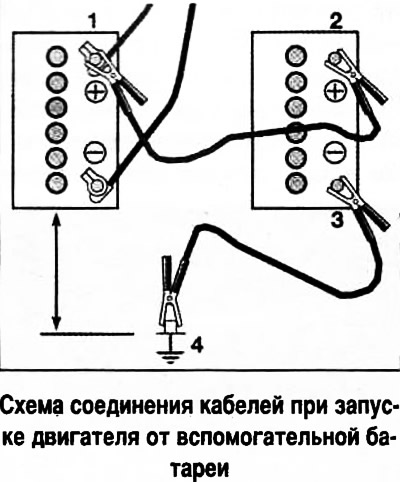
Connect the red jumper cable terminal to the positive terminal of the discharged battery. Connect the other terminal of the red jumper cable to the positive terminal of the booster (starting) battery. Connect the black jumper cable terminal to the negative terminal of the booster battery. Connect the other terminal of the black cable to a well-cleaned ground area on the cylinder block of the engine to be started, at a sufficient distance from the booster battery. Make sure that the jumper cables are located at a sufficient distance from the fan, belts and other moving parts of the engine and cannot come into contact with them. Start the engine from the booster battery, set it to idle mode, turn on all consumers and disconnect the cables in the reverse order.
Lifting a car with a jack
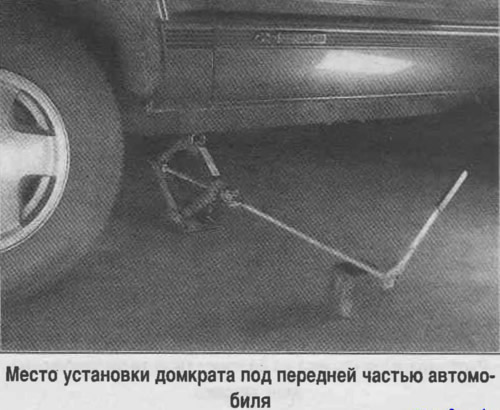
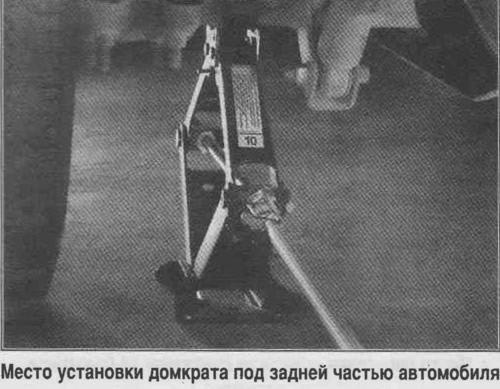
Before lifting the vehicle, engage reverse gear or move the automatic transmission selector to Park. When changing a wheel or performing other work, place the jack under the following areas of the body.
When raising the front of the vehicle:
- on rear-wheel drive vehicles - under the frame box, at the point where the cross member is attached,
- on all-wheel drive vehicles - under the front suspension cross member.
When raising the rear of the vehicle - under the rear axle beam.
It is prohibited to perform any work under the vehicle without additional supports and wheel locks (the wheel located diagonally from the one being lifted is blocked).
(The article is based on data from the website: chevyman.ru)