


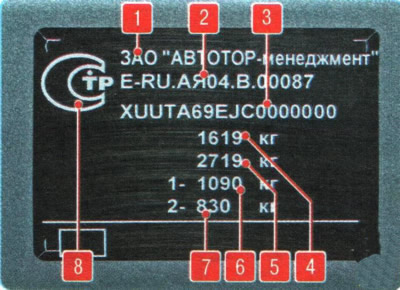
Figure 1.5. Identification plate: 1 - car assembly company; 2 - license permit number; 3 - vehicle identification number; 4 - permissible gross vehicle weight; 5 - permissible gross weight of the road train; 6 - permissible load on the front axle of the car; 7 - permissible load on the rear axle of the car; 8 - certification mark.
NOTE: This identification number is entered in the "VIN code" column when registering a vehicle with the State Traffic Safety Inspectorate.

In addition, the identification number assigned by the car assembly plant is duplicated by stamping on the inside of the right side member of the engine compartment.
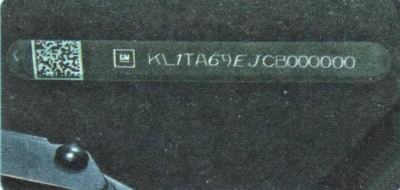
The vehicle identification number assigned by the car kit manufacturer is shown in the lower left part of the windshield.
NOTE: This identification number is entered into the "Body number" column when registering a vehicle with the State Traffic Safety Inspectorate and is subsequently used when ordering spare parts.
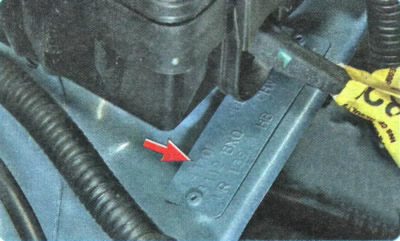
In addition to the above, a plate is attached to the left mudguard of the engine compartment with tear-off rivets, which contains information about the place and date of manufacture of the body, and its serial number.
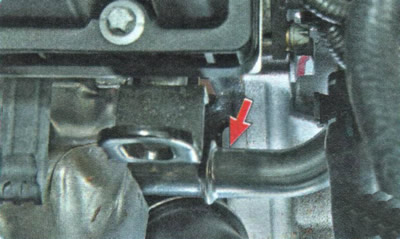
Designation (model and main characteristics) engine is stamped on the cylinder block lug next to the oil filter.
NOTE: The Chevrolet Aveo engine manufacturer does not label its engine with a serial number.
Decoding the engine designation, for example, A16 XER:
- A - exhaust toxicity standard (A - compliance with Euro-5 requirements);
- 16 - engine displacement (16 - 1.6 l, 18 - 1.8 l, etc.);
- X - compression ratio (L - 8.5-9.0; N - 9,0-9,5; S - 9,5-10,0; X - 10,0-11,5; Y - more than 11.5);
- E - type of fuel used (E - gasoline, D - diesel fuel);
- R - modification features (R/H - high boost, L - low boost, P - Twinport system, T - turbocharging).
[Information taken from the official website: CHEVYMAN.RU]