


Note: If the fluid is heavily contaminated and darkened, check the power steering pump and steering gear for proper operation. They may need to be repaired.
You will need: a container for the working fluid, a 22 mm wrench, and pliers.
For replacement of working fluid perform the following operations.
1. Raise the front of the vehicle until the wheels are off the ground and place the vehicle on supports.
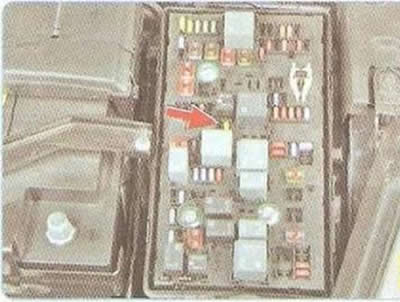
2. Remove the fuel pump fuse from the mounting block in the engine compartment.
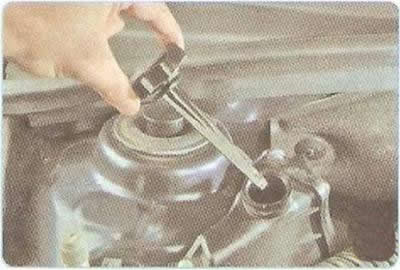
3. Unscrew the cap of the power steering reservoir.
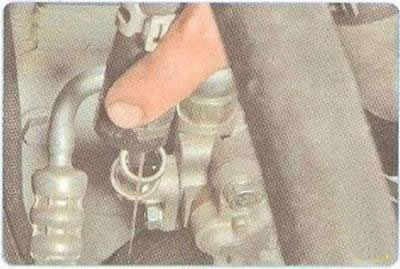
4. Loosen the clamp securing the fluid supply hose to the power steering pump pipe by squeezing its bent ears with pliers. Slide the clamp along the hose and disconnect the hose from the pipe. Drain the fluid from the reservoir into a previously prepared container.
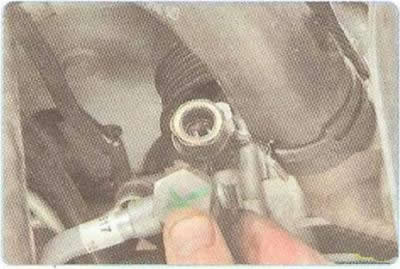
5. Unscrew the bolt securing the high-pressure line to the power steering pump connection and disconnect the line.
6. Drain the fluid from the power steering system by turning the starter two or three times and turning the steering wheel in both directions until it stops.
7. Connect the power steering pump to the pipeline and niche. Fill the fluid into the reservoir and remove air from the power steering system.
The need for bleeding occurs when air gets into the hydraulic system during fluid replacement, repair work, or when the tightness is broken during operation. A sign of air in the system is the steering wheel jamming when trying to make a sharp turn. In addition, the pump makes increased noise when turning the steering wheel, and the liquid in the tank usually foams.
For bleeding the power steering system steering, perform the following operations.
Warning: Air in the power steering system will cause premature failure of the power steering pump.
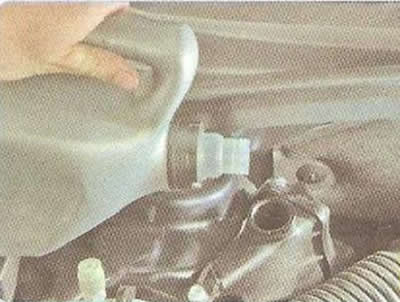
1. Fill the power steering system with working fluid to the minimum level (mark "MIN") (see "Checking the level and adding working fluid to the power steering reservoir").
2. Start the engine and turn the steering wheel five or six times in both directions until it stops.
Note: When bleeding, add fluid to the reservoir: its level should not fall below the "M1N" mark on the working fluid level indicator on the reservoir cap.
3. Turn the steering wheel from lock to lock in both directions until there are no air bubbles in the fluid poured into the power steering reservoir and the level of the working fluid in the reservoir stops decreasing.
Note: Make sure that the fluid level in the power steering reservoir does not change significantly when the steering wheel is turned in either direction. If the fluid level changes by more than 10 mm and rises sharply when the engine is stopped, bleed the system again.