


Warning: Batteries are dangerous because:
- contain acid that can burn you
- contain gas that may explode or catch fire
- contain enough electricity to shock and burn you
1. Check another vehicle. It should have a 12-volt battery with a negative ground.
2. Park the cars next to each other so that the bundle wires can reach the target, but do not put both cars on the parking brakes, automatic transmission in PARK (P).
1. Turn off the ignition on both vehicles, disconnect all unnecessary power consumers.
2. Open the hoods and inspect the batteries. Find the positive and negative terminals.
3. Check the starting wires; their insulation should not be damaged.
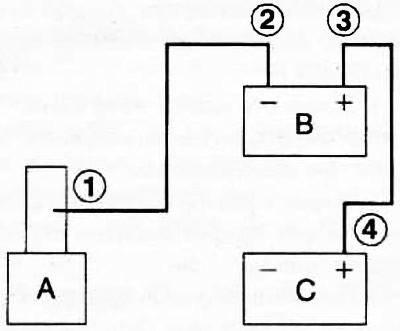
4. Connect the red positive cable to the positive terminal of the dead battery.
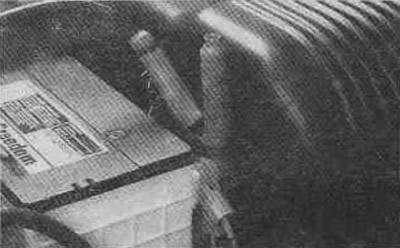
5. Do not let the other end of the wire touch metal. Connect this end of the wire to the positive terminal of the charged battery.
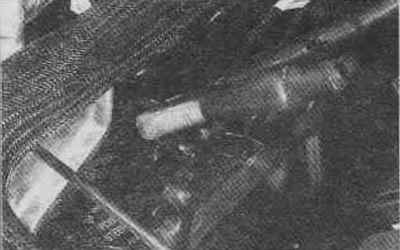
6. Connect the black negative cable to the negative terminal of the charged battery. Do not let the other end touch anything until the next step. Do not connect this end of the cable to the dead battery, but to a suitable negative metal terminal on your vehicle away from the battery.
7. The wire must be connected at least 18 inches (45 cm) away from the discharged battery. Wires must not be located near moving parts of the engine.
8. Now start the engine with a good battery, let the engine run for a while.
9. Try to start the engine with a dead battery. If it does not start after several attempts, your car needs service.
10. After starting, disconnect the wires in the reverse order. Make sure that they do not touch anything.