Fuel system
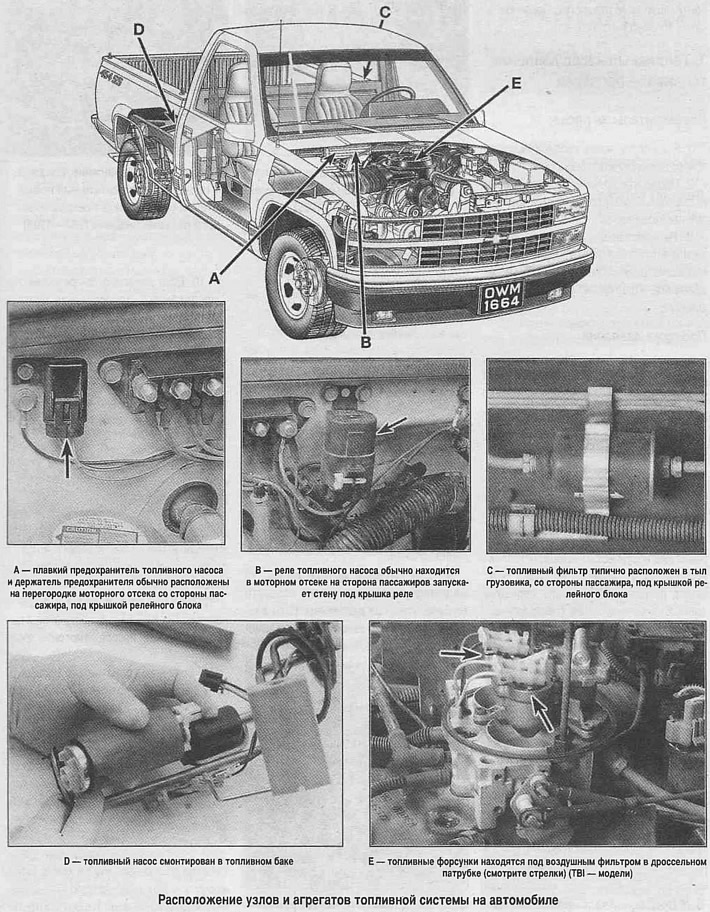
The fuel system consists of a fuel tank, an electric fuel pump, a fuel pump relay, fuel lines, and a fuel injection system. All models prior to 1995 use a dual-nozzle throttle body fuel injection system (TBI system). This system uses two injectors mounted inside the throttle body. Fuel is sprayed under pressure into a conventional intake manifold, from where it is delivered to the intake ports.
On models from 1996 with V6 and V8 5.0L and 5.7L engines, a centralized sequential injection system is installed (central SFI system). Since 1996, models with 7.4-liter V8 engines have used a multi-nozzle sequential fuel injection system (sFI system).
In the Central SFI system, the throttle body is mounted in the upper section of the intake manifold. The centrally located injector unit is installed in the space between the upper and lower manifolds. The injector unit consists of six (on a V6 engine) or eight (on a V8 engine) fuel injectors connected by hoses to the nozzles of each cylinder. The nozzles are equipped with plate valves.
The SFI system used on the 7.4-liter engine has a plastic fuel distributor mounted on the lower intake manifold. The fuel distributor contains 8 injectors, a pressure regulator, wires, and a fuel pressure test nipple. The throttle body is mounted on the upper intake manifold.
All models have electromagnetically driven injectors. Fuel is supplied to each injector under constant pressure, which is automatically set by the pressure regulator. Excess fuel returns to the tank. A signal from the RCM processor unit opens the injector, providing fuel atomization in the channel or in the throttle pipe. The open time of the injector determines the air-fuel composition of the mixture.
The electric fuel pump is mounted in a single module with the fuel level sensor.
Exhaust system
The exhaust system consists of an exhaust manifold with an oxygen sensor, a catalytic converter, exhaust pipes and a muffler.
Location of fuel system components and assemblies on a vehicle