


2. It is recommended to perform the following preliminary checks to determine the condition of the clutch.
- 1) Check the fluid level, restore if necessary (if the tank is empty, add fluid and bleed the hydraulic drive). Determine the cause of the leak.
- 2) To check for clutch slippage, press the pedal with the engine idling and after a few seconds engage reverse gear. A grinding noise will indicate increased wear of the pressure or friction discs.
- 3) Check that the clutch is fully disengaged. To do this, with the engine running, press the clutch pedal so that the pedal is about 12 mm from the floor. Shift from 1st to reverse gear several times. Difficulty shifting indicates wear of parts. Check the stroke of the working cylinder rod with the pedal fully depressed. If the stroke is small, check the fluid level.
- 4) Inspect the condition of the pedal axle and clutch release lever, make sure that the lever and clutch pedal have no play in the axles.
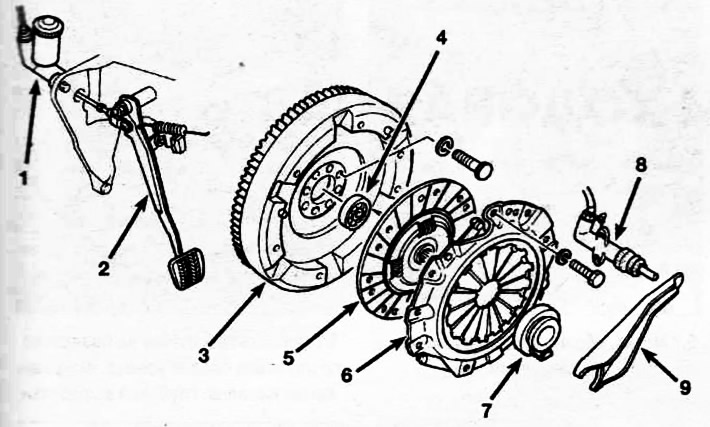
2.1. Clutch parts.
1. Master cylinder
2. Clutch pedal
3. Flywheel
4. Guide bearing
5. Friction disc
6. Pressure disc
7. Release bearing
8. Working cylinder
9. Clutch release lever
(The original source of the article is the website ChevyMan)