


Note: Parts that can be reused must be marked so that they can be installed in their original location.
Conventional pushers
1. Wash the parts with solvent.
2. Dry the parts with compressed air.
3. Inspect the tappets, look for:
- Bent or broken clip (1).
- Signs of wear on the push rod support (2).
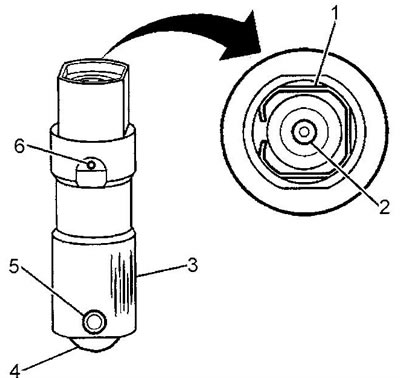
- Signs of wear or scoring of the bearing surface (3), if these defects are present, check the condition of the guide tappets.
- Signs of roller cutting (4).
- Loose fit or damage to the retainer (5).
- Dirt in the oil supply hole (6).
- Signs of wear or damage to the roller axle (the roller should rotate freely without jamming).
Cylinder deactivation system tappets
Note: Parts that can be reused must be marked so that they can be installed in their original location.
1. Wash the parts with solvent.
2. Dry the parts with compressed air.
3. Inspect the tappets, look for:
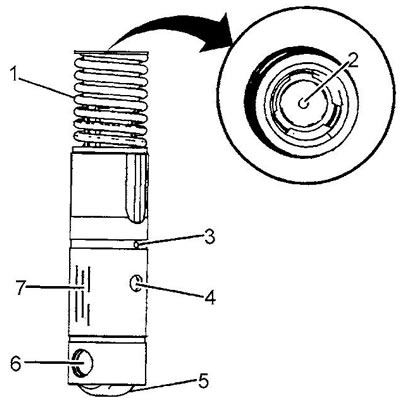
- signs of deformation or destruction of the spring (1).
- signs of wear on the push rod support (2).
- dirt in the oil supply hole (3).
- dirt in the oil supply hole (4) of the cylinder deactivation system.
- roller cut (5).
- signs of wear or damage to the roller axle (the roller should rotate freely without jamming).
- signs of wear or scoring of the support surface (7), if these defects are present, check the condition of the guide pushers.
4. Inspect the pushrod guides, look for:
- cracks or damage.
- signs of wear on the guide walls.
(The original article is on the website ChevyMan)