


Note:
- excessive clearance between the valve stem and the valve guide can cause noise in the valve train, premature wear of the valve stem seal and, accordingly, increased oil consumption.
- insufficient clearance can cause valve sticking and damage to other engine parts.
1. Use a dial indicator to measure the clearance between the valve stem and the valve guide. Place the indicator leg at the top of the valve guide. When rocking the valve, determine the clearance in the pair.
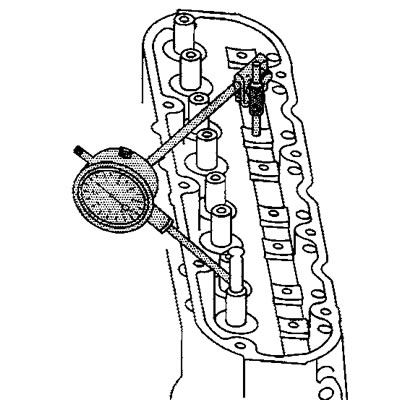
The clearance between the valve stem and the guide can also be obtained by directly measuring the outside diameter of the valve stem and the inside diameter of the guide. The clearance value is given in the specification. If the diameter of the valve stem is less than 7.95 mm, the valve must be replaced.
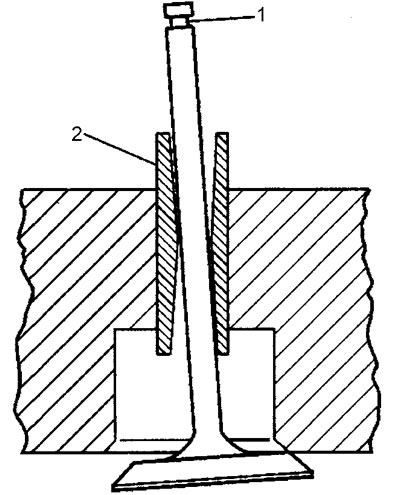
2. If the clearance is excessive, replace the valve (1) and guide (2) or the cylinder head assembly.
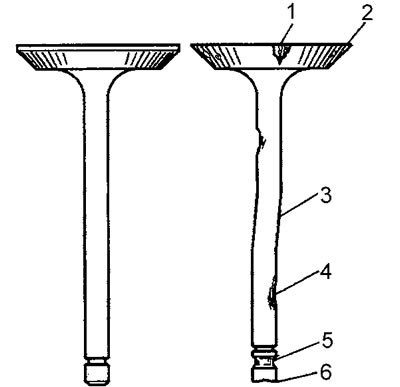
3. Inspect the valves, look for:
- burnout or traces of gas erosion (1)
- signs of valve plate thickness reduction (2)
- signs of valve stem deformation (3)
- signs of valve stem wear (4)
- signs of wear on the grooves for installing crackers (5)
- signs of wear on the end of the stem (6)
(The text of the article was obtained from the website: chevyman.ru)