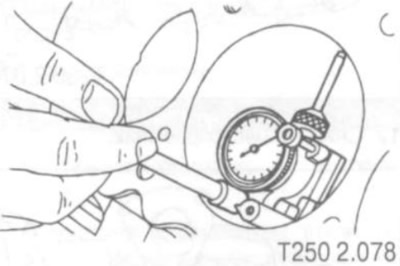
2. Check the condition of the connecting rod bearings (only to determine the operating conditions of the engine before repair, since in any case new crankshaft bearing shells should be installed).
3. Check the seat of the connecting rod bearing shells for wear.
4. Check the connecting rod upper head bore for scoring or wear.
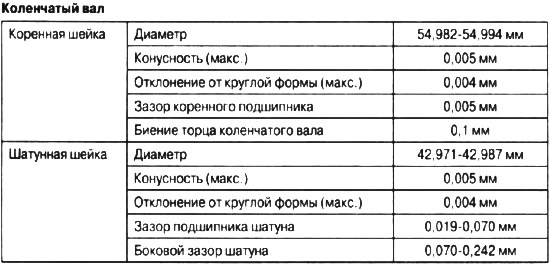
5. Check the crankshaft journals for wear.
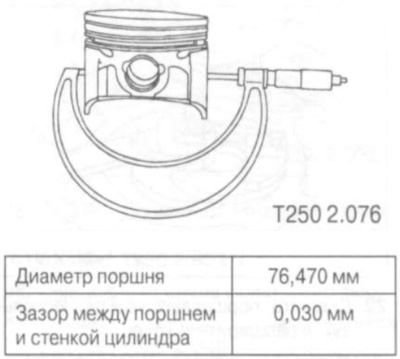
6. Check the pistons for scoring, chips and wear.
7. Measure the piston diameter using a micrometer.
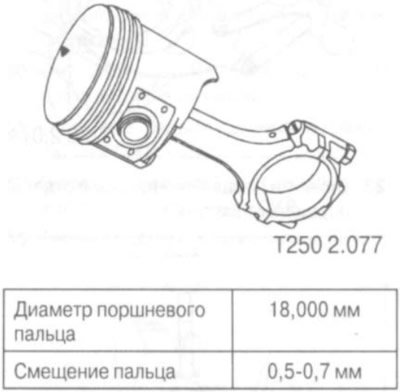
8. Check the correct installation of the piston relative to the connecting rod (see marks).
9. Check the cylinder block for flatness of the surface in contact with the cylinder head gasket using a ruler and feeler gauge.
10. Measure the cylinder diameter at various places using a bore gauge (at the top, middle and bottom of the cylinder, along two mutually perpendicular diameters).
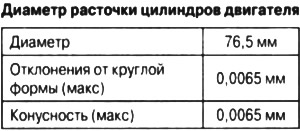
11. Check the condition of the cylinder walls for protrusions, burnt-through walls, increased local wear, and scoring.
12. Check the condition of the cylinder walls for varnish and carbon deposits; if necessary, perform light honing for cleaning purposes.