
ChevyMan.ru
Mazda Mitsubishi Toyota Land Rover Honda Kia Nissan
English Русский
Български
Беларускі
Український
Српски
Hrvatski
Română
Polski
Slovenský
Magyar
|
Articles | Sitemap | Contacts |


Home   Aveo   Captiva   Cruze   Lacetti   Lanos   Niva   Tahoe   Others  
Orlando 1 (2010-2018) Trailblazer 1 (2001-2008, petrol) Lumina 1 (1989-1994)
  • Home
  • Chevrolet
  • Orlando 1
  • General information
  • Maintenance
  • Replacing the coolant

Replacing the coolant (Chevrolet Orlando 1)

            0

We replace the coolant depending on the results of its density check (see above) or when the scheduled replacement period comes - after 240,000 km of mileage or after 5 years, whichever comes first. When replacing parts of the cooling system, it is also necessary to completely or partially drain the coolant.

Warning! To avoid burns, replace the coolant when the engine temperature is no more than +40°C. The coolant is toxic, so do not pour it into the soil or into the sewer.


1. We prepare the vehicle for maintenance and install it on an inspection pit or overpass.

2. Prepare a container with a capacity of at least 6 liters to drain the coolant. If the liquid is supposed to be refilled into the cooling system in the future, the container must be clean.

3. Unscrew the expansion tank cap.
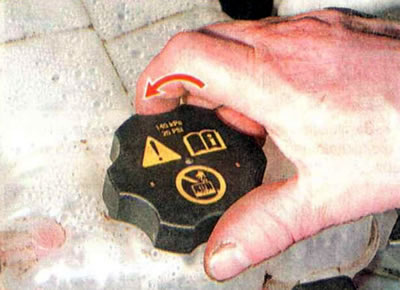
3. Unscrew the expansion tank cap.


4. Place a previously prepared container under the radiator drain pipe 2 and unscrew the plug 1 a few turns. When the coolant has drained, tighten the plug.
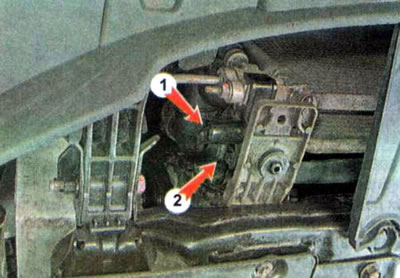
4. Place a previously prepared container under the radiator drain pipe 2 and unscrew the plug 1 a…


Recommendation. If the drained coolant is cloudy, brown in color, or has sediment, flush the system with clean water and refill with new coolant.


Warning! Dilute antifreeze with distilled water in advance (before filling the cooling system). This is the only way to ensure that the specified ratios of antifreeze and distilled water are precisely observed.


5. Prepare the coolant.

6. Slowly pour coolant into the expansion tank of the cooling system to the maximum level (see above), and close the filler cap.
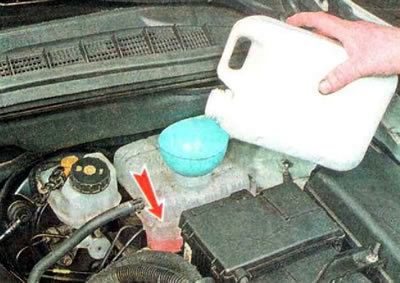
6. Slowly pour coolant into the expansion tank of the cooling system to the maximum level (see…


7. Start the engine. We check whether coolant is leaking from the radiator drain pipe.
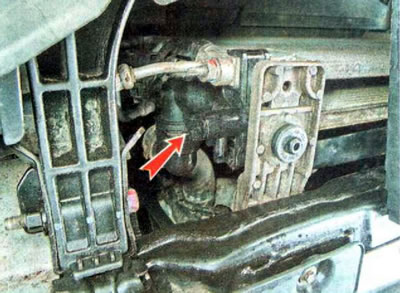
7. Start the engine. We check whether coolant is leaking from the radiator drain pipe.


If necessary, tighten the cap more tightly.

8. Warm up the engine to operating temperature (the electric fan should turn on at least twice). We stop the engine and after it has cooled down, we check the coolant level in the expansion tank. If necessary, we bring it to the maximum.

(The text of the article was obtained from the website: ChevyMan.ru)

The article was checked: Vladimir Romannikov
This article is available at russian, bulgarian, belarusian, ukrainian, serbian, croatian, romanian, polish, slovak, hungarian

Share information:

Previous articles
Orlando 1: Maintenance
Next articles

Checking the density of the coolant
Checking the coolant level
Processing of door seals
Running in a car
Oil and oil filter change
Maintenance plan
Preparing the car for maintenance and repair
Seasonal maintenance
Periodic maintenance
Checking the brake fluid level


See similar articles on the topic of Chevrolet cars:
Replacing the coolant Chevrolet Aveo T300 (2012-2018)
Engine coolant temperature gauge Chevrolet Captiva 1 (2006-2018)
Replacing the coolant Chevrolet Cruze 1 (2008-2016)
Replacing the coolant Chevrolet Lacetti 1 (2002-2009)
Replacing the coolant Chevrolet Lanos T150 (2002-2009)
Replacing fuses Chevrolet Niva 1 (2002-2016)
Replacing the coolant Chevrolet Tahoe 2 and 3 (2000-2014)
Link in different formats to this page


Visitor comments

No comments yet


How much will 12 + 49 =


Orlando 1 (2010-2018) 
  • General information
  • Introduction to manual
  • User manual
  • Maintenance
  • Troubleshooting
  • Power unit
  • Engine repair
  • Fuel and control system
  • Cooling and lubrication system
  • Ignition system
  • Transmission
  • Clutch
  • Gearbox
  • Drive shafts
  • Chassis
  • Car suspension
  • Steering
  • Brake system
  • Body
  • Exterior (external elements)
  • Doors, locks and windows
  • Electrical equipment
  • Equipment and devices
  • Windscreen wipers
  • Power devices
  • Electrical diagrams


Trailblazer 1 (2001-2008) 
  • General information
  • User manual
  • Troubleshooting
  • Maintenance
  • Power unit
  • Engine in a car
  • Engine overhaul
  • Cooling and heating
  • Fuel and exhaust system
  • Engine electrical equipment
  • Engine control
  • Transmission
  • Automatic gearbox
  • Transfer case
  • Drive shafts and cardan
  • Chassis
  • Brake system
  • Car suspension
  • Steering
  • Body
  • Exterior (external elements)
  • Interior (internal elements)
  • Doors, locks and windows
  • Electrical equipment
  • Equipment and devices
  • Electrical circuits


Lumina 1 (1989-1994) 
  • General information
  • Maintenance
  • Power unit
  • Engine 3.1L V6
  • Engine 3.8L V6
  • Engine overhaul
  • Cooling system
  • Power and exhaust system
  • Fuel injection
  • Engine electrical equipment
  • Reduced exhaust gas toxicity
  • Transmission
  • Automatic gearbox
  • Drive shafts
  • Chassis
  • Brake system
  • Car suspension
  • Steering
  • Body
  • Heating and air conditioning
  • Repair of body elements
  • Doors, covers and windows
  • Interior (internal elements)
  • Electrical equipment
  • Equipment and devices
  • Electrical circuits


ChevyMan.ru © 2017-2026 · Mobile version · Feedback · Site search · Interesting to read · Sitemap: EN BG BY UA RS HR RO PL SK HU

Aveo 2003-2008 · Aveo 2006-2011 · Aveo 2012-2018 · Captiva 2006-2018 · Cruze 2008-2016 · Lacetti 2002-2009 · Lanos 2002-2009 · Niva 2002-2016 · Tahoe 1992-2000 · Tahoe 2000-2014 · Lumina 1 1989-1994 · Trailblazer 1 2001-2008 · Orlando 1 2010-2018 ·
🛡️ For your security and to improve our service, this site uses cookies. You can disable them in your browser.