


Warning: It is prohibited to mix green ethylene glycol antifreeze with orange antifreeze "DEX-COOL", which does not contain silicate components, since this reduces the efficiency of the latter, which is intended for use for a mileage of 160,000 km (or 5 years).
1. Most engine problems are caused by problems in the cooling system. On vehicles with automatic transmission, the system coolant also circulates in the transmission oil cooler. Thus, the performance of the cooling system directly affects the performance of the automatic transmission.
2. The cooling system is checked with the engine unheated. Perform the check the day after the vehicle has been in use or no earlier than three hours after the engine has been turned off.
3. Slowly turn until it stops and remove the radiator cap. If a hissing sound is heard (which indicates that there is pressure in the system), wait until it stops. If there is no hissing sound, press the cap in and continue unscrewing it. Wash the lid thoroughly on both sides with clean water. Also clean the radiator filler neck. Completely remove all corrosion deposits. The coolant in the radiator should be relatively clear. If the liquid has a rusty tint, it should be drained and then the system should be filled (see subsection 30). If necessary, raise the fluid level by adding the required volume of the appropriate antifreeze solution to the system (see subsection 4).
4. Carefully inspect the larger upper and lower radiator hoses, as well as the smaller diameter heater hoses that enter the rear bulkhead of the engine compartment. Inspect the hoses along their entire length and replace any cracked, bulging or worn hoses as necessary. Cracks appear when the hose is compressed (see illustration).
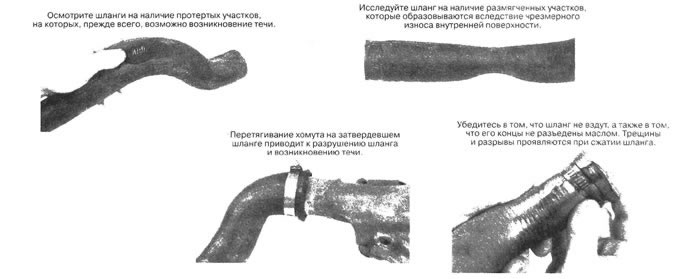
14.4 Hoses, like drive belts, fail, which takes the car owner by surprise. To prevent unexpected failure of the cooling and heating system hoses, periodically inspect them using the following method
5. Make sure the hose connections are secure. Coolant leakage appears as whitish or rusty deposits in the area of the hose rupture or puncture. If spring clamps are present, it is recommended to replace them with more reliable worm fasteners.
6. Use compressed air or a soft brush to remove stuck and dried insects, dry leaves, etc. from the front of the radiator or condenser of the air conditioning system. Be careful not to cut yourself on the sharp radiator honeycombs or allow them to become damaged.
7. If the coolant level is constantly decreasing and there is no leakage, it is necessary to check the system pressure and determine the pressure that is maintained by the expansion tank cap. To do this, you should contact a service station.
[The material was created based on information from the website: CHEVYMAN.ru]