
ChevyMan.ru
Mazda Mitsubishi Toyota Land Rover Honda Kia Nissan
English Русский
Български
Беларускі
Український
Српски
Hrvatski
Română
Polski
Slovenský
Magyar
|
Articles | Sitemap | Contacts |


Home   Aveo   Captiva   Cruze   Lacetti   Lanos   Niva   Tahoe   Others  
Orlando 1 (2010-2018) Trailblazer 1 (2001-2008, petrol) Lumina 1 (1989-1994)
  • Home
  • Chevrolet
  • Trailblazer 1
  • General information
  • Maintenance
  • Checking the technical condition of the fuel system

Checking the technical condition of the fuel system (Chevrolet Trailblazer 1)

            0

Warning: Certain precautions must be observed when performing preventive inspection and maintenance on fuel system components. Work in well-ventilated areas and do not allow open flames or unshielded light bulbs in the work area. Avoid contact with gasoline on your skin. Work with rubber gloves. If gasoline gets on your skin, wash it off with running water and soap. Wipe up spilled fuel immediately and store the absorbent cloth where it cannot be ignited. Before acting on the elements, release the pressure in the system (see chapter 4). Have a class B fire extinguisher on hand and wear eye protection when working with the system.


1. If you smell fuel while driving or when the vehicle is exposed to sunlight, immediately inspect the fuel system.

2. Remove the fuel filler cap and inspect it for signs of damage or corrosion. A clear imprint of the sealing surface should be visible on the cover gasket. If the gasket surface shows signs of wear or corrosion, replace the cover.

3. Inspect the fuel supply and return lines for cracks. Make sure that the metal fuel lines are securely connected to the injectors.

Warning: The vehicle has a forced fuel injection system. Before servicing the fuel equipment, it is necessary to relieve the system pressure. IN chapter 4 the corresponding procedure is described.


4. On 4.2L engines the fuel injectors are not visible. Signs of a leak include the presence of fuel impurities in the engine oil or a long engine start time, which is accompanied by the appearance of black smoke from the exhaust pipe.


5. Since some system components, such as the fuel tank and significant sections of the forward and return fuel lines, are located on the underside of the vehicle, it is recommended to raise the vehicle with a lift to provide improved visibility during inspection. If it is not possible to use a lift, raise the vehicle using a jack and install vertical supports.

6. After raising the vehicle and ensuring its stability, inspect the fuel tank and filler neck for cracks, holes and other damage. The connection between the filler neck and the fuel tank requires the most careful attention. Sometimes the rubber neck starts leaking due to loose clamps or wear of the material. Make sure that the tank is securely attached to the car body by inspecting its brackets

Warning: Do not attempt to repair the fuel tank yourself (only replacement of rubber parts is allowed). Exposure to an open flame from a welding torch may cause fuel vapors in the tank to explode.


7. Carefully inspect the metal and rubber sections of the fuel lines connected to the fuel tank (see illustration). Inspect for loose connections, worn hoses, pinched fuel lines and other problems. Make the necessary replacement as described in chapter 4.
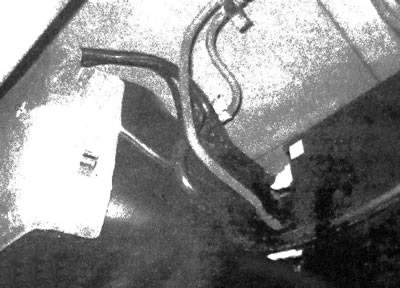
18.7 Inspect the fuel tank mounting straps, as well as all fuel and vent lines

18.7 Inspect the fuel tank mounting straps, as well as all fuel and vent lines


8. Fuel odor may also come from connections and components of the fuel vapor recovery system. This system is designed to accumulate vapors in a carbon adsorber and then direct them into the intake tract, from where the vapors, mixed with air, enter the combustion chambers.

9. The most common sign of a problem with the fuel vapor recovery system is a persistent smell of fuel coming from the canister. If there is a smell of fuel, after ruling out that its source is located in the areas inspected above, it is necessary to inspect the adsorber and its connections to the hoses (see chapter 6).

The article was checked: Vladimir Romannikov
This article is available at russian, bulgarian, belarusian, ukrainian, serbian, croatian, romanian, polish, slovak, hungarian

Share information:

Previous articles
Trailblazer 1: Maintenance
Next articles

Lubrication of chassis elements
Checking the Differential Transmission Fluid Level
Wheel rotation
Inspection of the cooling system
Inspection and replacement of hoses located in the engine compartment
Checking the technical condition of the brake system
Checking the technical condition of the exhaust system
Checking the Transfer Case Fluid Level (4WD Models)
Replacing brake fluid
Replacing the air cleaner


See similar articles on the topic of Chevrolet cars:
Checking the technical condition of the front wheel drives Chevrolet Aveo T300 (2012-2018)
Checking the air filter and fuel system Chevrolet Captiva 1 (2006-2018)
Checking the pressure in the fuel system Chevrolet Cruze 1 (2008-2016)
Checking the condition of the brake system Chevrolet Lacetti 1 (2002-2009)
Checking the pressure in the engine fuel system Chevrolet Lanos T150 (2002-2009)
Checking the technical condition without disassembling Chevrolet Niva 1 (2002-2016)
Technical data of the fuel system Chevrolet Tahoe 1 (1992-2000)
Link in different formats to this page


Visitor comments

No comments yet


How much will 48 + 49 =


Orlando 1 (2010-2018) 
  • General information
  • Introduction to manual
  • User manual
  • Maintenance
  • Troubleshooting
  • Power unit
  • Engine repair
  • Fuel and control system
  • Cooling and lubrication system
  • Ignition system
  • Transmission
  • Clutch
  • Gearbox
  • Drive shafts
  • Chassis
  • Car suspension
  • Steering
  • Brake system
  • Body
  • Exterior (external elements)
  • Doors, locks and windows
  • Electrical equipment
  • Equipment and devices
  • Windscreen wipers
  • Power devices
  • Electrical diagrams


Trailblazer 1 (2001-2008) 
  • General information
  • User manual
  • Troubleshooting
  • Maintenance
  • Power unit
  • Engine in a car
  • Engine overhaul
  • Cooling and heating
  • Fuel and exhaust system
  • Engine electrical equipment
  • Engine control
  • Transmission
  • Automatic gearbox
  • Transfer case
  • Drive shafts and cardan
  • Chassis
  • Brake system
  • Car suspension
  • Steering
  • Body
  • Exterior (external elements)
  • Interior (internal elements)
  • Doors, locks and windows
  • Electrical equipment
  • Equipment and devices
  • Electrical circuits


Lumina 1 (1989-1994) 
  • General information
  • Maintenance
  • Power unit
  • Engine 3.1L V6
  • Engine 3.8L V6
  • Engine overhaul
  • Cooling system
  • Power and exhaust system
  • Fuel injection
  • Engine electrical equipment
  • Reduced exhaust gas toxicity
  • Transmission
  • Automatic gearbox
  • Drive shafts
  • Chassis
  • Brake system
  • Car suspension
  • Steering
  • Body
  • Heating and air conditioning
  • Repair of body elements
  • Doors, covers and windows
  • Interior (internal elements)
  • Electrical equipment
  • Equipment and devices
  • Electrical circuits


ChevyMan.ru © 2017-2026 · Mobile version · Feedback · Site search · Interesting to read · Sitemap: EN BG BY UA RS HR RO PL SK HU

Aveo 2003-2008 · Aveo 2006-2011 · Aveo 2012-2018 · Captiva 2006-2018 · Cruze 2008-2016 · Lacetti 2002-2009 · Lanos 2002-2009 · Niva 2002-2016 · Tahoe 1992-2000 · Tahoe 2000-2014 · Lumina 1 1989-1994 · Trailblazer 1 2001-2008 · Orlando 1 2010-2018 ·
🛡️ For your security and to improve our service, this site uses cookies. You can disable them in your browser.