
ChevyMan.ru
Mazda Mitsubishi Toyota Land Rover Honda Kia Nissan
English Русский
Български
Беларускі
Український
Српски
Hrvatski
Română
Polski
Slovenský
Magyar
|
Articles | Sitemap | Contacts |


Home   Aveo   Captiva   Cruze   Lacetti   Lanos   Niva   Tahoe   Others  
Aveo T300 (2012-2018) Aveo T250 (2006-2011) Aveo T200 (2003-2008)
  • Home
  • Aveo
  • T300 (2012-2018)
  • Power unit
  • Supply system
  • Replacing the fuel tank and its filler pipe

Replacing the fuel tank and its filler pipe (Chevrolet Aveo T300)

            0

You will need: a 10 mm wrench, 10 mm and 13 mm socket heads, and a flat-blade screwdriver.

If a fuel leak is detected from the tank, it is recommended to replace the tank, since soldering it requires a certain qualification of the performer and special equipment. In addition, it is necessary to thoroughly wash and steam the tank, otherwise an explosion of fuel vapors is possible during soldering.

If the fuel filter screen often becomes clogged, remove and clean the tank.

USEFUL TIP: It is easier to remove an empty tank when working on a lift, overpass or inspection pit. To remove the remaining fuel, pump it out through the open hole in the tank (after removing the connecting hose of the filler pipe).


1. Reduce the pressure in the fuel system (see "Reducing pressure in the fuel system").

2. Disconnect the wire from the negative terminal of the battery.

NOTE: The rear suspension has been removed from the vehicle for clarity in the photographs. It is not necessary to remove the suspension to replace the fuel tank.

NOTE: The rear suspension has been removed from the vehicle for clarity in the photographs. It is…


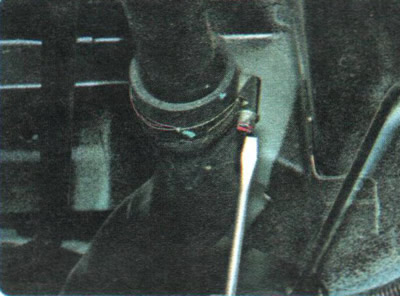
3. Loosen the clamp securing the connecting hose to the filler pipe...
3. Loosen the clamp securing the connecting hose to the filler pipe...


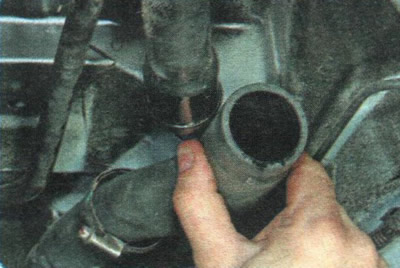
4. ...and disconnect the hose from the pipe, while removing the clamp from the hose so as not to lose it.


4. ...and disconnect the hose from the pipe, while removing the clamp from the hose so as not to…


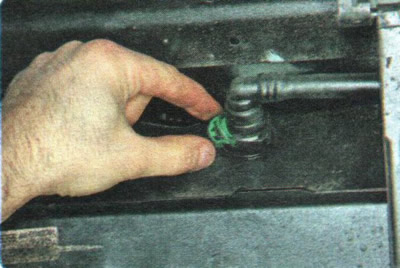
5. Pull out the air bleed tube retainer...
5. Pull out the air bleed tube retainer...


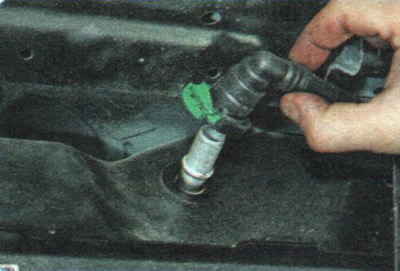
6. ...and disconnect it from the fuel tank hose.
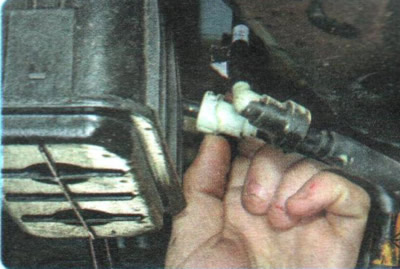
6. ...and disconnect it from the fuel tank hose.


7. Press the pressure pipe tip retainer...
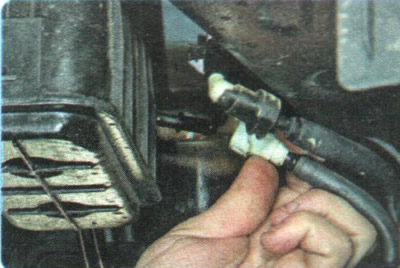
7. Press the pressure pipe tip retainer...


8. ...and disconnect the pipeline from the fuel supply line.
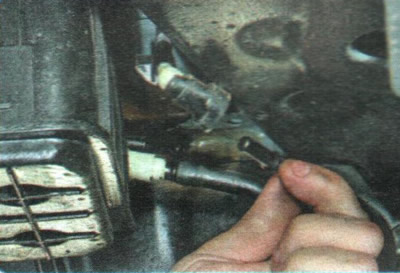


8. ...and disconnect the pipeline from the fuel supply line.


9. Disconnect the fuel vapor recovery system canister pipe in the same way.

10. Remove the right rear wheel and place the vehicle on a secure support.
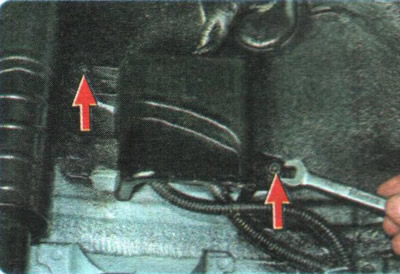
10. Remove the right rear wheel and place the vehicle on a secure support.


11. In the right rear wheel arch, unscrew the two nuts...
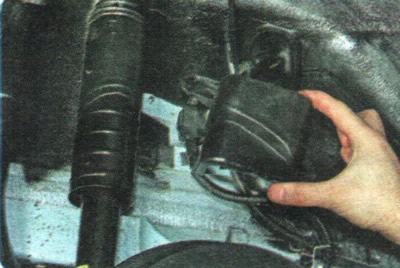
11. In the right rear wheel arch, unscrew the two nuts...


12. ...and remove the protective cover of the electrical connectors.
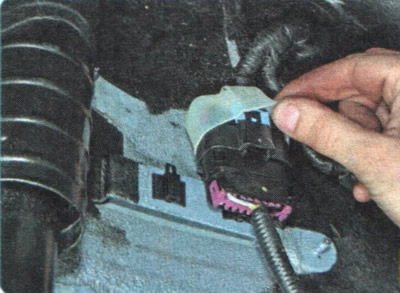
12. ...and remove the protective cover of the electrical connectors.


13. Lift the protective cover of the fuel module wiring harness connector.
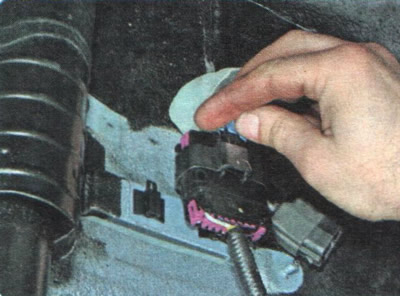


13. Lift the protective cover of the fuel module wiring harness connector.


14. Pull out the locking bracket...
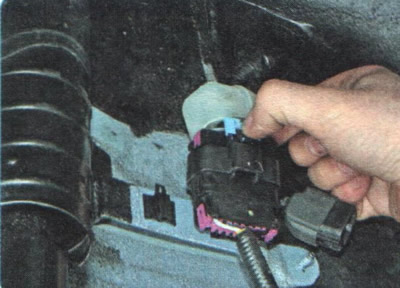
14. Pull out the locking bracket...


15. ...and squeeze the fuel module wiring harness connector retainer...
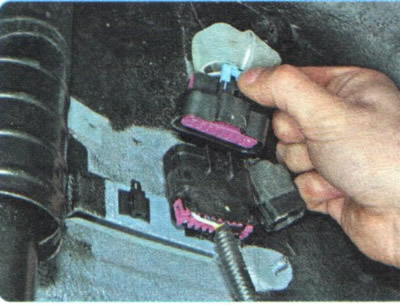
15. ...and squeeze the fuel module wiring harness connector retainer...


16. ...then disconnect the connector.
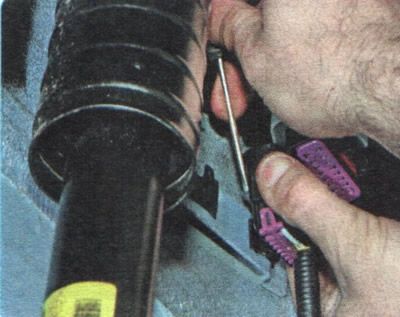
16. ...then disconnect the connector.


17. Use a screwdriver to pry up the latch...
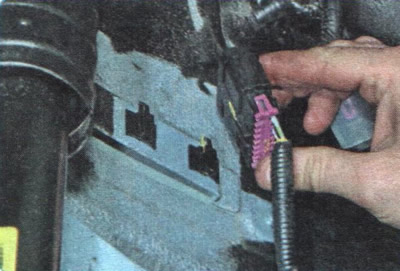


17. Use a screwdriver to pry up the latch...


18. ...and remove the lower part of the shoe from the holder on the body.
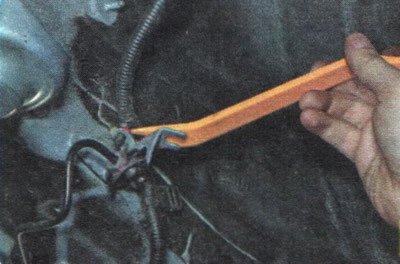
18. ...and remove the lower part of the shoe from the holder on the body.


19. Pry the wire harness holder out of the brake hose bracket hole.
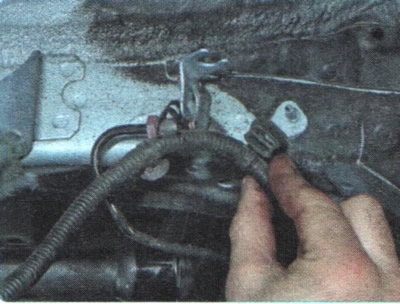
19. Pry the wire harness holder out of the brake hose bracket hole.


20. Remove the second wire harness holder from the stud.
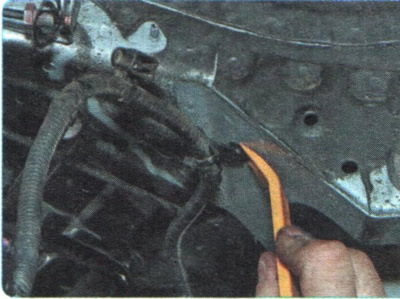
20. Remove the second wire harness holder from the stud.


21. Pry the third holder and remove it from the side member hole.


21. Pry the third holder and remove it from the side member hole.


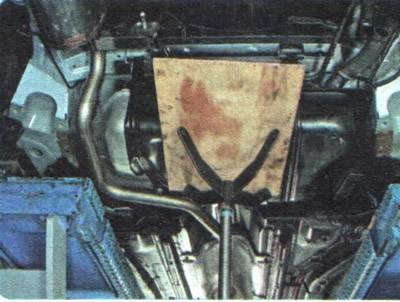
22. Place a secure support under the tank.
22. Place a secure support under the tank.


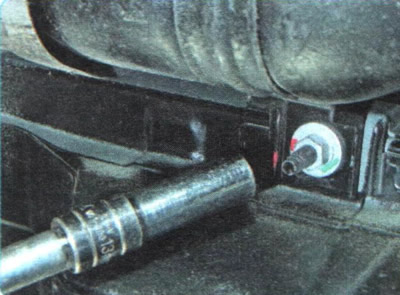
23. Unscrew the nuts securing the two fuel tank suspension clamps.
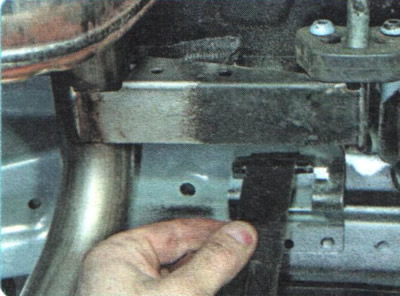
23. Unscrew the nuts securing the two fuel tank suspension clamps.


24. Remove the clamp pins from the brackets on the body...
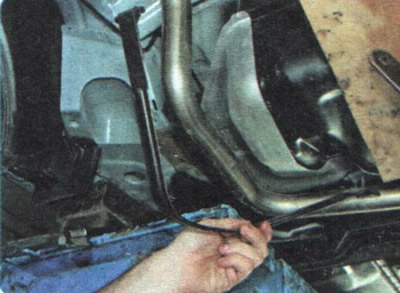
24. Remove the clamp pins from the brackets on the body...


25. ...and remove the clamps.
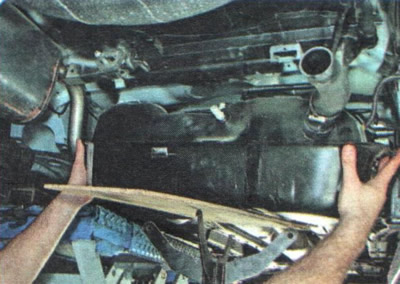
25. ...and remove the clamps.


26. Remove the support and lower the fuel tank slightly, gradually moving it down and to the right.
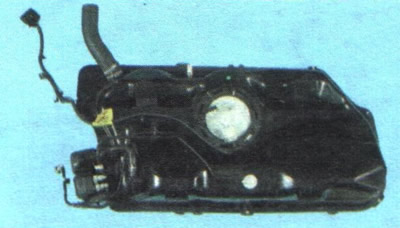
26. Remove the support and lower the fuel tank slightly, gradually moving it down and to the right.


27. Remove the fuel tank completely.

28. Install the fuel tank in the reverse order of removal.

29. After connecting the pipes and the fuel pump wiring harness, fill the tank with gasoline, start the engine and check the tightness of all pipe connections.

If you need to remove fuel tank filler pipe, do the following.

1. Remove the right rear wheel and place the vehicle on a secure support.

2. Remove the right rear fender liner (see "Removal and installation wheel arch liners and mudguards").
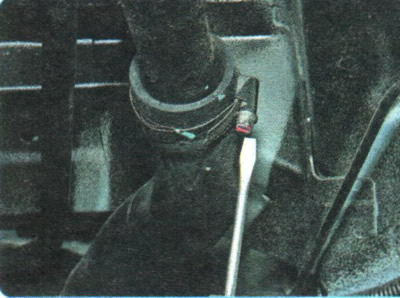
2. Remove the right rear fender liner (see «Removal and installation wheel arch liners and…


3. Loosen the clamp securing the connecting hose to the filler pipe...
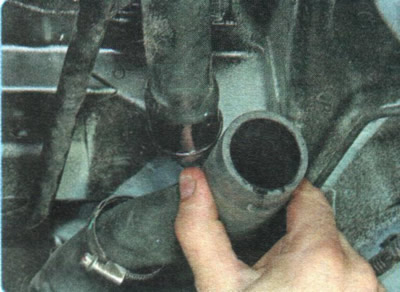
3. Loosen the clamp securing the connecting hose to the filler pipe...


4. ...and disconnect the hose from the pipe, while removing the clamp from the hose so as not to lose it.
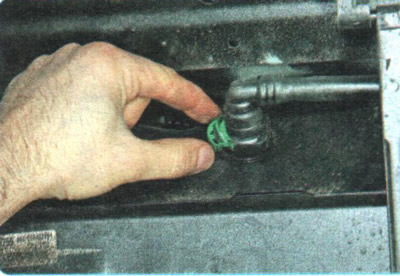
4. ...and disconnect the hose from the pipe, while removing the clamp from the hose so as not to…


5. Pull out the air bleed tube retainer...
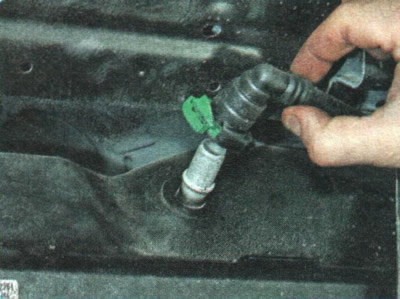
5. Pull out the air bleed tube retainer...


6. ...and disconnect the tube from the fuel tank pipe.
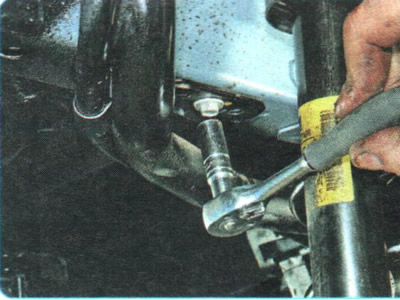
6. ...and disconnect the tube from the fuel tank pipe.


7. Unscrew the bolts securing the filler pipe to the side member...
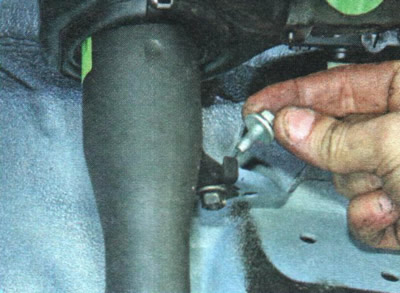
7. Unscrew the bolts securing the filler pipe to the side member...


8. ...and the bracket on the side of the body.
8. ...and the bracket on the side of the body.


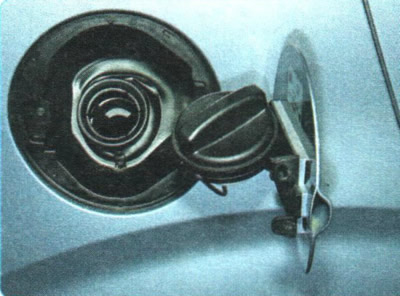
9. Open the fuel tank filler cap and unscrew the filler cap.
9. Open the fuel tank filler cap and unscrew the filler cap.


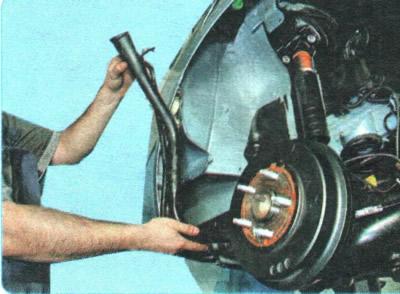
10. Remove the filler pipe from the rubber hatch seal and remove it.
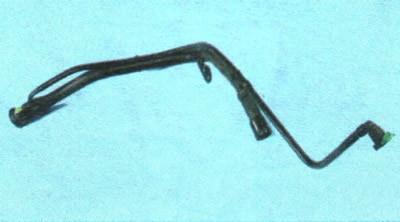
10. Remove the filler pipe from the rubber hatch seal and remove it.


11. Install the fuel tank filler pipe and all removed parts in the reverse order of removal.

The article was checked: Vladimir Romannikov
This article is available at russian, bulgarian, belarusian, ukrainian, serbian, croatian, romanian, polish, slovak, hungarian

Share information:

Previous articles
Aveo T300: Supply system
Next articles

Removal and installation the fuel module
Removal and installation the air filter and air duct
Replacing the air filter element
Reducing pressure in the fuel system
Checking the pressure in the fuel system
Replacing the fuel pressure pulsation compensator
Removal and installation the fuel rail
Removal, inspection and installation of injectors
Removal and installation the throttle assembly
Removal and installation the throttle pedal


See similar articles on the topic of Chevrolet cars:
Filling the fuel tank Chevrolet Captiva 1 (2006-2018)
Replacing the fuel tank and its filler pipe Chevrolet Cruze 1 (2008-2016)
Replacing the fuel filter Chevrolet Lacetti 1 (2002-2009)
Replacing the fuel filter Chevrolet Lanos T150 (2002-2009)
Fuel tank cap Chevrolet Niva 1 (2002-2016)
Fuel tank filler pipe Chevrolet Tahoe 2 and 3 (2000-2014)
Fuel tank cleaning and repair Chevrolet Lumina 1 (1989-1994)
Link in different formats to this page


Visitor comments

No comments yet


How much will 48 + 39 =


Aveo T300 (2012-2018) 
  • General information
  • Vehicle device
  • User manual
  • Main malfunctions
  • Maintenance
  • Power unit
  • Engine
  • Lubrication system
  • Cooling system
  • Supply system
  • Exhaust system
  • Transmission
  • Clutch
  • Manual gearbox
  • Automatic gearbox
  • Front wheel drives
  • Chassis
  • Front suspension
  • Rear suspension
  • Steering
  • Brake system
  • Body
  • Exterior
  • Interior
  • Doors and trunk
  • Security systems
  • Electrical equipment
  • Engine electrics
  • Equipment and devices
  • Heating and air conditioning
  • Electrical circuits


Aveo T250 (2006-2011) 
  • Manual
  • Driver's workplace
  • Salon equipment
  • Vehicle characteristics
  • Maintenance
  • Engine 1.5 SOHC
  • Engine repair
  • Fuel supply system
  • Control system
  • Cooling system
  • Engine 1.6 DOHC
  • Engine repair
  • Control system
  • Transmission
  • Clutch
  • Manual gearbox
  • Automatic gearbox
  • Wheel drive
  • Chassis
  • Wheel suspension
  • Steering
  • Brake system
  • Body
  • Exterior
  • Interior


Aveo T200 (2003-2008) 
  • General information
  • User manual
  • Power unit
  • Engine repair 1.5L SOHC
  • Fuel system
  • Control system
  • Cooling system
  • Transmission
  • Clutch
  • Manual gearbox
  • Automatic gearbox
  • Drive shafts
  • Chassis
  • Front suspension
  • Rear suspension
  • Steering
  • Brake system
  • Body
  • Exterior (external elements)
  • Interior (internal elements)
  • Electrical equipment
  • Equipment and devices
  • Electrical circuits


ChevyMan.ru © 2017-2026 · Mobile version · Feedback · Site search · Interesting to read · Sitemap: EN BG BY UA RS HR RO PL SK HU

Aveo 2003-2008 · Aveo 2006-2011 · Aveo 2012-2018 · Captiva 2006-2018 · Cruze 2008-2016 · Lacetti 2002-2009 · Lanos 2002-2009 · Niva 2002-2016 · Tahoe 1992-2000 · Tahoe 2000-2014 · Lumina 1 1989-1994 · Trailblazer 1 2001-2008 · Orlando 1 2010-2018 ·
🛡️ For your security and to improve our service, this site uses cookies. You can disable them in your browser.