


Oxygen sensor (O2S) (for unleaded fuel only)
Three-channel catalysts are used to control the content of bicarbonates (HC), carbon monoxide (CO) and nitrogen oxides (NOx) in exhaust gases. The catalytic agent in the catalyst provokes a chemical reaction. This reaction oxidizes HC and CO in the exhaust and converts them into safe water vapor and carbon dioxide. The catalyst, as well as the catalyzing agent, reduces NOx by converting it to nitrogen. The ECM can track this process using an O2S oxygen sensor). The sensor reproduces an output signal that indicates the amount of oxygen in the incoming exhaust gas stream. This is a sign of the catalyst's ability to convert exhaust gases. The catalysis process tracking sensor works on the same principle as fuel supply control sensors. The main task of the sensor is to track the catalysis process, but their role in controlling the fuel supply is limited. If the sensor output indicates the presence of a voltage above or below 450 mV bias voltage for an extended period of time, the engine control unit will smoothly adjust the fuel balancing to ensure that the fuel supply is consistent for monitoring the catalysis process.
Removal
1. Disconnect the "-" battery cable.
Note: The oxygen sensor uses a permanently attached electrode and connector. This electrode cannot be removed from the oxygen sensor. Damage to or removal of the electrode or connector may impair the performance of the oxygen sensor. Be careful when handling the oxygen sensor. Do not drop it.
2. Remove the oxygen sensor (O2S) connector.
Note: If the engine temperature is below 48°C, it may be difficult to remove the oxygen sensor. Excessive force may result in stripping the threads in the exhaust manifold.
3. Carefully remove the oxygen sensor (O2S).
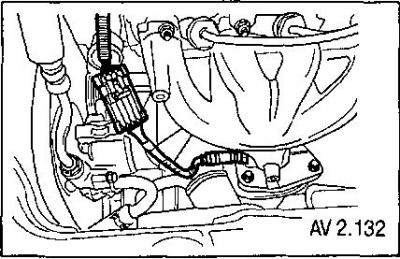
Installation Caution: The threads of the oxygen sensor are coated with a special anti-stick compound. This compound consists of liquid graphite and glass granules. The graphite will burn off later, but the glass granules will remain, which will make it easier to remove the sensor. A new or repaired sensor will have this compound on the threads. If the sensor is removed from the engine or there is a need to reinstall it, a layer of anti-stick compound must be applied before reinstallation.
1. Coat the oxygen sensor threads with non-stick compound if necessary.
2. Install the oxygen sensor (O2S) and tighten to 42 Nm.
3. Connect the oxygen sensor.
4. Connect the "-" wire of the battery.
CO regulator (for leaded fuel only)
CO regulator (potentiometer), typically a variable resistor that regulates carbon monoxide (CO) emissions from vehicles running on leaded fuel. On such vehicles, the CO regulator is installed in place of the oxygen sensor to control the pulse width of the fuel injector.
The original article is on the website: chevyman.ru