


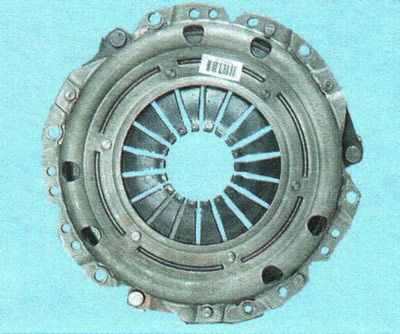
The pressure plate is mounted in a stamped steel casing 3 (figure 6.1), attached with six bolts to the flywheel 1 of the engine.
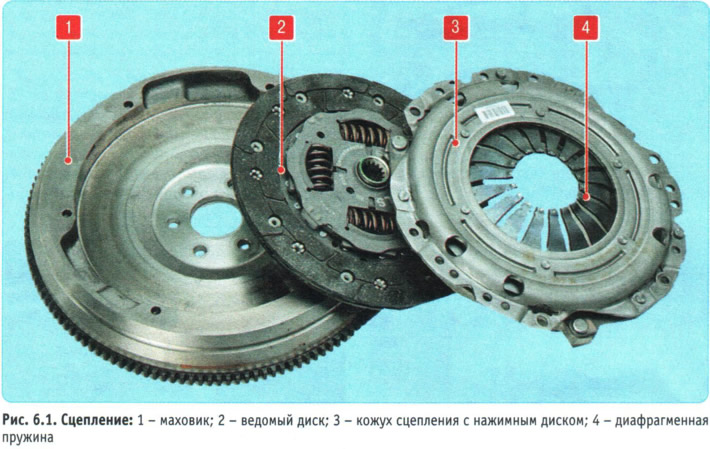
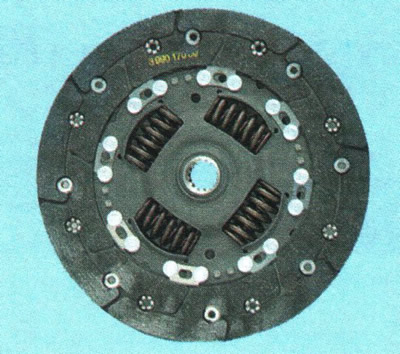
Driven disk 2 is mounted on the splines of the primary shaft of the gearbox and is clamped by diaphragm spring 4 between the flywheel and the pressure plate.
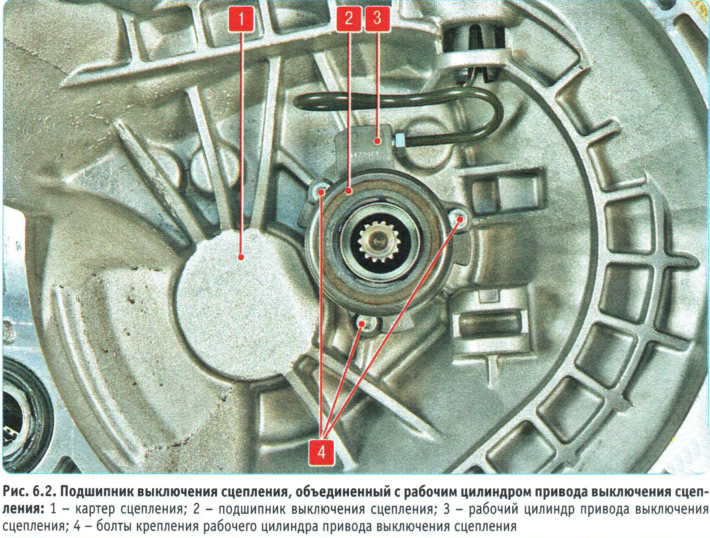
Bearing 2 (figure 6.2) the clutch release is structurally combined with the working cylinder 3, attached with three bolts 4 to the clutch housing 1.
The hydraulic clutch release drive consists of the following elements...
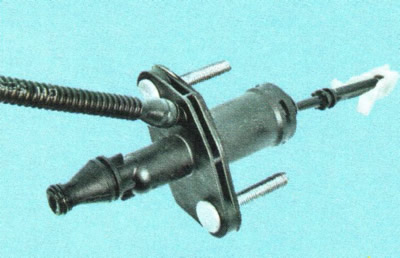
...the master cylinder installed in the engine compartment...
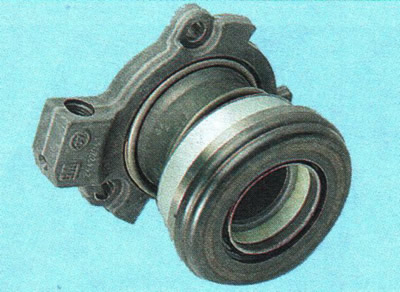
...working cylinder 3 (see figure 6.2), combined with the clutch release bearing...
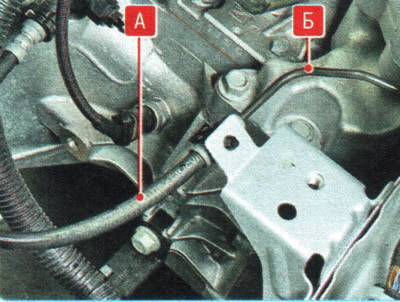
...a pipeline consisting of hose A and tube B...
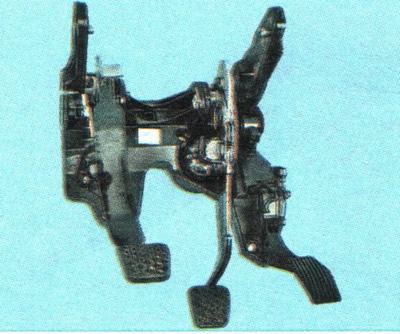
...and the clutch pedal, the bracket of which, common with the brake pedal, is attached with nuts to the front shield of the body.
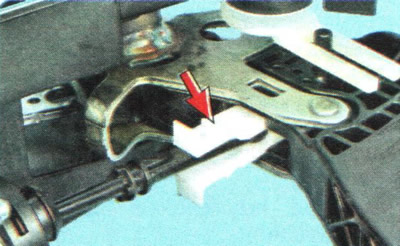
The clutch release master cylinder rod is connected to the pedal by a special plastic spring retainer.
NOTE: Shown with pedal assembly removed for clarity.
The master cylinder is connected by a hose to a reservoir mounted on the master brake cylinder (the reservoir is common for both main cylinders). The hydraulic clutch release drive uses brake fluid. The clutch release drive cannot be adjusted; it is only possible to check the clutch pedal stroke to determine the technical condition of the clutch.
USEFUL TIPS: To ensure that the clutch serves you for a long time and without failure, do not keep your foot on the clutch pedal all the time. This bad habit is often acquired during driving lessons at driving schools out of fear of not having time to disengage the clutch when the car stops. In addition to the rapid fatigue of the foot, which is always above the pedal, the clutch is at least slightly pressed, and the driven disk slips and wears out. In addition, although the release bearing is designed to operate in the constant rotation mode, when the pedal is pressed slightly, it is under increased load, and its service life is reduced. For the same reason, we do not recommend keeping the clutch in the disengaged state for a long time (for example, in traffic jams). If you don't have to move off right away, it's better to put the gearbox in neutral and release the pedal.
Clutch slippage can be easily determined using a tachometer. If, while driving, when you sharply press the accelerator pedal, the revs increase sharply, and then drop a little and the car begins to accelerate, the clutch requires repair.