


A sign that the clutch release bearing needs to be replaced is increased noise when the clutch pedal is pressed, and a leak of working fluid from the clutch release drive slave cylinder indicates the need to replace it.
NOTE: When replacing the clutch release bearing due to noise, check the condition of the drive disc pressure spring petals. If the petal ends are heavily worn where they contact the bearing, replace the drive disc assembly.
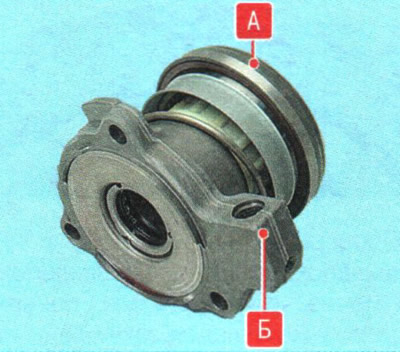
Clutch release bearing A is a single unit with slave cylinder B, secured with three bolts to the inner wall of the clutch housing.
1, Remove the gearbox (see "Removal and installation of a manual gearbox",), unless it was removed for clutch repair.
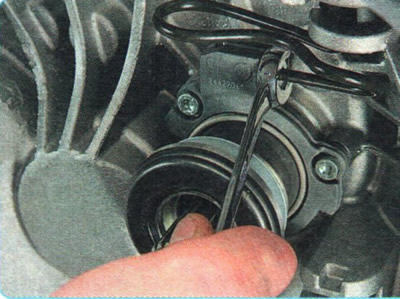
2. Unscrew the nut securing the intermediate pipe of the clutch release hydraulic drive to the working cylinder.
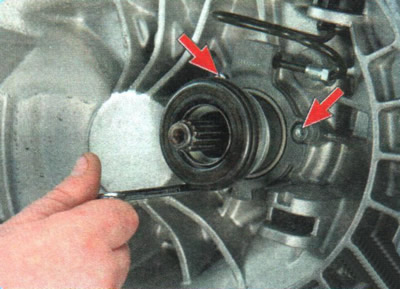
3. Remove the three bolts securing the slave cylinder to the clutch housing...
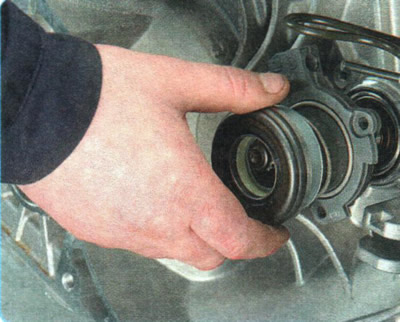
4. ...and remove the cylinder assembly with the clutch release bearing from the clutch housing.
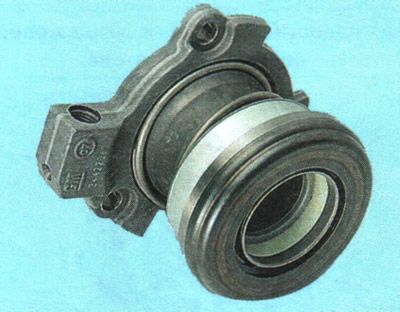
NOTE: Before installation, check the new bearing. It should rotate easily, without jamming or noise, and have no play. Check the ease of movement of the bearing on the guide of the working cylinder by pressing on it in the axial direction. The bearing should move to the stop without jamming and clearly return to its original position with the pressure spring.
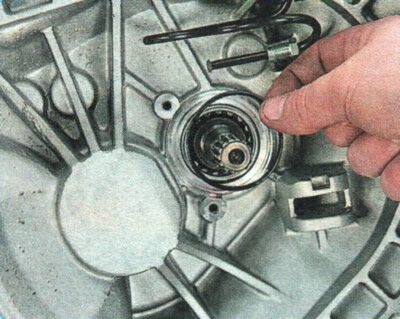
5. Remove the rubber sealing ring from the grooves of the clutch housing by prying it up with a screwdriver.
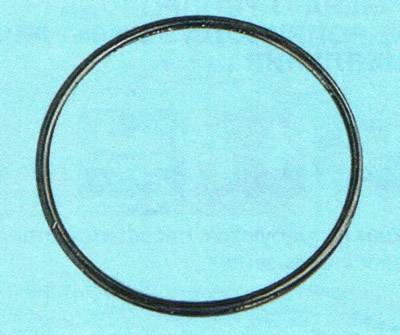
6. Replace the clutch release bearing seal ring regardless of its condition.
7. Install the clutch release drive slave cylinder assembly with the bearing in the reverse order of removal. Tighten the slave cylinder mounting bolts to the clutch housing to 7 N·m.
8. Attach the tube to the working cylinder and tighten its fastening nut.
9. Install the gearbox (see "Removal and installation of a manual gearbox").
10. Remove air from the clutch release hydraulic drive (see "Bleeding the clutch release hydraulic drive").