


2. Visually check the block for cracks and corrosion. Check the condition of the threads, and restore the stripped threads if necessary. It is recommended to check the cylinder block for internal defects at a car service center. If defects are found, replace the cylinder block.
3. Check for chips and burrs on the inner surfaces of the cylinders.
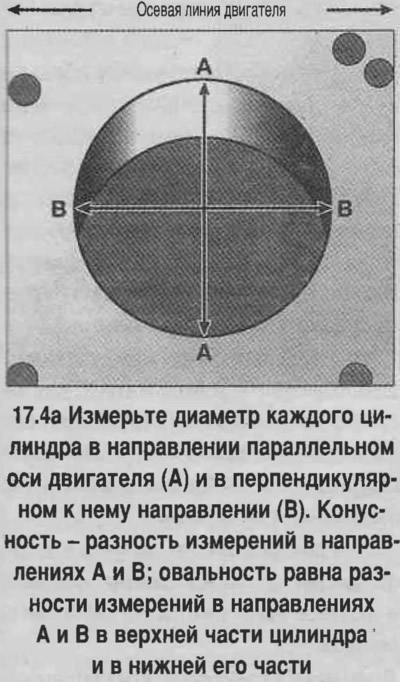
4. Measure the inside diameter of the cylinder at the top (right under the flange), in the middle and at the bottom parallel to the crankshaft axis. Check the ovality and taper of the cylinders (see photo).
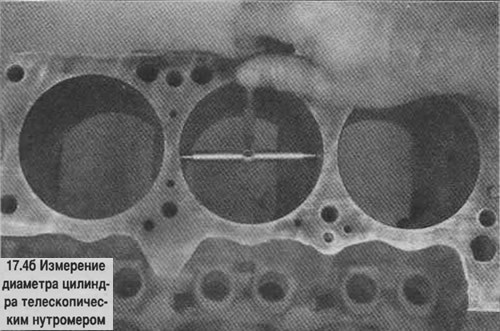
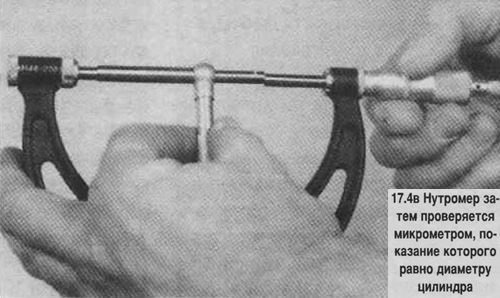
Attention! For measurements, the cylinder block must be removed from the stand, otherwise the measurements will be inaccurate due to deformation of the block.
5. Cylinder conicity is defined as the difference in diameters in the upper and lower planes. Cylinder ovality is defined as the difference in diameters measured in directions perpendicular and parallel to the crankshaft axis. Compare the measurement results with the standard values.
6. If there are severe burrs and scratches on the cylinder surfaces, or the ovality and taper of the cylinders exceed the norm, the block must be sent to a workshop for boring and honing. After the block is restored, pistons and rings of repair sizes will be needed.
7. If the condition of the cylinders is acceptable, the cylinder wear does not exceed the norm, and the clearance between the cylinder and the piston can be restored by replacing the piston, then only honing of the cylinders is required.
[The original article can be found on the resource: CHEVYMAN]