


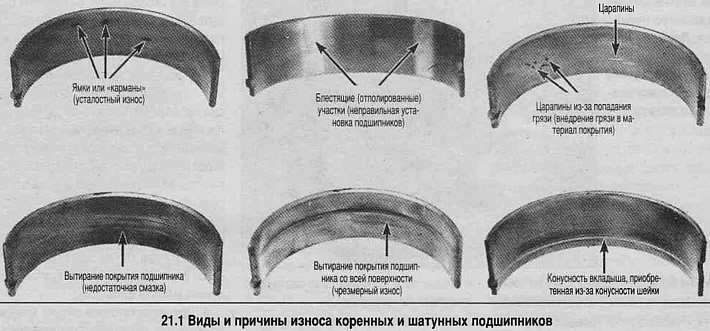
2. The causes of crankshaft bearing failure are insufficient lubrication due to improper assembly, contamination and penetration of foreign particles, frequent engine overloads, corrosion, etc. Regardless of the cause that caused the bearing failure, it should be eliminated.
3. To prevent accelerated wear due to contamination, maintain cleanliness when assembling the engine. During operation, it is recommended to change the oil and filters more often.
4. If there is insufficient lubrication, the bearing coating material is wiped off the steel base, and the bearing crumbles due to overheating (a bluish tint is observed).
5. When driving in difficult conditions for the engine (with the throttle fully open, or at low speed in a higher gear) the bearing coating is torn off from the steel base in the form of small particles, and the bearings are subject to fatigue wear.
6. Frequent short-distance travel can cause corrosive wear of bearings, since insufficient heating does not allow condensed moisture to be removed.
7. Incorrect installation of bearings during assembly also leads to their premature wear. If the clearance in the bearings is less than the norm, then their lubrication is difficult, which leads to wear as well as due to "oil starvation".
8. When assembling, do not touch the surfaces of the liner with your fingers.
9. The main and connecting rod bearing shells must be replaced during major repairs.
The original article can be found on the resource CHEVYMAN.RU