


Contents: Ignition switch ↧ Starting the engine ↧ Coolant heater ↧ If the engine does not start ↧ Starting the engine (if the spark… ↧ Jump starting with an additional… ↧
Ignition switch
There are four fixed positions of the ignition switch:
- LOCK: In this position, you can insert or remove the key from the ignition switch. When the key is removed, the steering wheel is locked.
Note: The vehicle is equipped with a RAP system, which means that all electrical equipment in the vehicle will continue to operate for ten minutes after the ignition switch is turned to the "LOCK" position and will then be switched off automatically.
- ACC: In this position, you can use the following electrical devices: radio and control the outside mirrors.
- ON: In this position, the engine runs. When the engine starts, the indicators of various systems on the instrument cluster light up.
- START: This position starts the engine.

Starting the engine
Caution: Do not allow the engine to run at high speed for a long time or accelerate sharply when not warmed up.
1. Apply the parking brake.
2. Turn off unnecessary lights and auxiliary equipment.
3. Set the selector to position "P". The engine can be started when the automatic transmission selector is in position "N", but for safety reasons it is recommended to start the engine with the selector in position "P".
4. Press the brake pedal and hold it until you start moving.
5. Start the engine.
Without pressing the accelerator pedal, turn the ignition key to the "START" position and start the engine. Release the ignition key when the engine starts.
Caution: Do not crank the engine for more than 5 seconds at a time. This may cause the starter and electrical connections to overheat. If the engine does not start within 5 seconds, wait about one minute before trying again.
Coolant heater
Some models are equipped with an engine coolant heater, the use of which at low temperatures (below -18°C) facilitates engine starting and significantly reduces fuel consumption when warming up the engine.
Caution: Do not use the coolant heater when the outside temperature is above - 18°C.
1. To turn on the heater, follow these steps:
- a) Turn the ignition key to the "LOCK" position.
- b) Open the hood and unfold the coolant heater cord. The cord is located on the driver's side near the power steering fluid reservoir.
- c) Plug the plug into a grounded 110V outlet.
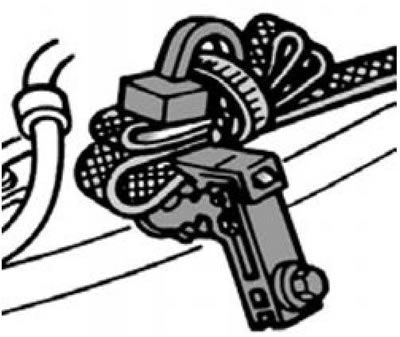
2. After warming up the engine coolant, turn off the heater and put the heater cord back in its original place.
If the engine does not start
1. Before performing checks, make sure there is sufficient fuel in the tank.
2. If the engine crankshaft does not turn or turns too slowly:
- a) Check that the battery terminals are securely tightened and clean.
- b) If the battery terminals are OK, turn on the interior lighting. If there is no lighting, it is dim, or it goes out when the engine is cranked by the starter, the battery is discharged. Perform a jump start using an additional battery.
- c) If the lighting is normal, but the engine does not start, then the engine is faulty.
3. If the engine crankshaft turns normally, but the engine does not start, then check:
- a) Check the tightness of the connectors (eg: spark plug connections, ignition coils).
- b) If the connectors are OK, the spark plugs may be "flooded" due to repeated cranking of the engine crankshaft.
4. (Models with immobilizer system) Perform engine start using other (additional and main) keys. If the engine starts, your key is faulty and needs to be replaced. If the engine does not start when using other keys, the immobilizer system may be faulty.
Starting the engine (if the spark plugs are "flooded")
1. While pressing the accelerator pedal, crank the engine with the ignition key in the "START" position for approximately 15 seconds. Do not pump the pedal, just hold it down.
2. Release the ignition key and the accelerator pedal. Then try to start the engine without pressing the accelerator pedal.
3. If the engine does not start within 15 seconds of cranking the crankshaft, release the ignition key and wait a few minutes.
4. Try to start the engine. If the engine does not start, then:
- a) Remove the spark plugs and dry the wet electrodes.
- b) Turn the ignition key to the "START" position for approximately 15 seconds while keeping the accelerator pedal depressed.
- c) Install the spark plugs.
5. Try starting the engine without pressing the accelerator pedal. If the engine still does not start, it is faulty and requires adjustment or repair.
Caution: Do not crank the engine for more than 15 seconds at a time. This may cause overheating of the starter and electrical circuit connections.
Jump starting with an additional battery
Caution: The booster battery voltage must be 12 V. Do not start the engine using a booster battery unless you are sure that its parameters meet the required ones.
1. Turn off the ignition, turn off all unnecessary lights and accessories and make sure the vehicles are not touching.
2. Open the hoods of both cars and determine the location of the positive and negative terminals of the battery. Your car has two terminals ("+") and terminals of the battery, designed specifically for starting the engine with an additional battery.
- a) The additional positive terminal of the battery is located near the bracket of the additional equipment drive. On some models, this terminal is covered with a red cover.
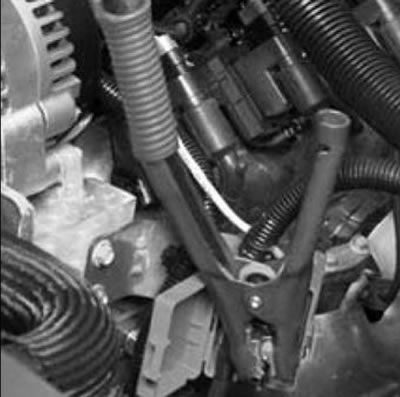
- b) The additional negative terminal is located on the bracket of the additional equipment drive and is marked "GND".
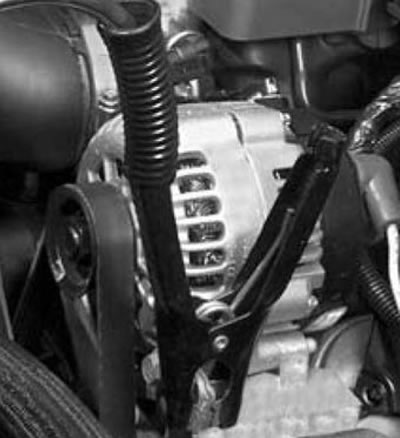
3. Connect the starting wire kit in the following sequence:
- a) Connect the wire clamp to the positive terminal of the discharged battery (or to the additional "+" terminal of the automatic transmission terminal (if available)), and then to the positive terminal of the additional battery.
- b) Connect the wire clamp to the negative terminal of the booster battery, then to ground (to a rigid, stationary, unpainted metal part of a car engine with a discharged battery).
Attention:
- Do not connect the cable near any part that may move when the engine cranks.
- Do not allow cables or clamps to accidentally touch anything other than the appropriate battery terminals or ground, as this may result in a fire.
- When connecting cables, make sure they are securely connected.
4. Start the engine of the car that is used to start a car with a discharged battery and let it run for a few minutes.
5. Start the engine of the car with a discharged battery in the usual way.
Note: If the engine does not start after several attempts, the vehicle requires repair.
6. Carefully disconnect the cables, first the negative, then the positive.
Warning: Be especially careful when performing this step. Do not touch the moving parts of the engine with your hands and watch the hems of your clothes to avoid them getting caught in the rotating parts (for example, drive belts).
[The original text can be found on the website: «CHEVYMAN»]