


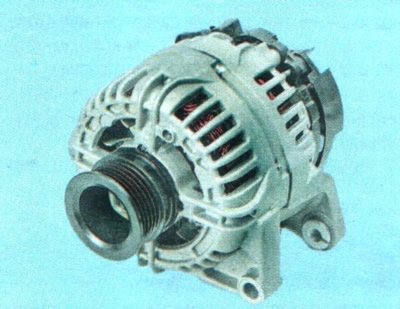
Stator 6 (figure 10.3) and covers 4 and 9 are tightened with four bolts 14. The rotor shaft 7 rotates in bearings installed in the covers. Power to the rotor winding (excitation winding) is supplied through brushes and slip rings.
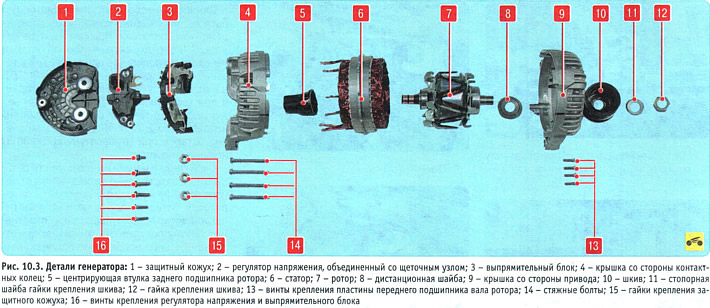
Three-phase alternating current induced in the stator winding is converted into direct current by rectifier unit 3, attached to cover 4. Electronic voltage regulator 2, combined with a brush holder, is also attached to cover 4. Voltage for excitation of the generator when the ignition is turned on is supplied to the terminal block of the regulator.
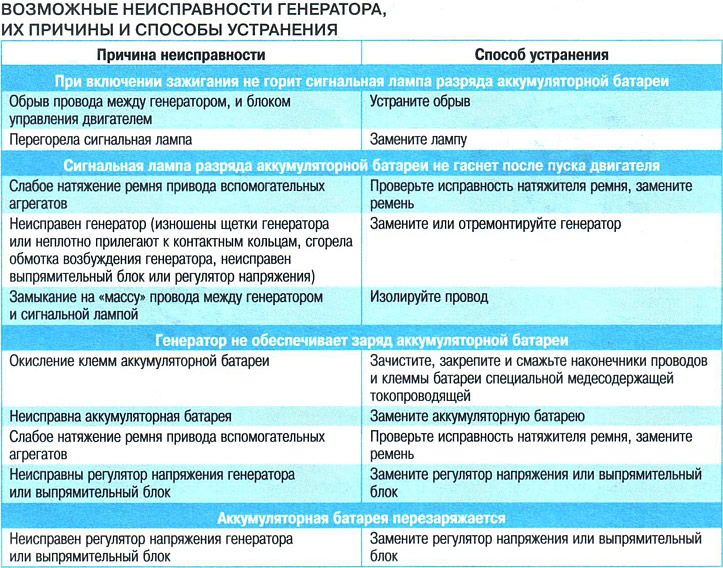
The generator operation is monitored by the signal lamp 20 (see figure 1.7) discharge of the storage battery located in the instrument cluster. When the ignition is turned on, the lamp should light up, and after the engine starts, it should go out if the generator is in good working order. Bright or dim lighting of the lamp indicates malfunctions.
USEFUL TIP: Recently, many companies have appeared that specialize in repairing imported generators. There, you can diagnose a faulty unit, purchase spare parts for any generator model, and get qualified advice. If you are not sure that you can repair the generator yourself, it makes sense to contact a company that will repair this unit quickly, efficiently, and at an affordable price. However, on cars with high mileage, it is often more profitable to replace the unit as a whole with a new one than to replace the failed parts.
The text of the article was obtained from the website: ChevyMan.ru